
• Home
  • News
  • Judge Posner Blames ‘People Like Me’ for the Economic Crisis

Financial Crisis

Judge Posner Blames ‘People Like Me’ for the Economic Crisis

Posted May 13, 2009 10:47 AM CST
By Debra Cassens Weiss

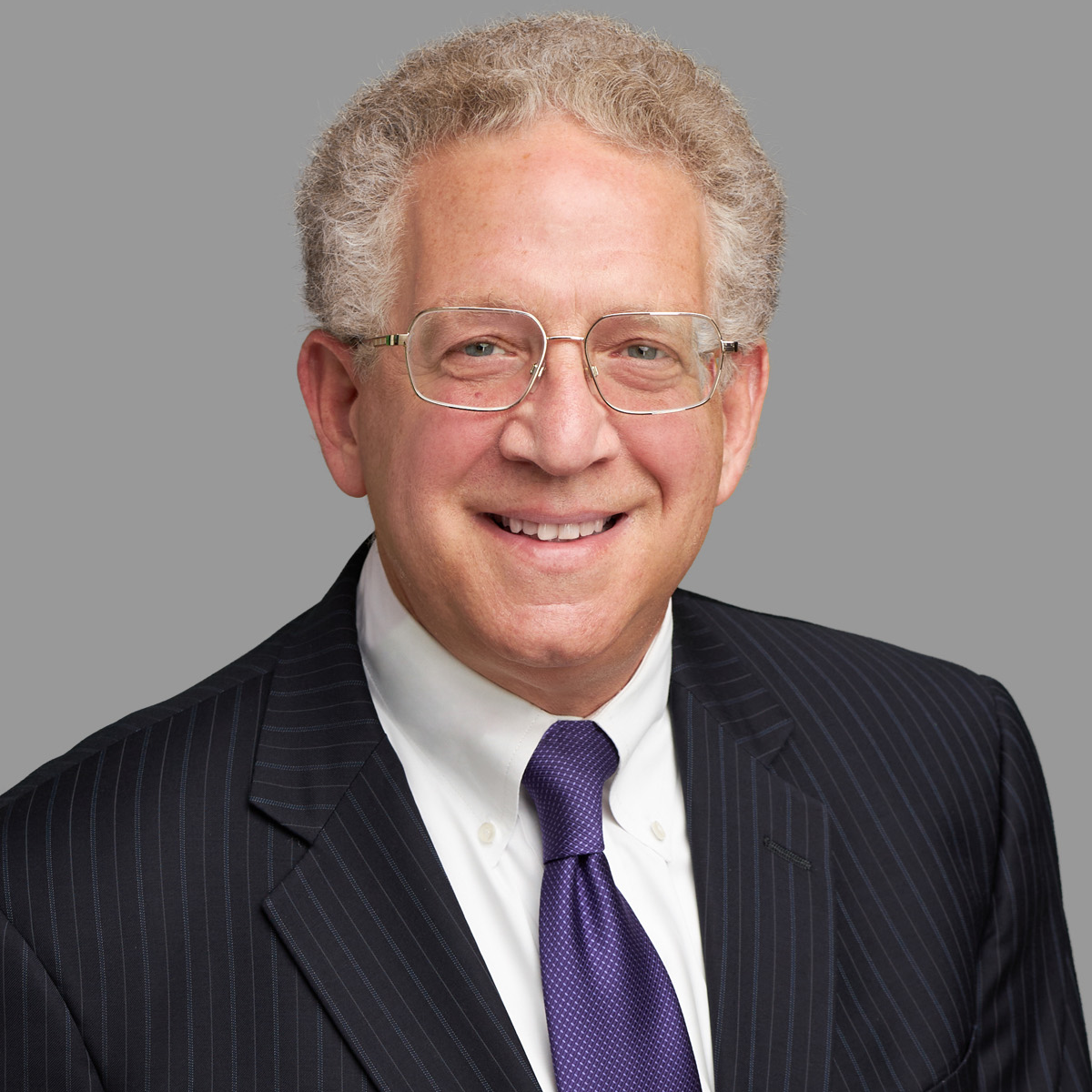
Judge Richard Posner says he probably misspoke when he advocated less government intervention in the private sector.

Posner, a judge with the Chicago-based 7th U.S. Circuit Court of Appeals, tells U.S. News & World Report that he should have added a qualifier. “I've always been a strong supporter of deregulation, and I should have said deregulation in everything but banking,” he says.

The banking system is different, he says, because it’s “the arterial system of the economy. If you don't have bank borrowing and lending, almost all economic activity will take a severe dive.”

Posner spoke to U.S. News in an interview to promote his new book, A Failure of Capitalism: The Crisis of '08 and the Descent Into Depression. The book examines the origins of the banking crisis in terms that lay readers can understand, according to a Washington Post review.

So who’s to blame for the economic downturn? “Primarily the deregulation movement—people like me who didn't carve out banking from the other industries to be deregulated,” Posner tells U.S. News. “But also the Federal Reserve under [Alan] Greenspan and [Ben] Bernanke for having pushed down interest rates so far that it caused a housing bubble. …

“And when that bubble bursts, it not only brings down the housing industry but it brings down the banking industry because the banks are almost partners in real estate because so much of the purchase price of a house is in the form of a debt, a loan from a bank.”

The New York Review of Books says A Failure of Capitalism is “a partial success” that gets some things right and some things wrong. “More striking than what the book says is who says it,” the review says. It notes that Posner has written several books and essays. “Judge Posner evidently writes the way other men breathe,” says the reviewer.

Posner is writing updates to his book on a blog hosted by the Atlantic called A Failure of Capitalism.

Comments

1.

J.D.
May 13, 2009 11:22 AM CST

Comment removed by moderator.

Flag this comment

2.

mike
May 13, 2009 2:11 PM CST

This is so honest of Posner.  He, like other conservatives since Reagan, have gotten it wrong: it’s not that we should ensure smaller government, but instead that we should ruthlessly ensure the *efficiency* of whatever government is there.  Where there are market failures (and they’re somewhat common, here in banking and housing), regulation should be efficiently implemented.  The blanket mantra “deregulate” helped to ensure that we ended up here.

And JD: why are you changing the subject?  By the way, President Obama’s response was right on the money: he said we shouldn’t have a policy of sanctioning torture, but that he’d make decisions in emergency situations when they actually occur.  Exactly right. 

“OBAMA:  America cannot sanction torture.  It’s a very straightforward principle, and one that we should abide by.  Now, I will do whatever it takes to keep America safe.  And there are going to be all sorts of hypotheticals and emergency situations and I will make that judgment at that time.

But what we cannot do is have the president of the United States state, as a matter of policy, that there is a loophole or an exception where we would sanction torture.  I think that diminishes us and it sends the wrong message to the world.”

Flag this comment

3.

B. McLeod
May 13, 2009 4:20 PM CST

The rate manipulation picture has not changed.  The failed rate policy has been carried over en todo from the previous administration.  For anyone who has saved conservatively, this is the Fed’s mechanism to further rip them off (i.e., in addition to the tax ripoff) for the benefit of the banking system.  Why is Bernanke still here?  He’s out of rate cuts and (hopefully) out of bailouts, and he doesn’t know how to do anything else (including, apparently, shaving).

Flag this comment

4.

TD
May 15, 2009 4:49 AM CST

I’m surprised the judge limited his exception to one industry, based on its failure.  It would seem that there are lessons here that could be applied elsewhere.  While the impact may not be as severe in other industries, this teaches us a lesson about unfettered greed in any industry it occurs.

Flag this comment

5.

Charles
May 15, 2009 6:12 AM CST

@TD - agree - I would notably extend it to energy deregulation, which totally screwed over California (albeit via Enron).

Flag this comment

6.

texzcowboy
May 15, 2009 6:16 AM CST

There are two points of view here: (1) less government or (2) more government.  I am always of the opinion of less government.  The invisible hand of 300 million Americans making decisions (or 6 billion people) is always more predictable than 1 President’s Agenda or 100 Sentators.  Predictability in the grand scale (the law of market averages) is the grease for capitalism.  Notice the worst markets swings are on the verge of a new bill or the fed moving interest rates.  I’ll always take 300 million little decisions over the unpredictability of a 100 Senators.  Guess what, I haven’t seen a penny of the Stimulus plan.  If you want to put money in everyone pocket - money to be spent at each individual’s best discretion - then Obama just need to tell everyone “there are no taxes this year.” The economy would have boomed!

Flag this comment

7.

ACKPMG
May 15, 2009 7:25 AM CST

Tex, you might want to study up on the whole bicameralism thing. 

Is it really more efficient to have 300 million people are all out there looking to advance their own personal wealth at the expense of the other 299,999,999 people?  And, you believe that having 300 million people gaming the process to achieve an edge over their competition will bring order and calm to the economic engine?

Just take a look at Texas’ lack of business ethics and morality.  The source of all recent economic calamity came from Texas based decision makers - S&L crisis, Oil crisis #1, real estate crash #1, Oil crisis #2, real estate crash #2, banking crisis #2.  History just keeps repeating itself because people are only out to benefit themselves.  Without regulation to level the playing field and keeping people honest, the economy can only descend into the pits of he!! because that is where Americans like to draw the line - at the edge of the pit.

Flag this comment

8.

Asphalt Ranger
May 15, 2009 7:26 AM CST

Mike, let’s cut to the hear of what Obama said:

America cannot sanction torture.  There might be loopholes or exceptions.  But as a formal policy, there are no loopholes or exceptions.

Double-talk comes so easy for accomplished politicians, whether they are reps and dems.  Listen to that type of garbage for too long and your mind will rot.  Then all that will be left for you is a career in the federal judiciary.

Flag this comment

9.

Everett
May 15, 2009 8:10 AM CST

Many aspects of interstate commerce have been effectively shielded from state regulation.  The Solicitors General have increasingly supported federal pre-emption of state regulations ever since Walter Dellinger III.  One result is that systemic problems can develop nationally (and internationally).  In the absence of an admittedly cumbersome array of differing state regulations, there are no “firewalls” of stabilizing regulations in prudent states capable of mitigating deficiencies elsewhere, because such regulations have beeb largely preempted since the late 1990’s.

Flag this comment

10.

Mikey
May 15, 2009 8:14 AM CST

#2, Mike, agree with you in theory about efficiency (nice pipe dream there, though—gov’t and efficiency in the same sentence—good luck!), but how is Obama’s quoted position “exactly right”?  It’s just typical Obama, law professor/politician doublespeak, where his lips are moving but if you break it down he says… exactly nothing.  First he says the PC thing, can’t approve of torture, but then says he’ll do “whatever it takes” to keep America safe.  Diametrically opposite statements. What does that mean?  That we’ll lie and say no torture, but then do it on the sly anyway when deemed necessary? Why not just be honest in the first place? Then, the favorite liberal refrain, can’t do it because “the world” won’t like us if we do.  So, J.D. is essentially right - Obama would rather let the bomb go off and be liked by the world than do *whatever* is necessary to stop it in the first place.  The guy has no clue - he released detailed info on our interrogation techniques for heaven’s sake.

Flag this comment

11.

Mary
May 15, 2009 8:19 AM CST

I agree completely with Mike. Regulation vs. deregulation shouldn’t be fodder for ideolgic obfuscation of the real issues. What to regulate and how must be factually analyzed according to cause and effect principles - as in what works and what doesn’t; in a zealous defense of the “general Welfare of the United States”* (what a thought!).    *Section 8, Constitution of the United States

Flag this comment

12.

DanL
May 15, 2009 9:04 AM CST

Judge Posner continues to demonstrate why he does not belong on the federal bench. He’s a radical right activist who has turned federal law upside down time and again. To suggest that only banking should not be deregulated ignores reality. The airline industry’s descent into bankruptcies and poor service began with its deregulation. Regulation is very much needed to curb the excesses of the private sector which abuses its privileges way too often—nearly always to the detriment of the nation.

Flag this comment

13.

Andy the Lawyer
May 15, 2009 9:28 AM CST

Judge Posner’s comments aren’t much different from Alan Greenspan, who also has outed himself as a recovering free-market capitalist.  But anyone with the most basic knowledge of american history should have seen this coming.  The last time the government responded to a world-threatening recession by doing absolutely nothing was 1929-1932.  the result?  the recession mushroomed into a depression, FDR was elected and the gop did not regain meaningful political power for a generation.

In other words, there’s a silver lining in every cloud.

Flag this comment

14.

Bird Smack
May 15, 2009 9:30 AM CST

Mike at No. 2 - perhaps unknowingly, but you have highlighted one of the criticisms of Obama:  he has the ability to use a lot of words to say absolutely nothing.  The quote you cite boils down to this:  “Torture is bad, but I’ll decide later whether we’ll use it.”  What does this mean as far as a policy statement?  Absolutely nothing.

And for DanL - Posner is hardly radical.  He subscribes to an economic theory of law.  Before ineptly describing him, perhaps you should read some of the books he has written, and read his published appellate opinions.  I don’t mean to imply that you’ll agree with him, but a radical he is not.  And while deregulation may allow the private sector to abuse its privileges, regulation allows the government to abuse its privileges, too:  the operations of this country are, under that theory, regulated by civil servants with (a) little experience in the sector they regulate and (b) absolute protection (in the form of civil service and union protections) from stupid, uninformed decisions (some of which delve into the realm of willful and wanton ignorance and inefficiency).

Oh - and the Latin phrase is “in toto.”  The Spanish (rough) equivalent is “en todo.”

Flag this comment

15.

Jim
May 15, 2009 9:31 AM CST

Protection of the environment is another area in which regulation is necessary.

Flag this comment

16.

Bird Smack
May 15, 2009 9:44 AM CST

The problem is that everyone with a pet project thinks that that area is need of regulation.  “I like birds, so we should regulate whatever industries might adversely affect birds.”

“Yeah, and, um, I like marshmallows and so I think we should regulate the sugar cane industry so that, uh, marshmallows will be cheaper.”

“Really.  Well I myself am partial to driving big, gas-sucking SUVs but, holy cow, I just cannot afford to fill my gas tank.  So I think we should regulate oil and gas.”

How about this, folks?  Regulate everything.  Socialize our economy.  Eliminate the private sector and render all industry government run.  Describing the repercussions could fill volumes, but let’s start here.  One, your tax rates will go from percentages in the twenties or thirties to the seventies or eighties.  Two, personal incentives for those that are gifted in this area or that will be neutralized - why would someone with exceptional knowledge or skill in a particular area choose to exercise that experience or skill when there is no reward at the end of the rainbow - like it or not, that is what motivates people.  Third, our government would hire hundreds of thousands of dim-witted buffoons who cannot be fired for their incompetence.

Go forth and conquer, socialists.

BigLaw Rules (which is why socialism is bad)!

Flag this comment

17.

WSJ
May 15, 2009 10:03 AM CST

B. McLeod- What in the hell are you talking about?  Half of your comment doesn’t make sense and you don’t seem to understand how the Fed works.  Maybe you should read about finance and economics instead of posting glib messages on this board 24 hours per day.

Flag this comment

18.

Ebe Mombatsu
May 15, 2009 10:31 AM CST

Comment removed by moderator.

Flag this comment

19.

James Pollock
May 15, 2009 10:35 AM CST

If we assume that the goal is to maximize efficiency while reducing waste, then there are two problems we need to watch out for:  Opportunists who game the system for their own benefit (i.e. greedy capitalist pigs) and regulations which once served a valuable purpose of blocking unwanted behavior but which now only cause unnecessary compliance costs, of both real dollars and in terms of lost opportunities due to delay (i.e. endless paperwork and bureaucratic trolls).

Regulation can block the first but lead to the second.  Deregulation, on the other hand, cuts away the second but gives free reign to the first.  Therefore, I am automatically suspicious of anyone who proposes only one or the other.  There isn’t any “sacred industry” which is the lifeblood of the economy; it’s all interlinked.  The trick is to find the type and level of regulation that limits the scoundrels while not weighing down everyone else so much that everything is paralyzed.

Consider an analogy:  ordinary traffic.  The deregulators would remove all the stoplights on the theory that, since nobody wants to be slowed down by being in a wreck, all of the drivers on the road will be careful enough to avoid having accidents, while in all other ways trying to get to their destination(s) as quickly and efficiently as possible.  The safety nuts, on the other hand, want to reduce as much as possible the human judgment involved… stoplights instead of stop signs, automated stoplight and speed limit enforcement, mandatory seat belts and helmets, cell phone bans… imagine if we let them decide that, in the interest of improving our safety, a system of ground traffic control would be instituted where every decision of when to proceed or wait would be made by traffic controllers (you know, like airplanes at the airport…)  Yes, it would be marginally safer than the current system, but at what cost?

I think that the right answer is in finding the right balance, which means examining old laws and regulations periodically and removing the deadwood, while keeping those elements that still provide a relevant purpose.  This would, of course, require a significant change in the way we do things as a society, and therefore would face attack from both the left AND right.

Flag this comment

20.

Jason James
May 15, 2009 11:25 AM CST

I have not yet read this book, but I hope to in the very near future.  What saddens me is that Judge Posner was so quick to abandon a well reasoned position for this unsupported populist position.  Hopefully his book will explain to me just how different banking is from other businesses (I though the purpose of all business was to earn profits for its owners/shareholders) and why banking should be heavily regulated.  Also, I hope he explains the negative impacts regulations like Sarbanes Oxley have had on financial institutions and how new regulation will not fall into this trap.  Lastly, I am very interested in his explanation of why the market can’t be trusted to handle the “banking issues.”

Flag this comment

21.

mc
May 15, 2009 1:47 PM CST

I agree with James (#19) in large part. Ignoring that the governement regulation and the free market must learn to coexist is just ignoring the reality. It has to be balance. The history teaches us that. The question is of course what is the ratio? And here the real debate is. If I would need to put a percentage figure on how much regulation we need, I would say a dynamic 15-30%, no more.  I grew up in socialism (East Europe), I have experienced the transition to capitalism in the ‘90s, and I have lived in capitalism (USA) for more than 10 yrs now. I must say that it scares me when I see the US pushed toward socialism. Haven’t we learned from the 50 yrs tragedy of the East-Europe? Did we forget that the socialism and not the capitalism failed in Europe and arround the world? Are we really missing an important point, that more government control means not only less economic efficiency but also less individual freedom? Are we really forgetting how we got to be the greatest nation in the world? Please, lets learn from the bubble burst, but keep the emotions under control. Let’s find reasonable solutions, and, please, do not fall in the trap of believing that the government burocrats know better, or care about, how to solve our problems. We, the American people, can learn from this tragedy, find a solution, at individual and national level, and come out of it stronger.

Flag this comment

22.

anon
May 17, 2009 3:27 PM CST

One big unregulated area is attorney liability insurance.  Who knows what happens behind the scenes.

Flag this comment

23.

aka Gregor Samsa
May 18, 2009 3:29 PM CST

Regulation of private industries is not the same as socialism.

James Pollock is correct.  Regulation should be designed to maximize efficiency, while reducing waste.

Mary #11 is right.  Regulation is also necessary to achieve social welfare that might not otherwise be served because of tragedy of the commons.  Environmental regulation often fits this category.  The key trick with environmental regulation is to know when to use market solutions and when not to.  Best Available Control Technology requirements can stifle more efficient market-based solutions.  But those same market based solutions are inappropriate when dealing with toxins or hazardous materials.  The point is one of clear objective, balance, and design.  Regulation should achieve its purpose at the least cost.

Banking and financial regulations typically are promulgated to prevent principal-agent problems and moral hazards.  Markets require regulation to prevent fraud and abuse.  Regulation is necessary to enable trust and transparency in markets and financial institutions, so that while individual firms may fail, the market and the economy itself does not self-destruct and collapse.  The repeal of the Glass-Stegall, the enactment of the Commodity Futures Modernization Act, and a deliberate lack of regulatory oversight allowed securitization and sale of risky mortgages and other commodities and loans.  A financial contagion from the underlying irresponsibility and abuse followed and we all suffer as a result. 

As we repair our financial and banking system, we need to dispel the notion that regulation that requires disclosure, shareholder protection, and ethical provisions preventing conflict of interest is socialism.  Rather, it is necessary for free and transparent functioning markets.

Flag this comment

24.

J.D.
May 19, 2009 12:38 PM CST

We have mass socialist regulation in California—the latest proposal from our legislature was to make HOME thermostats controllable by bureaucrats in Sacramento. I’m not making this up. Business and taxpayers have left the state in droves because of the endless regulation and taxation.

And now the state is billions in the red, on the verge of total destruction.

Conservatives had nothing to do with it. And now the same ideology is running Washington. Obama’s best hope is that republicans retake control of Congress so that he can take credit for an improved economy, much like Clinton did.

Flag this comment

25.

aka Gregor Samsa
May 21, 2009 10:53 AM CST

J.D., you are conflating the California Energy Commission’s work on smart meters and the 2008 California PUC rulemaking on the smart grid with Glen Beck’s March 20th attack on the smart grid as socialism.  Nearly 85 percent of electric consumers are served by private investor-owned utilities.  Yes, they are regulated.  And, yes, implementation of smart grid technology could make it possible for a utility to turn down thermostats to prevent power outages.  But those same utilities have an obligation to serve.  Home thermostats will not be turned down remotely unless customers opt in to demand response programs to get lower rates.

Wholesale power deregulation and regulatory failure led to the power outages that have caused businesses to flee the state.

Flag this comment

Add a Comment

We welcome your comments, but please adhere to our comment policy.

Commenting has expired on this post.