

Coming soon to a theater near you: James Dean as you’ve never seen him before! See the First American Teenager back on the silver screen, resurrected thanks to the latest in cutting-edge technology! Watch him bring back iconic characters like Cal Trask, Jim Stark and Jett Rink as they embark on all-new adventures! Like in Further East of Eden! Or Rebel Still Hasn’t Found a Cause! Or Giant 2: Gigantic! And yeah, if this goes well, we’ll do the same thing with a bunch of other dead actors and actresses. Maybe we’ll see Sean Connery resuming his role as 007 in Never Say Never Say Never Again. And for the soundtrack, we’ll use artificial intelligence to create a new James Bond theme sung by Elvis Presley and Michael Jackson with a guitar solo from Jimi Hendrix. So give us your money!
Not only is the above scenario a possibility, but it is one that almost happened (other than the satirical movie titles, of course). In November 2019, Magic City Films announced Dean’s likeness would be re-created via computer-generated imagery for an original role in a canceled Vietnam War movie. The filmmakers got consent from Dean’s estate to use his likeness and had planned on dubbing in a voice actor to impersonate him.
“This is awful,” Avengers star Chris Evans wrote on Twitter in 2019. “Maybe we can get a computer to paint us a new Picasso. Or write a couple new John Lennon tunes. The complete lack of understanding here is shameful.”
Evans’ doomsday scenario is upon us. Thanks to the advent of generative artificial intelligence, it has never been easier to replace or resurrect otherwise unavailable artists. What once required body doubles, camera tricks, special effects and a healthy amount of suspension of disbelief can now easily be done with a computer and a large language model.
With deepfake videos already commonplace and nearly indistinguishable from authentic ones, feature films using AI actors seem like the next logical step.
“I’m genuinely surprised at how quickly things have advanced in the last few years,” says James Grimmelmann, Tessler Family Professor of Digital and Information Law at Cornell Law School. “I have been following AI generation since the mid-2010s when new large datasets were making a big difference in the quality of results, but even so, I’ve been stunned at how quickly things have moved in the last five years. It’s unclear how long this will continue, but even this has been genuinely breathtaking.”
But with great technology comes greater legal issues, and generative AI has generated plenty. Hollywood has always relied on stand-ins, stock footage and visual tricks for otherwise absent actors. Generative AI is transforming those workarounds into fully digital performances, forcing courts and lawmakers to decide whether decades-old publicity laws can keep pace. It has also raised similar questions that other industries are struggling with, such as whether AI could eventually replace human actors.
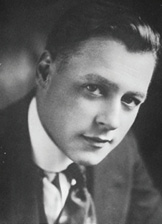
Replacing actors midway through production because of death, injury or unavailability is nothing new. For instance, actor Harold Lockwood died of Spanish influenza in 1918 while filming Shadows of Suspicion. The silent movie was eventually completed with a body double and was released the following year. In 1937, well-known movie star and sex symbol Jean Harlow died of renal failure while filming the romantic comedy Saratoga. At first, MGM was going to reshoot the film with another actor before Harlow’s fans demanded that her last film be released. The studio was able to complete the movie by using her regular stand-in and a voice actor to record Harlow’s lines.
Movies like Superman II (1980), Trail of the Pink Panther (1982), and The Crow (1994) used body doubles and archive footage to stand in for absent or deceased actors; and subsequent films like Gladiator (2000), Furious 7 (2015) and Star Wars: The Rise of Skywalker (2019) added in CGI to help make re-creating actors look more realistic.
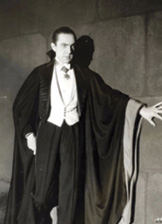
In a couple of infamous instances, famed B-movie director Ed Wood replaced the late horror film icon Bela Lugosi with his wife’s much-taller chiropractor in Plan 9 From Outer Space (1958), while the Bruce Lee film Game of Death (1978) even used footage from the actor’s actual funeral and a cardboard cutout of the martial arts icon in lieu of a body double.
The most famous example, and the one that ended up being the trope namer, came from the Three Stooges. When Shemp Howard suddenly died in November 1955 after suffering a massive cerebral hemorrhage, his surviving brethren, Larry Fine and Moe Howard, still owed four shorts to their studio, Columbia Pictures. The grieving Stooges could not just forgo that contractual obligation. Nor could they hire a replacement Stooge and film all new shorts with him since Columbia had been hit with budget cuts. Instead, they had to rely on stock footage from previous Stooges shorts featuring Shemp and combine it with some new scenes to make them look original.
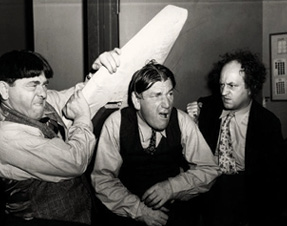
So they drafted a body double and used some creative camera work so that “Shemp’s” face was never clearly in the frame. Old dialogue and sound clips were recycled when needed, and the new scenes often conveniently featured Larry and Moe waiting for “Shemp” to show up.
The low-budget quality of the shorts and the obvious, not-so-subtle use of body doubles led to mockery and criticism.
“Even as teenagers watching the Stooges after school, we could tell whenever the fake Shemp made his appearance (which amounted to four shorts) and it amused us to no end,” actor Bruce Campbell wrote in his autobiography, If Chins Could Kill: Confessions of a B Movie Actor. He and his longtime collaborator, director Sam Raimi, started using the term “fake Shemp” in their movies whenever they needed to use a stand-in or body double.
“We would always put people in the background covering their faces and stuff, and those became ‘fake Shemps,’” Raimi wrote in Army of Darkness: Movie Adaptation. “The term got hooked up with anybody who we used in the movie whose face you didn’t see.”
That experience came in handy during filming for Raimi’s 1981 horror movie The Evil Dead. As a result of budget issues, cast and crew members started quitting in the middle of production, forcing Raimi to use “fake Shemps” everywhere. They even used the term in the end credits.
Back to the Future Part II, however, took the fake Shemping up to another level.
Actor Crispin Glover, who had played George McFly in the original film, had decided not to reprise his role in the 1989 sequel, citing creative and monetary disputes. Rather than recast the character (as they had replaced Claudia Wells with Elisabeth Shue as Marty McFly’s girlfriend), director Robert Zemeckis reused footage from the first film and deployed a fake Shemp for the new footage.
Actor Jeffrey Weissman was fitted with prosthetics to make him look more like Glover. He was filmed in ways that would not draw attention to his face, meaning plenty of wide angles and shots where his back was to the camera, as well as scenes where his face was partially obscured by objects or people. In one scene, he was suspended upside down the entire time with his face near the bottom of the frame. Audio clips of Glover from the first film were also reused. The film went so far as to credit Glover as “George McFly in footage from Back to the Future.”
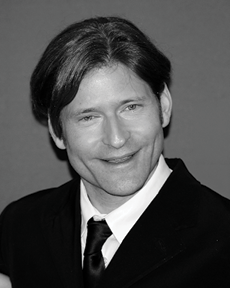
Glover filed suit the following year against Universal Pictures for violating his publicity rights by using his likeness without his authorization.
“They deliberately impersonated his likeness, and that was evidenced not only by the fact that they used the prosthetics, but by the fact that they mockingly called the other actor ‘Crispin’ on set,” says Doug Kari, Glover’s attorney who filed suit on behalf of the actor. “They wanted the uniqueness that Crispin Glover had brought to the George McFly character, they wanted the persona of Crispin Glover to attach to the character, but they didn’t pay him for it.”
The parties ended up settling out of court; however, Glover’s lawsuit may have helped establish a precedent going forward. The Screen Actors Guild-American Federation of Television and Radio Artists now has rules in place forbidding studios from using prosthetics, molds, CGI or other techniques designed to re-create an actor’s likeness without permission and compensation.
According to the Hollywood Reporter, Glover has taken credit for those rules being in place, and Kari mostly agrees with his client’s assessment. A SAG-AFTRA spokesperson, however, wasn’t able to confirm to THR when the changes went into effect.
The lawsuit also foreshadowed what was to come. “The Hollywood Reporter called our case ‘unintentionally visionary,’ and I laughed about that because it was actually intentionally visionary,” Kari says. “It didn’t take a lot of foresight to think that technology might get to the point where it would become easier and easier to re-create someone’s likeness. I argued that this was an important case, that it raised a groundbreaking issue, and that we had stated a valid claim that there needed to be a boundary between the character in a screenplay and the actor’s rights.”
At the heart of the controversy is the right of publicity.
“The right of publicity is simply the right of an individual to control the commercial use of their persona,” says Jonathan Faber, managing partner and general counsel at Luminary Group and an intellectual property attorney at McNeelyLaw. He has represented musicians like Drake and Motley Crue bassist Nikki Sixx, as well as actresses like Zooey Deschanel and Uma Thurman. “Yes, the right of publicity has complexity, and you have to navigate it. You need to know what you’re doing.”
Faber maintains that the general principles that have always governed the right of publicity remain unchanged even in a post-AI world.“If a company wants to use an AI version of one of my clients that I represent, my answer is, ‘I don’t care if it’s AI or if it’s video footage of my clients, if it’s a look-alike or whatever. If that’s my client, then that’s going to need a license,’” he says. “And the right of publicity is broad enough to already provide an answer to AI and deepfakes, and certainly when it concerns commercial use.”
Others disagree and think stronger laws are necessary to protect individuals from having their likenesses exploited in this post-generative AI world.
“AI has certainly increased the pressure to expand the right of publicity to nonadvertising situations that historically we would have considered outside of the scope of the right of publicity,” says Rebecca Tushnet, a professor at Harvard Law School. She calls it “actually a pretty scary thing” since lawmakers have “largely ignored First Amendment issues.”
For one thing, there is no federal law governing the right of publicity. Instead, different states have different laws. Some have strong protections that last long after the principal dies—for instance, Indiana and Oklahoma provide statutory protection for up to 100 years after death, while California’s right lasts 70 years. Others, such as Iowa and New Mexico, don’t have an actual law on the books.
Matthew Kugler, a professor at Northwestern University Pritzker School of Law, notes that a patchwork of state laws could be sufficient and that a federal standard isn’t necessarily the magic bullet. However, he adds, “the problem is less state-versus-federal and more the lack of a comprehensive approach at any level.” He notes that “state rights of publicity are generally ill-defined, and caselaw is often unclear,” forcing some states to rely on common law, “which on the one hand avoids having the problem of obvious gaps, but also avoids having the clarity of clear rules.”
David Nima Sharifi, principal attorney of L.A. Tech and Media Law Firm, says that when it comes to Hollywood studios, it might be sufficient for them to comply with California’s laws.
“California does have some of the most stringent and restrictive celebrity publicity rights, so the idea is that if you can comply by the California law, you’re probably cleared nationwide,” says Sharifi, who has advised clients on technology and intellectual property matters since 2007 and is the author of the forthcoming LexisNexis treatise Navigating TTAB and Trademark Disputes. “So that’s kind of the standard that I think most producers take.”

The sole U.S. Supreme Court decision on the right was handed down in 1977 in the case of Zacchini v. Scripps-Howard Broadcasting Co. Human cannonball circus act Hugo Zacchini had filed suit against the owner-operator of a local television station in Cleveland after a reporter had recorded his entire act and played it on the news without his consent.
Zacchini claimed this was a commercial application in violation of his publicity rights that was not covered by free speech, and a 5-4 Supreme Court majority agreed with him.
“The broadcast of a film of petitioner’s entire act poses a substantial threat to the economic value of that performance,” Justice Byron White wrote for the majority, adding “if the public can see the act free on television, it will be less willing to pay to see it at the fair.”
The potential of AI has led to calls for more stringent legislation, both at the state and federal level, to protect publicity rights.
The Nurture Originals, Foster Art, and Keep Entertainment Safe Act was initially proposed in the wake of the actors’ strike in 2023. Aggressively championed by SAG-AFTRA, the No Fakes Act would establish a federal right of publicity and give people greater control over digital replicas of their images, likenesses or voices. It would carve out a fair use exception for news reports, public affairs, sports broadcasts, or historical or documentary features. It also provides a safe harbor for online service providers—similar to the Communications Decency Act and the Digital Millennium Copyright Act—where they can escape liability by taking down unauthorized digital replicas and ban users who repeatedly violate the act. The No Fakes Act was formally introduced in the Senate and House in 2024 but did not pass during the session. It was reintroduced in 2025 and 2026 and was favorably reported out of the Senate Judiciary Committee in June.
The act is not without critics. Civil liberties groups have warned that it could have a chilling effect on satire, commentary and other forms of free speech by creating a “heckler’s veto” that will result in platforms removing potentially protected content for fear of getting hit with the act’s penalties, which include a fine of up to $750,000 per work.
“The person depicted, or anyone who holds their likeness rights, could demand that each of these works come down, and platforms would face heavy pressure to comply rather than risk liability,” groups including the American Civil Liberties Union, Electronic Frontier Foundation and the Center for Democracy & Technology wrote in a June 16 letter to members of the Senate Judiciary Committee. “The people best positioned to make that demand, and the most motivated to make it, are the powerful figures who least enjoy being mocked. Passing No Fakes would hand them that power.”
In the years since Glover’s lawsuit, Hollywood has tended to rely on a combination of CGI, archive footage, body doubles and voice impressionists whenever it needed to bring someone back from the dead or needed a substitute for some reason.
The 2004 film Sky Captain and the World of Tomorrow producers did not use technology as a last resort. Instead, they took CGI-enhanced archived footage of the late actor Laurence Olivier (who died in 1989) and combined it with old audio and new lines spoken by a vocal impersonator to craft an original performance of him as the film’s lead antagonist, Dr. Totenkopf. The character was written in a way so that a live-action stand-in was unnecessary—instead, Totenkopf existed as a holographic image on a screen and not as a corporeal being.
Today’s technology makes Sky Captain look like amateur hour. Producers today would have had no problem re-creating Olivier’s likeness through generative AI and having it interact with live actors on screen.
For instance, in April, a teaser trailer for the upcoming film As Deep as the Grave showed just that, featuring an AI-generation of the late actor Val Kilmer appearing on screen as if he were still alive.
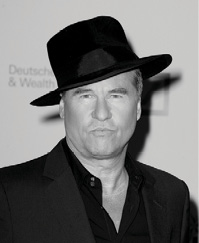
At one point in the trailer, the AI-generated Kilmer even tells one of the live actors: “Don’t fear the dead, and don’t fear me.”
Kilmer, who had been cast in the film before his 2025 death after a long bout with throat cancer, had been a major supporter of AI technology, having worked with Sonantic to re-create his precancerous voice and using it in his last live-action performance, Top Gun: Maverick (2022).
Using AI to re-create deceased actors is just one of the possibilities for producers and studios.
Sharifi points out that directors could use AI to set up dangerous scenes or stunts, allowing them to save money, time and, potentially, lives. Maybe on-set tragedies like Brandon Lee’s death while filming The Crow or Alec Baldwin accidentally shooting and causing the death of cinematographer Halyna Hutchins with a prop gun on the set of Rust could be avoided, he adds.
“Let’s say you have a scene where you need to blow up a fuselage on Sunset Boulevard or something,” Sharifi says, noting that CGI and other graphics have been used for special effects for decades now. “Let’s say you just want to show someone like Tom Cruise on top of the fuselage before it blows up. With AI, it’s much easier and safer to do it. You don’t have to get the location, you don’t have to get the pyrotechnics, you don’t have to. There’s a lot of production that you can skip by doing it using AI.”
He adds that good directors and producers will use AI not necessarily as a replacement for actors but as a supplement.
“It’s the same with a lot of white-collar jobs, where the middle 80% of the legwork that has to be done can be replaced by AI, but you still need an expert to come in at the first 10% to set things up and then look at the last 10% in terms of making sure everything is polished and ready,” he says.
Meanwhile, actors have an opportunity to use AI to exercise more control over their public images. Kugler points out that Bruce Willis, who was forced to retire from acting after being diagnosed with aphasia, allowed an AI production company to use his likeness in a 2021 commercial.
“For someone like Bruce Willis that can’t really perform anymore but would like to continue getting paid, there’s a way you can use his likeness to make things work, and that’s an entirely fair perspective and one that can be dealt with through consent,” Kugler says.
Will AI ever get to the point where it could replace actors?
“There’s always going to be a little bit of a disconnect, because what makes a performance great is being distinctive—the particular mannerisms, the way they create a character for a role. Someone has to do that work. Someone has to know when to cock their head to the side or when to stumble over their words,” Grimmelmann says.
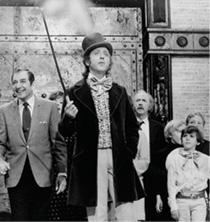
And AI can’t account for ad-libs and improvisations that aren’t in the script and can only come from a particular actor. For instance, Grimmelmann points to a memorable scene in 1971’s Willy Wonka & the Chocolate Factory where Gene Wilder ad-libbed Wonka’s entrance by pretending to be old and frail and then falling onto the ground before effortlessly executing a tuck roll and popping up like a gymnast.
“A virtual Gene Wilder isn’t going to come up with that,” he says.
Faber adds that the question of whether AI-generated actors or movies will catch on will be answered by the ultimate arbiters of success or failure.
“The public will decide if it was in poor taste, or if it was well done and respectful,” he says. “The market will determine if we need this or not.”








