DOJ fired lawyer because she wouldn’t bend rules for Mel Gibson, lawsuit alleges


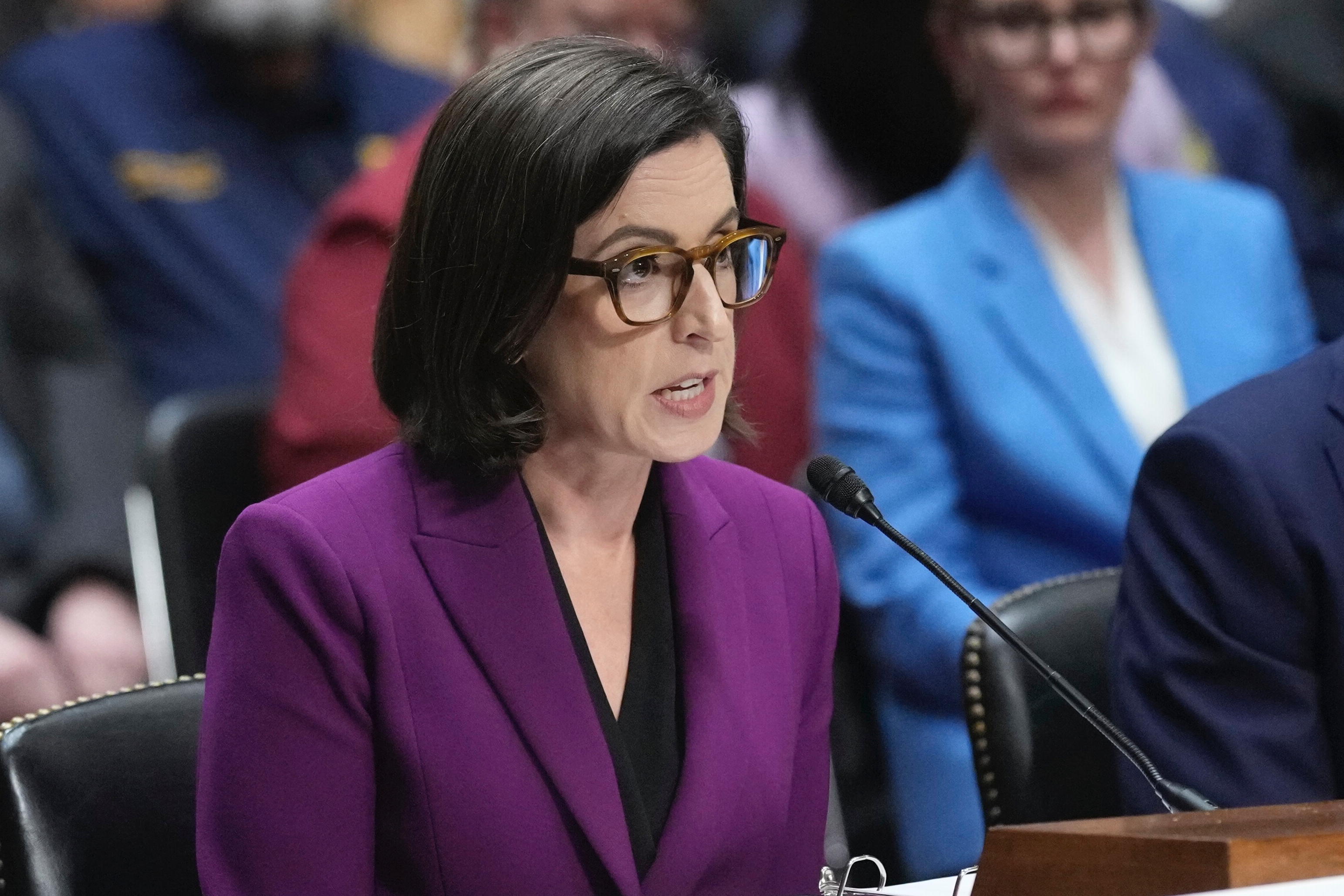
Elizabeth Oyer, a former U.S. Department of Justice lawyer who handled pardon recommendations for the agency, claims that she was wrongfully terminated from her job. (Photo by J. Scott Applewhite/The Associated Press)
In a lawsuit filed Thursday, a former U.S. Department of Justice lawyer claims that she was wrongfully terminated after refusing to restore gun ownership rights for actor Mel Gibson, who had a domestic violence conviction.
The action brought on behalf of Elizabeth Oyer, who worked as the DOJ’s pardon attorney, was filed in the U.S. District Court for the District of Columbia. U.S. Attorney General Todd Blanche and the DOJ are named as defendants in the complaint, which was filed by the Democracy Forward Foundation.
“Shortly after President [Donald] Trump took office, Ms. Oyer was asked to disregard her duties and facilitate a political favor for the actor Mel Gibson, based on Mr. Gibson’s relationship with President Trump. Ms. Oyer was asked to make it seem like an independent review had concluded that Mr. Gibson, who was convicted of a domestic violence offense, should have his gun rights restored,” according to the complaint.
Oyer declined, and shortly afterward, she was fired by Blanche, who at that time worked as the deputy attorney general, according to the suit. It alleges that the government violated her due process and First Amendment rights, as well as the appointments clause of the U.S. Constitution, the Administrative Procedure Act and due process protections of the Civil Service Reform Act.
The Associated Press reported that Gibson, who pleaded no contest to misdemeanor spousal battery, had his conviction vacated in 2014 after completing the terms of his sentence.
Oyer was the agency’s pardon attorney from April 2022 to March 2025, and before that, she was an assistant public defender and a senior litigation counsel with the Maryland federal public defender’s office, the Guardian reports. In July, she testified to the U.S. Senate Judiciary Committee, urging that Blanche’s nomination as the attorney general not be confirmed.
According to the suit, shortly after Trump was inaugurated, Oyer was assigned to a working group responsible for coming up with names of people who lost their gun rights because of criminal convictions but deserved to have their gun rights restored.
“This was an unusual task for the office of the pardon attorney, but Ms. Oyer accepted the assignment,” according to the complaint.
The list was comprised of people who were convicted of nonviolent offenses, were “very old” and asked for their gun ownerships back in pardon applications. The pardons office determined that the people had a low risk of recidivism, according to the complaint.
Blanche’s office cut the list to nine people and asked Oyer to draft a memo recommending them for gun rights restoration, which she did, according to the suit.
“Mr. Blanche’s staff then came back to Ms. Oyer with another request: They asked her to add the actor Mel Gibson to the list,” her complaint said.
She had concerns based on Gibson’s domestic violence history and emailed them to Blanche’s staff.
“Later the same day, a senior official on Mr. Blanche’s staff called Ms. Oyer and urged her to recommend reinstatement of Mr. Gibson’s gun rights anyway in consideration of the fact that Mr. Gibson had a personal relationship with President Trump. The official employed a bullying tone and suggested to Ms. Oyer that she would be wise to make the recommendation,” the complaint said.
Instead, Oyer sent a memo stating that she did not know the details of Gibson’s case and left the decision to the attorney general, according to the suit. It also states that she was terminated a few hours later.
“If career officials like me can be fired for refusing to bend the rules to serve the president’s friends, then the message to every public servant is clear: Loyalty to a politician matters more than loyalty to the Constitution. I cannot accept that,” Oyer said in a Sept. 3 statement.
The DOJ Office of Public Affairs referred the ABA Journal to Oyer’s “exchanges” with the Senate during her testimony. In March 2025, an official from the agency told the New York Times that Gibson’s pardon had nothing to do with why Oyer was fired.
In April 2025, the DOJ restored Gibson’s gun rights, the New York Times reported in a separate article.
The Associated Press also has coverage.
Write a letter to the editor, share a story tip or update, or report an error.