Education Department committee declines to make recommendation on ABA Legal Ed council status as accreditor


Updated: The U.S. Department of Education’s National Advisory Committee on Institutional Quality and Integrity voted Thursday not to make a recommendation regarding the ABA Section of Legal Education and Admissions to the Bar’s status as the sole national accreditor of law schools, a role it has held since 1952.
The move came one day after the committee was unable to come to a decision after more than six hours of debate and three failed votes in the Washington, D.C., meeting held by the bipartisan committee. On Wednesday, 16 members were present; there were 14 on Thursday.
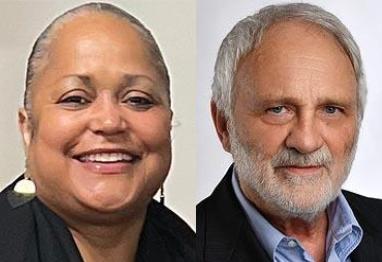
After the vote, council chair Melissa Hart said in a statement: “We take accreditation and our recognition as an accreditor very seriously. We will continue to work cooperatively with the Department as the recognition process continues.”
One of the motions rejected Wednesday recommended the council lose its status entirely, while two others proposed limiting the council’s powers until it provided documentation that it met department regulations requiring it be separate and independent from from the overall ABA.
The debate Wednesday focused on the council’s independence, including how much input the ABA House of Delegates has on the council’s decisions on standards, as well as the time the council took to completely revoke its standard regarding diversity and inclusion.
In his opening statement Wednesday, Daniel R. Thies, the council’s immediate past chair, took issue with the Department of Education’s 86-page final staff report, which found the council didn’t meet 26 of the committee’s criteria and recommended denying recognition.
 Daniel R. Thies, immediate past chair of the council to the ABA Section of Legal Education and Admissions to the Bar, testified at a U.S. Department of Education hearing Wednesday to consider the council’s status as the national accreditor of law schools. (Image courtesy of the ABA)
He noted how the committee refused to consider the council’s recent changes, how other findings in its report were unfounded, and how additional “findings were raised for the first time in the final report.”
His statement echoes a Sept. 11 letter to the Education Department from Council Managing Director Jenn Rosato Perea, which includes an “objection to the parallel process by [the] assistant secretary” who sought additional information “outside the normal recognition process” regarding council standards focused on diversity and inclusion.
Much of the fight centered around now-repealed Standard 206, which had required law schools to “demonstrate by concrete action a commitment to diversity and inclusion by providing full opportunities for the study of law and entry into the profession by members of underrepresented groups” and “having a faculty and staff that are diverse with respect to gender, race and ethnicity.” The standard had been suspended since February 2025 and was formally repealed earlier this month.
Law schools need accreditation by a nationally recognized body for their students to receive financial aid, and most states require bar candidates to have graduated from an ABA-accredited school. There are 198 ABA-accredited law schools.
First step
Wednesday’s hearing, one step in the council’s five-year review, comes one month after the Education Department’s recommendation not to renew the council’s powers.
The council is an independent arm of the ABA, which has been the target of criticism by President Donald Trump’s administration.
The legal education council itself has been singled out. In April 2025, President Donald Trump signed an executive order directing Education Secretary Linda McMahon to consider suspending or terminating the council as the government’s official law school accreditor, citing its “unlawful ‘diversity, equity and inclusion’ requirements.”
The scrutiny followed the U.S. Supreme Court’s 2023 decision striking down race-conscious admissions programs at Harvard University and the University of North Carolina, as some states also moved against DEI requirements.
As the council’s accreditation review proceeded, its standards committee noted the Education Department’s approach to other accreditors. A May 8 memo cited department letters stating that “any application of racial diversity standards would be viewed by the department as a violation of federal law.”
The council also faced pressure from states. The supreme courts of Alabama, Texas and Florida moved to break ties with it; others, including Ohio, currently are reevaluating ABA accreditation.
Under pressure
Throughout the year, pressure from the Education Department has been unrelenting.
In August, the day before its releasing its 86-page report, the department proposed a rule that would make it easier to approve new accreditors, force accreditors to scrap DEI policies and replace those policies with ones that value “intellectual diversity.” Under the proposed rule, higher education accreditors would not be allowed to require affirmative action-type policies, which the department characterized as discriminatory.
“Repealing Standard 206 was necessary to preserve recognition by a growing number of state courts, as well as the department,” said Melissa Hart, the council’s chair, in a statement that day.
The council’s role does not end if it loses its accreditor status, Theis told the ABA Journal in July. “We’d continue to serve as the gold standard of law school accreditation,” he said, “as we anticipate that we will continue to be recognized by the state supreme courts.”
The council and the department each have 10 business days to respond to the committee’s decision. The council can then follow up with a comment on the department’s response in the following 10 days, and a senior department official will make a follow-up decision after that.
Updated Sept. 24 at 8:40 a.m. to include additional reporting.
Write a letter to the editor, share a story tip or update, or report an error.