

In fall 2004, Aloysius Oliver stood before a judge in a Chicago courtroom to learn whether he would live or die. He’d been convicted of fatally shooting a police officer, and the state wanted him put to death.
The courtroom was tense, packed with police officers and members of the slain officer’s family, as well as Oliver’s family. I was there for his sentencing, having followed the case while working on a book about public defenders.
Oliver initially confessed to shooting Officer Eric Lee, 37, in an alley behind Oliver’s home on the city’s South Side in 2001. Oliver later recanted, however, claiming he was beaten into confessing. Cook County Judge John J. Moran Jr. didn’t buy it.
“I'm sorry things had to happen the way they did,” Oliver, 29, said before being sentenced.
“These things didn't have to happen,” Moran said. “You made those choices, and you have to suffer the consequences.”

Moran sentenced Oliver to life in prison without the possibility of parole.
Oliver went to prison, and I figured the case was over, marking the end of a tragic story that left Lee’s widow to raise their 6-year-old daughter, and another mother whose son would never be free again.
More than two decades later, this past July, I heard from Marijane Placek, the public defender who had represented Oliver. She told me that Oliver took his case to the Illinois Torture Inquiry and Relief Commission to revive his claim that he was coerced into confessing.
I wondered, after all these years, whether Oliver stood a chance, or whether this was desperate attempt to join a long line of other prisoners claiming they were tortured by Chicago police.
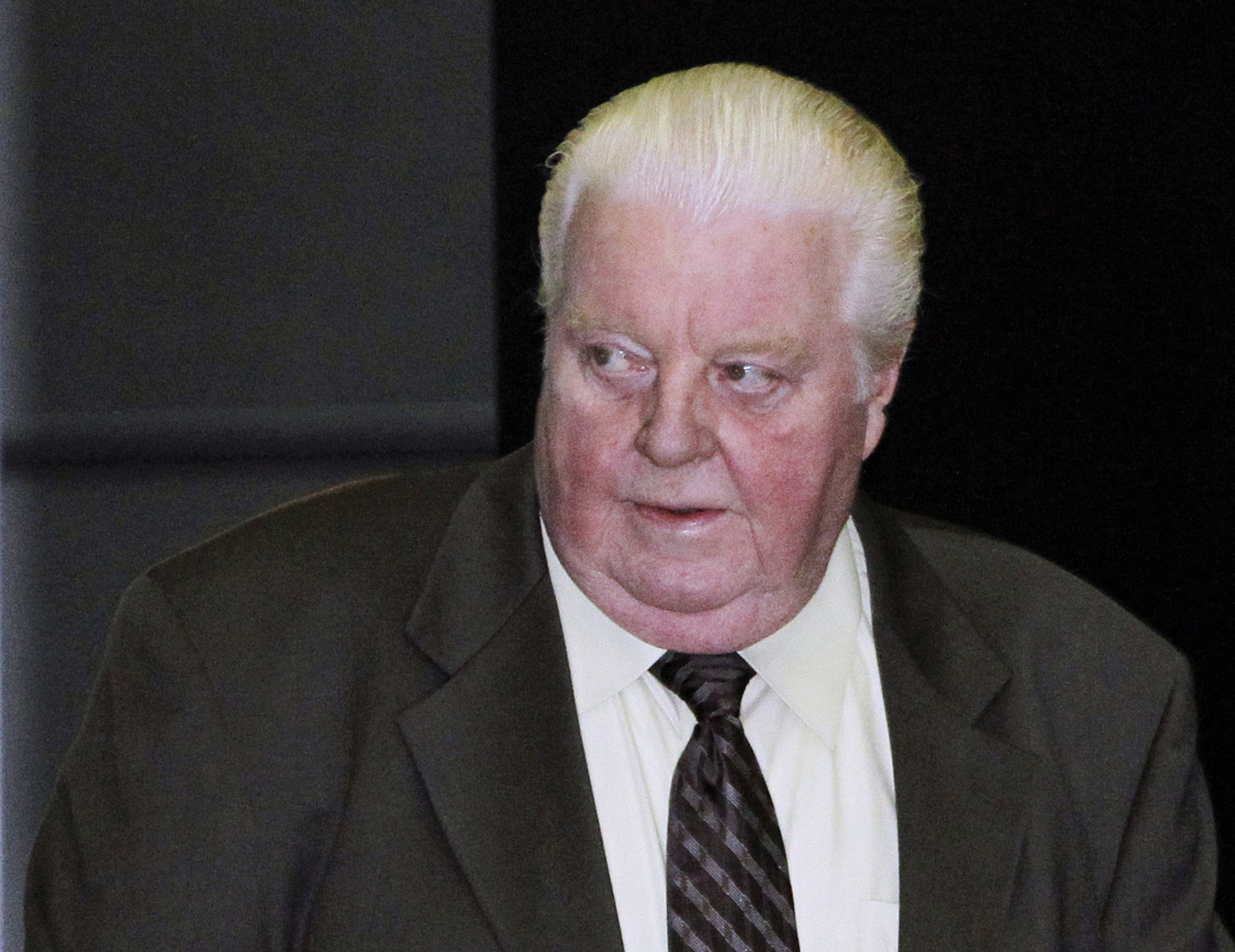
The Illinois Torture Inquiry and Relief Commission was created by the state legislature in 2009 in response to a growing number of confirmed reports dating back to the 1970s that Chicago police detectives routinely tortured suspects into confessing. Those reports centered on a detective named Jon Burge and others under his command known as “the midnight crew.”
Burge was suspended in 1991 and fired in 1993 after a police review board concluded he frequently used and encouraged torture. The U.S. attorney later charged Burge with perjury and obstruction of justice for denying he participated in or knew about torture. He was convicted by a jury in 2010 and sentenced to 4½ years in prison. He died in 2018 at age 70.
Since then, dozens of torture claims against Burge and his colleagues were sustained, leading to convicted murderers being released from prison and multimillion-dollar settlements with the City of Chicago. This gave hope to other inmates seeking freedom.
While the commission was created to address only cases related to Burge and those under his command, its jurisdiction expanded in 2016 to include cases in all of Cook County.
During Oliver’s trial, Placek tried to get his confession thrown out, claiming detectives beat him while he was in custody. His allegations remained dormant until Oliver filed a claim with the commission in 2011. His case lingered for more than a decade due to a growing backlog of cases and a small staff.
Placek was hopeful the commission would see the case differently. Tolerance for old-school police practices, she says, was no longer seen as acceptable.
“It’s a different time,” Placek says. “There’s been a social evolution since then. Judges in the past would say, 'Oh, well, that’s just how it is.’ Now there is a light being shined on it, and they are paying more attention.”
Over the years, I read stories about the torture commission—the only one of its kind in the country—and was curious to learn more. How and why did Oliver’s case make its way there, and what could the commission find that others had not?
I spoke to Jennifer Crespo, the commission’s general counsel. While she could not talk about Oliver’s case specifically, Crespo explained that the commission looks at all claims and turns down more than it accepts.
Since its inception, the commission has received 679 claims from defendants who said they were tortured (the filing period closed in August 2019). So far, commissioners have found credible evidence of torture to merit judicial review in 101 claims. While the commission does not keep track of how every case proceeds after it has ruled, it’s aware of three claimants whose charges were dropped, five who had their convictions vacated and seven who obtained certificates of innocence.
In May, for example, Arnold Day, who spent 26 years in prison after being wrongfully convicted in a 1991 murder, was awarded a $13 million settlement from the City of Chicago. In 2017, the torture commission determined there was credible evidence that Day was tortured by city police detectives.
There’s still a substantial backlog of cases, with about 350 claims remaining. When Crespo joined the commission in 2022, it had a staff of just five investigating attorneys and a budget of about $960,000. Today there are 17 staff members and a budget of about $2.3 million.
Crespo points out that the commission is not an advocate for either side.
“We’re not representing the torture claimants. We’re not representing the police. We’re not representing the state’s attorney,” she says. “We are a neutral investigatory body. So the only thing that we’re really passionate about is advocating for the truth.”
Crespo came to the job with a range of legal experience, having practiced immigration law and prosecuted consumer fraud cases for the Illinois attorney general. Most of the staff and commissioners, like Crespo, are lawyers, including former prosecutors, judges and criminal defense attorneys.
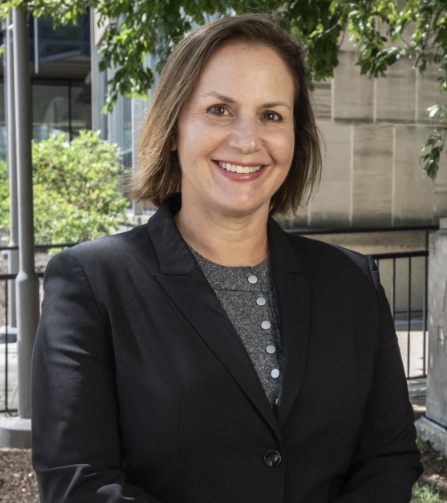
Commissioner Erica Zunkel is a University of Chicago law professor and ABA member. She worked as a federal public defender in San Diego before coming to Chicago about 15 years ago. She was appointed to the commission in 2022.
Zunkel says working on the commission has been eye-opening.
“One thing that has surprised me, despite doing criminal defense work for over two decades, is how intense it is to be a part of this commission,” she says. “We’re hearing the perspectives of people who are wanting to us see their cases, wanting for people to take a closer look at what they endured in the criminal system—then there's, of course, victim voices through family members and others.”
The commission, not surprisingly, has not been embraced by rank-and-file police officers. John Catanzara, president of the Fraternal Order of Police Lodge 7, puts it bluntly: “The commission is a total scam,” he told me. “It’s not even worth my time. Listen to convicted people blame a man who was never convicted of torturing any of them. The entire premise stinks.”
Catanzara sees a different kind of injustice. “Do a story on the aftermath. Actual killers released, and made rich by a corrupt system,” the head of Chicago's largest police union says. “Or the pathetic lawyers at corporation counsel who almost always advise settlements because they are incompetent or unwilling to actually fight these b------- suits.”
The Cook County State’s Attorney’s Office, which prosecuted Oliver, could not comment on the Oliver case because of the ongoing litigation.
“The Cook County State’s Attorney’s Office is committed to seeking justice on behalf of victims and their families, no matter how much time has passed,” Elyssa Cherney, director of communications, said in a statement to the ABA Journal. “Our mission is to uphold the law for everyone in the courtroom—including the defendant. “
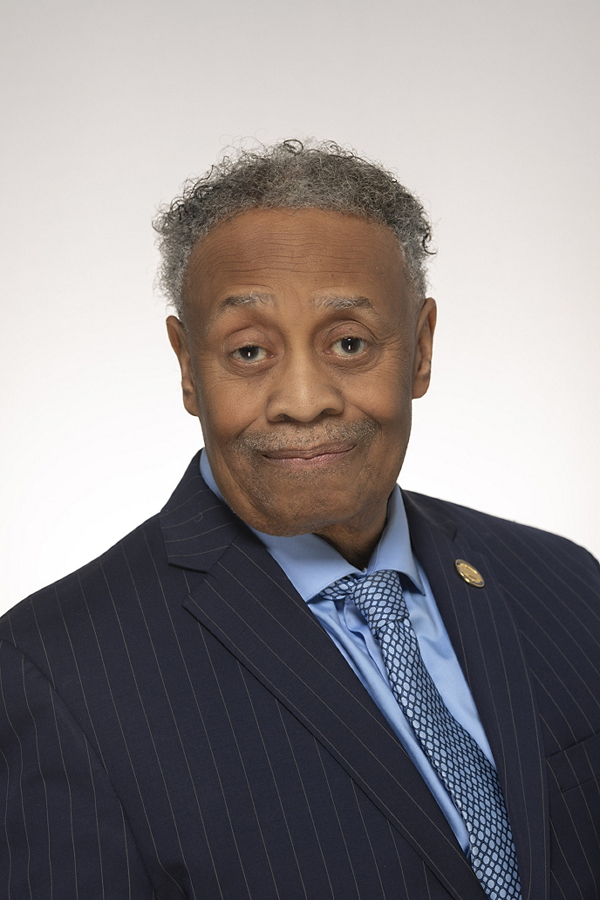
Oliver’s petition landed on the desk of Jerry Wynn, an attorney for the commission who investigates torture claims.
Wynn, who spent most of his career in public health, started attending Cooley Law School part-time at age 51 and graduated in 2015. After working for the City of Chicago for about year, he joined the commission.
“I was interested in public policy and social justice,” he says.
Wynn cracked open Oliver’s case file. It was clear that Oliver sustained injuries at some point. There were photos to prove it. The question was whether Oliver got those injuries before, during or after his arrest.
At trial, prosecutors told jurors that Lee, along with other officers in plain clothes who were in the area investigating drug crimes, heard a scuffle between Oliver and a homeless man in an alley behind Oliver’s residence and went to check it out. When the officers identified themselves, Oliver ran, quickly turned and began firing as he ran, shooting Lee in the head. After a brief chase, Oliver was tackled, arrested and later confessed.
During the trial, Placek argued that Oliver’s videotaped confession, in which he can be seen with three bandages on his face, should be suppressed because he was beaten into giving it. As evidence, she pointed out a report from a police captain at the scene that seemed to contradict other officers' accounts.
Capt. James M. Paoletti stated both in a deposition and at trial that when he took custody of Oliver at the scene of his arrest, Oliver did not appear to have any injuries that would require bandages on his face. Later, however, Oliver had visible injuries that were documented in his booking photo. Oliver said the lockup keeper would not accept him into the jail until he got medical treatment. He was taken to a local hospital for treatment and told hospital staff he was beaten.
Based on his investigation, Wynn concluded there was credible evidence that Oliver may have been tortured.
In March, the commission held a hearing to consider Oliver’s case. Lynn presented his findings and cited my book, Defending the Damned, which details Placek’s efforts to get Oliver’s confession thrown out and includes testimony from Paoletti.
The commission invited family members of victims to take part in the proceedings. Officer Lee’s widow, Shawn, gave a moving account of her life since her husband’s death.
“I believed our family could finally begin the healing process, and I could finally shield my daughter from the immense pain she has endured,” she said. “As you weigh your decision, I ask that you consider our decades of suffering. I have carried this burden for such a long time, and I continue to seek the justice my husband’s life and service deserve.”
Oliver’s aunt Evelyn George also spoke, suggesting the police covered up evidence.
“They know he’s not responsible,” she said. “We lost someone too.”
Officer Vincent Barner, who wrestled a gun from Oliver during the scuffle, also spoke.
“Nobody did anything to Oliver. He took a life and almost took my life,” Barner said. “I lost a very dear friend and a partner. … Now I have to sit here listening to ‘police did this and police did that.’”
Placek, who since retired from law practice, spoke on Oliver’s behalf. “The Oliver case has bothered me for a long time,” she said. “Something else happened.”
She contended that the officers who chased Oliver did not struggle with him enough to cause injuries at the scene.
“The officers were able to subdue him quite easily.”
James McKay, who prosecuted the case, scoffed at the claim that Oliver was beaten into confessing.
“One of the finest judges at 26th and California heard all the evidence in the motion to suppress,” he said. “The evidence was overwhelming that Aloysius Oliver’s statement—videotaped, five hours after he was Mirandized—was voluntarily and intelligently given.”
He said Oliver’s injuries occurred during the scuffle and arrest at the scene.
“There was no evidence of any coercion.”
The commission saw otherwise, and without discussion voted 6-0 (with one recusal) in favor of referring the case to Cook County Circuit Court to reconsider the torture allegations. Oliver has a pending motion for relief on Oct. 14.
“There’s a saying in the defense bar,” Placek later told me. “It’s never give up.”








