


The ceiling fans at the Iguana Azul turned so slowly they seemed to be remembering something. They stirred the air the way a spoon stirs lukewarm coffee. Below them, the mahogany bar stretched in a long lazy crescent, its surface scarred by years of sweating glasses and the occasional dropped cigarette, despite the signs. The stools were covered in cracked green leather. Most of them were empty. It was a Wednesday.
The bartender stood behind the bar with a towel draped over his left shoulder and a lime in his right hand, quartering it on the cutting board with the mechanical ease of someone who had done this 10,000 times, because he had. He’d been at the Iguana Azul for two years now, pouring drinks at the casino resort’s second-tier bar—not the high-roller lounge upstairs with the backlit shelves and the Japanese whisky, but the one near the side entrance, where tourists drifted in sunburnt and confused, and the locals came because they knew the pours were strong.
The resort sat on the western coast of Curaçao, wedged between a marina and a strip of white sand that the brochure made look twice as wide as it actually was. The casino floor hummed on the other side of a pair of tinted glass doors at the far end of the bar. You could hear the slot machines if the bar was quiet enough, which it usually was at this time of day. The Iguana Azul was the kind of place people ended up when they didn’t quite know where they wanted to be.
The bartender liked it that way.
He was 41. He’d been 38 when he’d closed out his old life – the old the brick row-house and everything in it, settled the last of the student loans, and flown one-way to the island with two duffel bags and three boxes of books shipped separately. The resignation letter had already been drafted for three months by then. It had been addressed to the managing partner at the mid-tier, but respectable, outfit that occupied a full floor of a glass tower, high enough that you couldn’t see the slumped-over homeless men lying in the overhang to the building across the street. He’d been a senior associate. Commercial litigation, defense side. He’d been on the cusp of making partner; everyone said so. He could still hear the way the managing partner had said it: You’re walking away from the table right when the cards are good.
He hadn’t corrected him. Hadn’t said that the cards were never good. That the table was rigged. That he’d known since his first semester of law school – a good one, one of the schools people mention by name at cocktail parties, the kind where debt was part of a debutante ball to a future suburban home in a good school district – that the whole thing was a kind of elaborate trick. The billing, the posturing, the 80-hour weeks dressed up as “dedication,” the incremental progression toward a partnership that would only mean more of the same, just in a different tax bracket. A confidence game where the mark and the grifter were the same person.
He’d just shaken the partner’s hand and walked out into a Tuesday afternoon in October, the trees going brilliant orange in the park down the street, and felt nothing at all. Not relief. Not fear. Just a vast, spreading quiet: like the moment after a car alarm finally stops.

The man came in around 4:30, when the light had turned the color of apricot jam and the bar was at its quietest—the dead hour, the time between the afternoon beach crowd and the evening gamblers. He was wearing a linen shirt, untucked, and khaki shorts, but he wore them like a costume he hadn’t quite committed to. His watch was too expensive. His shoes were uncreased loafers, not sandals. He had a leather messenger bag over one shoulder and a particular look in his face that the bartender recognized immediately.
The bartender knew him.
The man sat three stools from the end of the bar, nearest the window onto the sand. He put the messenger bag on the stool beside him and ran both hands through hair that was thinner than it used to be. Then he looked up at the chalkboard menu above the bar with the glazed expression of someone who wasn’t really reading it.
“What can I get you?”
“Scotch. Neat. Whatever you’ve got.”
“Macallan’s the best I can do for scotch. But there’s a local rum that’ll change your afternoon, if you’re feeling adventurous.”
“Scotch is fine,” the man said quickly, without deliberation.
The bartender poured two fingers into a rocks glass, one of the good ones, the heavy crystal that management didn’t know he’d requisitioned from the upstairs bar, and set it on a napkin. The man picked it up, drank half of it in one pull, set it down and exhaled through his nose.
“Long day?”
“Long year,” the man sighed.
His name was Todd Edelman. The bartender had sat next to him in Civil Procedure during their first year of law school. They’d been in the same study group for both semesters of 1L. They shared a ride to the bar exam from the hotel. Todd had gone to a big firm in New York afterward: one of the ones that had its name on the building. They’d kept in loose touch for a few years after graduation. Birthday texts. LinkedIn reactions.
Todd didn’t recognize him, and the bartender understood why. He’d lost 50 pounds. He’d grown a beard, which had come in more thick and more gray than he’d expected. He was tanned the deep permanent brown of someone who lived in the sun rather than visited it. And there was something else, something harder to quantify. His whole bearing had changed. The tightness was gone. The coiled-spring quality that every attorney develops, the readiness to argue, to object, to categorize. Now he moved slowly, like the tide pulling out from the lichened rocks.
But the bartender recognized Todd instantly. The same narrow face, though it was more drawn now. The same habit of pushing his glasses up with his index finger even when they hadn’t slipped. The same faint downturn at the corners of his mouth that he remembered from exam week. Except, now, it seemed permanent, as if his face had simply settled into a tight wince.
“You here on vacation?” Todd made a sound that was almost a laugh. “Supposedly,” he said, not inviting any more conversation.
Todd finished the scotch quickly and the bartender poured again.
“You here on vacation?”
Todd made a sound that was almost a laugh. “Supposedly,” he said, not inviting any more conversation.
He unzipped the messenger bag and pulled out a stack of papers: maybe 70, 80 pages, held together with a black binder clip. The bartender could see the formatting from where he stood. Double-spaced. Times New Roman. Block paragraphs with case citations in italics. The header read, in the small gray font of a draft watermark: MEMORANDUM — PRIVILEGED AND CONFIDENTIAL.
Todd spread the first few pages across the bar top, pushing his glass to the side. He pulled a red pen from the bag’s front pocket and clicked it repeatedly, and began reading, making marks in the margins. Small, precise annotations. Arrows, stars, underlines, the occasional word circled with a question mark and jotted commentary.
The bartender wiped down the bar around him, giving the papers a wide berth. He recognized what Todd was doing because he’d done it himself countless times. You printed the thing out because, on a screen, everything looked finished. But on paper, you could see where the argument limped, where the transitions were held together with loose tape, where the citations were one case short of persuasive. He’d spent whole Saturdays doing exactly this: sitting in his kitchen, red pen in hand, tearing apart his own work so the partner wouldn’t have to, even though he did regardless.
“Big case?” he said, not looking at the papers.
Todd didn’t look up. “They’re all big. That’s what we tell the clients, anyway.” He made a mark, flipped a page.
“Securities fraud. Bank client. $300 million in alleged damages. We’re on the defense side.”
“Heavy stuff.”
“It’s not the money that makes it heavy.” Todd took a sip without looking up. “It’s the volume. Fourteen million documents in the review database. I’ve got twelve associates coding documents for secondary review 16 hours a day and the client keeps emailing me to ask why we’re behind. We’re behind because there are 14 million documents. That’s why. But you can’t say that. You say, ‘We’re implementing a quantitatively revised workflow to optimize throughput.’ And then you go home at midnight and drink.”
He said this last part flatly, without self-pity.
“You do this thing a lot?” the bartender asked. “Work on vacation?”
Todd finally looked up. His eyes were a weak, brown color. He didn’t answer. “My wife’s at the pool. The kids are at the kids’ club or something. I told them I needed an hour. That was," he checked his watch, “2-1/2 hours ago.”
“Does she get upset?”
“She used to. Now she just plans around it. Which is worse, honestly.”
The bartender set down the towel. He leaned against the back counter where the bottles stood in amber and green rows, arms crossed, studying Todd with a detached gaze.
“How long you been at it?”
“Fifteen years. Same firm. I made partner eight years ago.” He said partner the way an oncologist might say diagnosis.
“They tell you it gets better. It doesn’t get better. You stop doing the grunt work and start managing the people who do the grunt work, and then you realize that managing people who are miserable is almost worse than being miserable yourself, because at least when you’re the one suffering you can tell yourself it’s temporary and for a reason.”
“And when you’re the one in charge?”
“You know it isn’t temporary. You know it’s the whole thing. And you’re a part of it—you are it. You’re the one sending the emails at 11:30 p.m. You’re the one saying ‘this is urgent’ when it isn’t.”
He went back to his memo.

A couple came in from the pool entrance, a man and woman in their 20s, pink from the sun and laughing, trailing the smell of coconut oil and chlorine. The bartender made them piña coladas in the blender, the mechanical roar of it filling the bar. He added the little paper umbrellas because the umbrellas cost nothing and made people happy, which was more than could be said for most things. They took their drinks to a table near a window and sat close pressed together, knees touching.
The bartender watched them for a moment. Then he looked at Todd, who hadn’t glanced up during the entire transaction, who was circled inside his memo like a man inside a concrete bunker.
“Another?” he intervened, nodding at the glass.
“Please.”
He poured. Outside, the sun was beginning its descent toward the waterline, the sky going from faded blue to tangerine in that quick Caribbean way. A pelican dropped behind the marina with a graceless splash. Music drifted from somewhere: a steel drum, faint and tinny.
“You ever think about doing something else?” the bartender asked.
Todd looked up. The question seemed to confuse him. “Like what?”
“Anything. Something different.”
“I’m a lawyer. I’ve been a lawyer my entire adult life. What else would I do?”
“That’s not what I asked.”
Todd stared at him. There was a flicker of something. Quickly it passed.
“My father was a lawyer,” Todd said. “His father was a lawyer. My brother-in-law’s a lawyer. My wife’s a lawyer, though she couldn’t wait to stop practicing as soon as we had the kids. The whole structure of my life is built on the assumption that I’m a lawyer. The mortgage. The tuition payments. The partnership draw. You can’t just ...” He trailed off, staring into the glass. “It would be like ... pulling a load-bearing wall out of a house. The whole thing would come down.”
“Maybe,” the bartender said. “Or maybe you find out the house is still standing and the wall was just in the way.”
Todd gave a thin smile, acknowledging a nice thought without believing it. “Sure thought a lot about this for a bartender.”
“Thinking’s part of the job.”
“I thought listening was part of the job.”
“They’re the same thing, if you do it right.”

The bar filled slowly as evening came on. A group of Dutch tourists claimed the corner table and ordered mojitos. A man in a cream jacket appeared at the far end of the bar, drinking Cynar. The couple ordered a second round and the woman laughed loudly at something the man whispered.
Todd worked through his memo like a surgeon. He was on page 40-something now, the red pen moving in quick decisive strokes. Occasionally he’d stop, stare at a paragraph—arguing with the text inside his head, negotiating with it. The bartender watched, remembering the way a bad sentence could feel like a splinter under your skin, the way you could spend an hour trying to fix a single argument and end up making it worse.
And he remembered, too, the particular loneliness of it. The way legal writing seals you inside in an abstract tomb, a suffocating closet in your own head. You’re not telling a story or expressing an idea; you’re constructing a machine out of words, each sentence load-tested, each citation a tightened bolt. And the machine’s only purpose is to beat than the other side’s machine, and winning in the legal sense has nothing to do with truth and everything to do with how tight each bolt is. You spend your life building machines that don’t do anything except win arguments, and the arguments don’t settle anything, they just generate more arguments, and the whole system feeds on itself, like a snake choking on its own tail, billable hour by billable hour, until one day you look up and realize you’ve spent 15 years doing nothing.
The bartender cut a lime. He focused on the blade going through the green skin, the clean bright smell of the juice. This was why he liked it here. Everything was immediate. A drink was a drink. A lime was a lime. Nothing was a memorandum of law in support of a motion for summary judgment.
“You been doing this long?” Todd asked, not looking up.
“Couple years.”
“You like it?”
“I do.”
“That must be nice. Liking what you do.” He said it without irony.
“It wasn’t always this,” the bartender said. “I did other things before.”
“Oh yeah? Like what?”
The bartender paused. The question sat in the air between them like a card laid face-down on a table. He could turn it over. He could say: I sat where you’re sitting. I held the same pen. I drank the same scotch. He could say: We took Civ Pro together, Todd. We sat next to each other. We once argued for an hour about Erie in the back booth of Tony’s, and when the bartender kicked us at close you yelled, ‘That dunce really doesn’t understand the constitutional implications of vertical choice of law!’ and I laughed so hard I doubled over.
He didn’t.
“Office work,” the bartender said. “Pushing paper.”
“And you left it?”
“It left me, more like. I just agreed with the decision.”
Todd looked at him then, really looked at him, and the bartender felt the moment hover. It was close. Something in his voice, maybe, or the way he’d said pushing paper with the particular tenor of someone who knows exactly how much paper weighs. A shadow passing over the water. Todd went back to his memo.
“You asked your associate to work while he’s on vacation?” “I didn’t ask him to go on vacation. I asked him to work. He chose to be on vacation.” Todd paused. “Is that bad? That sounds bad when I say it out loud.”
The sun was gone now. The sky over the marina had turned the color of muted purple, golden yellow at the edges, and the first stars were appearing over the water. The resort’s exterior lights turned on, casting the terrace in warm amber. Inside, the bar’s mood shifted: candles lit, music lowered, the clink of glasses taking on the softer timbre of evening, as the bar’s crowd ebbed and flowed with the repeating darkening waves.
Todd’s phone buzzed on the bar. He glanced at it, typed something with his thumb, and set it back down.
“Wife?” the bartender said.
“Ha. Associate. First-year. We’re doing this new “mentorship” schtick for new hires. Which just means I do more work. He can’t find a case I cited in section five of the revision,” Todd rubbed his eyes. “I told him which Westlaw folder it’s in. He says the folder’s empty. The folder is not empty. There’s 37 cases in that folder. But he’s 26 and he’s billing from a hotel room with his fiancé because I asked him to, so I can’t really yell at him.”
“You asked your associate to work while he’s on vacation?”
“I didn’t ask him to go on vacation. I asked him to work. He chose to be on vacation.” Todd paused. “Is that bad? That sounds bad when I say it out loud.”
He shrugged. “I’m just the bartender.”
“No, you’re right. It’s bad.” He looked at the memo, then at his phone, then at his glass. “The thing is, the brief is due the Monday we get back. The court set the deadline. And opposing counsel won’t stipulate to an extension because they’re animals. So either the work gets done on vacation or it doesn’t get done. And if it doesn’t get done, we lose the motion. And if we lose the motion, the case goes to trial. And if the case goes to trial, the client’s exposure is $300 million. So ...”
“So the vacation isn’t a vacation.”
“A vacation is never a vacation. A vacation is a different location in which to work. My wife knows that. My kids are starting to know that. I told my daughter I’d take her snorkeling today. I didn’t take her snorkeling.”
“How old is she?”
“Seven.”
The bartender said nothing.
Todd drank. His annotations were getting larger, less neat.
“You want to know the worst part?” Todd said unprompted. “The worst part isn’t the hours. It’s that the work doesn’t mean anything. Really. Seriously, we’re arguing about whether a particular disclosure in a prospectus was materially misleading under the statute. You know what the answer is? It depends. It always depends. On who can pay more for more argument. On the jury pool. On what expert is more credible. On whether the partner on the other side plays golf with the judge’s brother. None of it is about truth. It’s about who tells the better story. And we’re not even telling stories, we’re arguing about what stories the other side is allowed to tell. It’s stories about stories. It’s turtles all the way down.”
The bartender smiled. Not because it was funny, but because he’d had the same thought, in almost the same words, sitting at his desk five years ago as another Friday late afternoon bled into late evening. Turtles all the way down. He’d written it on a Post-It note and stuck it to his monitor, and the managing partner one day had asked what it meant, and the bartender had said it was a reminder, and the partner had said of what, and he had said exactly.

By 9 o’clock the bar was nearly full. The Dutch tourists were on their fourth round of mojitos and had started boisterously singing in Flemish or something. The cream-jacketed man had finished his Cynar and moved on. Three women in black cocktail dresses had taken his spot and were drinking espresso martinis.
Todd was still there. He’d ordered a plate of plantain chips from the kitchen, which sat barely-eaten beside the memo. The pages were covered in red ink now, margin to margin on some of them. His phone had buzzed eleven more times. He’d answered each one immediately.
“I should go ...” he said, not for the first time.
“One more?”
“One more.”
The bartender poured, and it was generous. He watched Todd hold the glass up to the dim light.
“You know what I used to want to do?” Todd intoned slowly, his voice had taking on that particular, stumbling quality that people get when they really drink. “I wanted to teach. High school history. I like history. I like the way it works—the way one thing led to another, the way you can trace a line from some decision in 1648 to something happening right now. Cause and effect. It makes sense. Law never made sense. Not the law itself ... but, the practice of it. The way it just ...” he trailed off, staring into the empty air.
“Why didn’t you?”
“Teach?” Todd gave a hollow laugh. “My father said ... teachers don’t make money. He said the only thing worse than being poor is being poor with a graduate degree.”
“Is it?”
Todd slowly put the glass down after a long moment and stared, glassy-eyed, at the memo. The stack of pages. The red ink. The binder clip.
“I don’t even know why I’m telling you this,” he said.
“People tell bartenders things.”
“No, it’s ...” He stopped. Something was working behind his eyes, some stupored calculus. “Have… we met before? You seem ... I don’t know, it’s just ... you seem familiar.”
The door opened. The bartender could walk through it. He could say the name. He could watch the recognition spread across Todd’s face and then the confusion and then the inevitable question: What happened to you? And he would have to explain, and the explanation would sound like both triumph and tragedy, and Todd would nod uneasily and say something polite and then, excusing himself, go back to his hotel room and tell his wife about can you believe it’s that guy from law school who’s bartending in the Caribbean, and it would become an anecdote, a Christmas party story told to the disbelief of the laughing partners and their wives.
“I just have one of those faces,” the bartender said.
Todd stared at him a moment longer. Then shrugged. “Yeah ... maybe that’s it.”
“Teach?” Todd gave a hollow laugh. “My father said ... teachers don’t make money. He said the only thing worse than being poor is being poor with a graduate degree.”
It happened at 9:47.
Todd had squared up the memo into a neat stack, tapping the edges against the bar. He set it down beside his glass and, beginning to stand up, reached for the messenger bag to pull out a manila folder to file the pages away, carry them back to his hotel room where he’d read them again while his wife slept and his 7-year-old daughter dreamed about a snorkeling trip she hadn’t gotten.
The bartender was reaching for Todd’s half-empty glass. He’d done this 100, 1,000 times: the smooth extension of the arm, the practiced close of the fingers around the tumbler, the easy lift.
But his fingers clipped the glass.
And liquid went across the paper like a wave across a beach. The pages darkened, the white cotton stock turning the color of wet sand, the red ink bleeding outward in feathering blooms like tails of palms, the typed words swimming and dissolving under reefs. The whisky pooled in the center of the stack and wicked outward through the pages, broken capillaries destroying in seconds what had taken hours to proof and days to think through and weeks of some, multiple, associates’ lives to read, and re-read, and draft, and re-draft until their eyes ached in the blue light of a computer screen.
“Jesus ...” Todd grabbed for the pages, trying to pull them apart, but the pour had been generous—the bartender always poured generous—the ink ran, the paper buckled, carefully constructed argument was a brown smear.
“Man ... I am so ...” the bartender said. He had a bar towel in his hand already—when had he picked it up? He was pressing it against the pages, pushing it deeper into the paper.
Todd stood, holding dripping pages at arm’s length, spattering onto his leather shoes. His face went through several stages in rapid succession: shock, fury, despair, and then ... something else.
And Todd stood there, the red ink dripping off the pages in thin pink rivulets, like diluted blood. He looked at the pages. He looked at the bartender. He looked at the pages again.
“I’ll comp your tab,” the bartender offered. “And I can get you some napkins for the shoes …”
“It’s fine.”
“Hey, I’m really sorry. If there’s anything I can ...”
“It’s fine.”
Todd said it again, quieter this time. He was looking at the memo. He held it a moment longer. Then he set the pages down on the bar, gently.
He stood there. The fading bar sounds continued around them—the Dutch tourists, the laughter, the faint steel drum—but between the two men there was a silence, like the eye of something.
Todd picked up the messenger bag. Leaving the memo on the bar, he turned, walked toward the exit, then stopped and looked back.
For a moment he just stood there, backlit by the terrace lights, his face half in shadow. The bartender waited.
“Thanks for the drinks,” Todd said. But he didn’t move. He was looking at the bartender with an expression that he couldn’t read. It lasted three seconds, or five, or ten.
Then Todd said, very quietly: “Good night.”
He walked out into the Caribbean night, where the stars were absurdly bright and the air smelled like salt and the ocean was doing what the ocean does, which is not care, which is just move, which is enough.
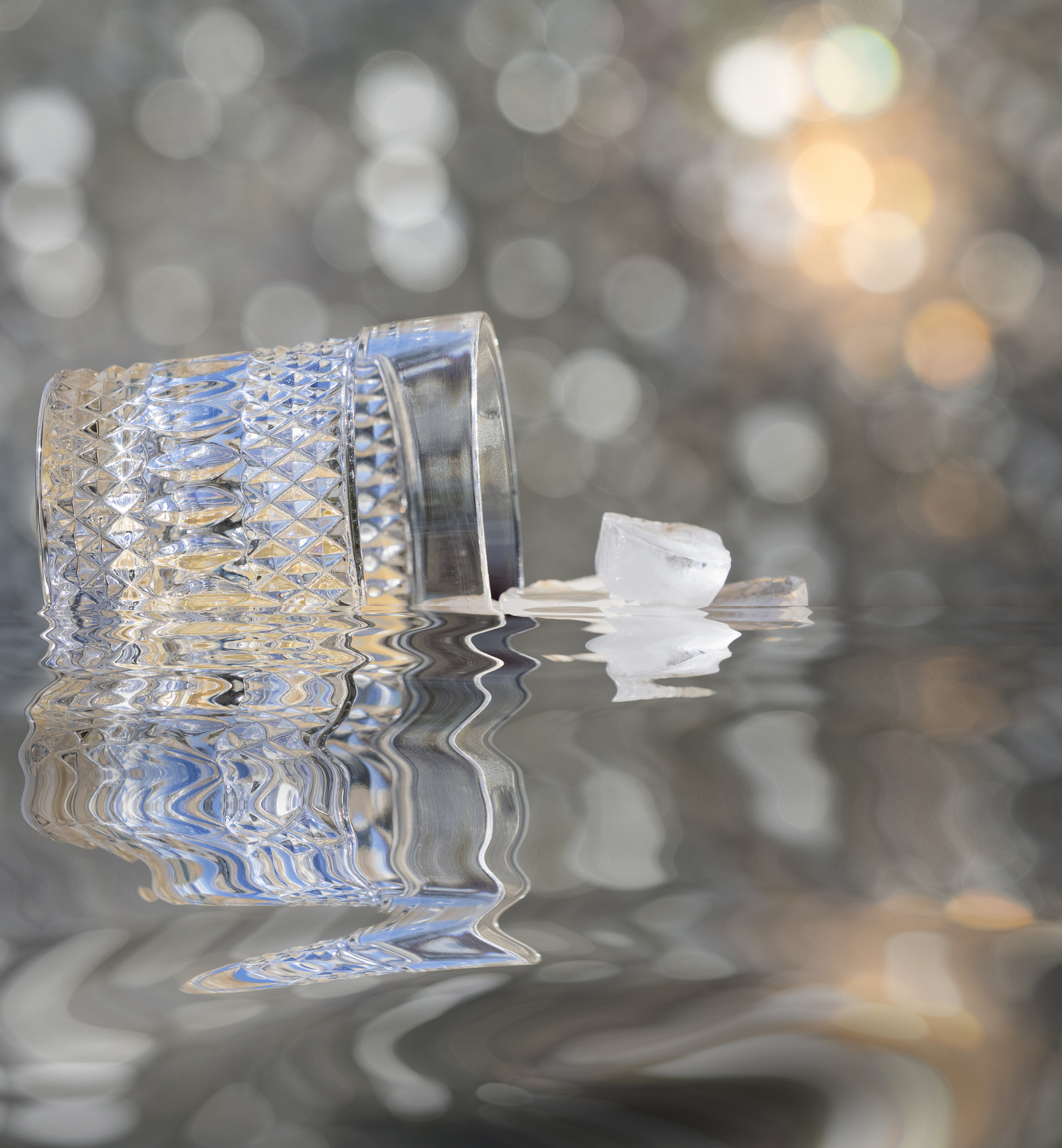
The bartender stood behind the bar. In the dim reflected light, the heavy crystal, the ruined ink, the dissolved arguments, the smeared case law, the red annotations bled together into abstract shapes, the pages looking like a map of somewhere that didn’t exist any more.
He picked them up. He held the paper over the trash can. A single heavy drop fell from the bottom edge and hit the liner with a sound like a period at the end of a very long sentence.
He let them go.
Then, he began to wipe down the bar. The crowd had started to leave the Iguana Azul by now, filtering into the glass-frosted casino doors, dissolving out into the night air.
Above him, the ceiling fans turned in their slow, indifferent circles, stirring the still-warm air without cooling it, casting candle-lit shadows that moved across the now-empty stools and the scarred mahogany, and the shadows were the same as they had always been, which is to say they were the shadows of something that was turning and turning without any memory of why it had started, without any expectation that it would stop.

Daniel J. Joyce, a graduate of the University of Pittsburgh School of Law, won the 2026 ABA Journal/Ross Writing Contest for Legal Short Fiction with The Pour. Read an interview with Joyce about his story here.
The ABA Journal/Ross Writing Contest for Legal Short Fiction awards a $5,000 prize to the winning writer of a story that illuminates the role of the law or lawyers in modern society. The winner is judged by a panel selected by the Journal’s editor and publisher and confirmed by the Journal’s Board of Editors. Entries cannot be longer than 5,000 words. The deadline for the 2027 contest is June 1. Read contest rules here.








