Image from Shutterstock.
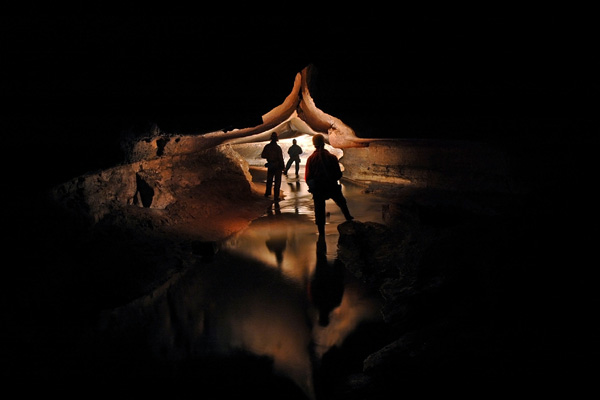
In May 1993, William Coughlin and his friends James Jakala and Kevin Feeley visited Cave City, Kentucky. Coughlin and Jakala decided to take the “Historic Tour” at Buzzards Roost Cave, which was intended for the inexperienced spelunker. When that went well, they joined a group for the guided “Wild Cave Tour,” which was for “the more daring visitor,” according to the brochure. Each signed a release.
After the group was taken deep into the caves, the guide David Hardin told them that they were running behind schedule, according to court documents. He then left them at the bottom of a ladder, telling them that he was making a quick phone call. The U.S. District Court for the Western District of Kentucky tells what happened next:
“When Hardin did not return after thirty to forty-five minutes had elapsed, the group attempted to exit the cave. Coughlin unsuccessfully tried twice to climb the second ladder. Jakala then asked two persons in the group to exit the cave in order to find Hardin. After waiting a while for Hardin to return, Coughlin attempted to climb the ladder again, but he slipped and fell. He hit his head on the rock protrusion, fell several feet and landed on his head, which began to bleed profusely. At Jakala’s request, several members of the group exited to summon Hardin, who returned without a medical kit and without having requested the assistance of medical or rescue personnel. Hardin strove to help Coughlin leave the cave, but Coughlin became wedged in a rock formation as he was attempting to crawl to safety. Having been trapped in the passageway for seven hours, Coughlin died of his injuries the next day.”
The Denver-based 10th U.S. Circuit Court of Appeals found that Stephen Butts had known too much about the dangers of the activity he was involved in for his estate to prevail, in part because of the detailed waivers he signed. But in Coughlin v. T.M.H. International Attractions, the court decided that as an inexperienced caver, the release “read more as an enticement than as a warning of specific risks” for Coughlin. Summary judgment for the defendants was denied.