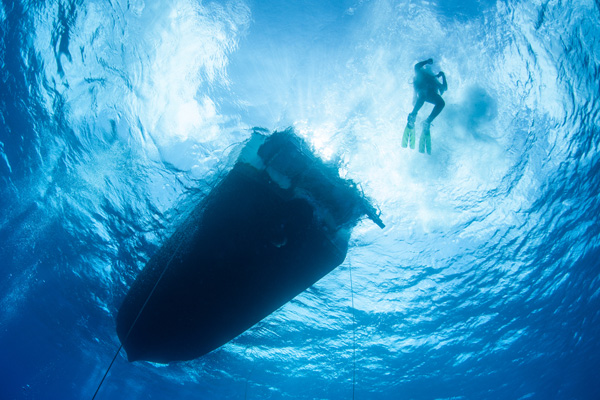
Image from Shutterstock.
Louis Tancredi was not an experienced scuba diver. But when the 35-year-old went on vacation to Hawaii in June 1988, he decided to join a dive off the coast of Kailua-Kona with Dive Makai Charters.
On the “Deep Reef” dive, the divers were expected to descend to 145 feet to view the fish and black coral. It was only intended for very experienced divers; the Professional Association of Diving Instructors and the National Association of Underwater Instructors have established 130 feet as the absolute maximum depth to which recreational divers should descend. However, Dive Makai Charters failed to ask Tancredi about his experience level.
Tancredi started struggling at 120 feet, and despite the efforts of the other divers, the dive master and the captain of the vessel, he began bleeding from the mouth and nose, sank to the bottom and drowned. It was later determined that his air supply had been inadequate, possibly because of the stress of the dive and his inexperience.
In Tancredi v. Dive Makai Charters, the U.S. District Court for the District of Hawaii was asked to determine if maritime law applied to Tancredi’s parents’ suit against Dive Makai. The court ruled that although the group had used a boat to arrive at the reef, there was no justification for applying maritime law. Tancredi’s parents eventually received a judgement of $477,869 for their son’s death.