

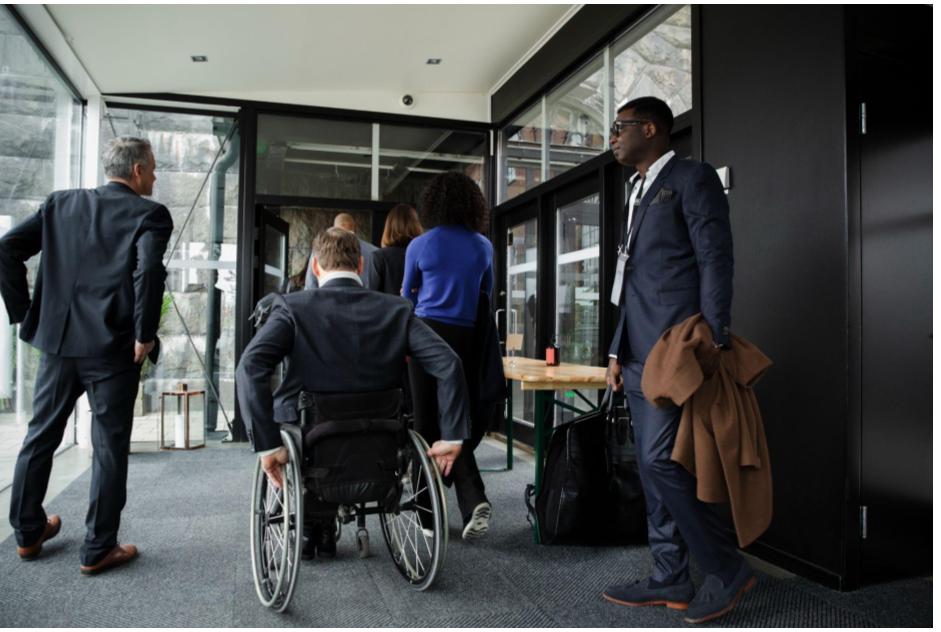
Marissa Ditkowsky is an attorney with a form of muscular dystrophy that can weaken muscles and impair body functions. She’s been to legal conferences where there’s no easy way to move through the hallways or between floors in a scooter, or the accessible bathrooms are far from the main rooms.
“It is frustrating when it’s difficult to get around,” she says.
Ditkowsky is executive director of the Crip the Law, formerly known as the National Disabled Legal Professionals Association. Crip the Law is a nonprofit organization that advocates for disabled legal professionals and provides training and resources to help ensure the legal profession is more inclusive and accessible.
Conference organizers should be asking questions like, “Is there an easy way to navigate the building, or do you have to use five different elevators and a circuitous route?” Ditkowsky says.
Ariel Simms is president and CEO of Disability Belongs, a nonprofit organization dedicated to creating systemic change in how society views and values people with disabilities.
When organizers are planning a legal conference or event, they should ensure that accessibility is “intentionally included throughout the planning process,” Simms says.
Accessibility “is much easier to build into an event than to add after the major decisions have already been made,” she adds.
The National Association for Law Placement Report on Diversity says the number of lawyers with disabilities has been increasing over the past six years. The latest report suggests that lawyers with disabilities comprise 3.06% of all lawyers, while associates are almost twice as likely as partners to report having a disability.
“Progress is real, but representation of lawyers with disabilities in the profession remains far from proportional,” says Amy Allbright, staff director for the American Bar Association Commission on Disability Rights.
Simms says conference organizers need to consider whether a building has an accessible entrance that is clearly marked and whether once inside a building participants can all have access to meeting rooms, networking areas, restrooms and food.
Organizers, Simms says, should also be thinking beyond the conference room to accessibility in transportation, food service, bathrooms, communications and hotel rooms. In addition, they should consider the wide variety of disabilities and not simply focus on one or two.
“Disability is not a monolith,” Simms says.
J. Christopher Davis, a shareholder in the Tulsa, Oklahoma, office of Crowe Dunlevy, is a litigator with more than 30 years of courtroom experience. He’s also paraplegic, paralyzed from the waist down due to complications from a spinal cord tumor.
Davis says conferences sometimes have off-site activities, tours and special outings that are challenging for him to attend.
“I've lost count how many times we signed up for a fun event only to learn once we arrive there was no transportation for me,” says Davis, a member of the ABA Commission on Disability Rights. “Addressing that up front is no small thing, but it helps and makes a difference.”
One law conference Davis attends has a “dedicated liaison from the organization” as well as a counterpart on the premises as contacts for “anything and everything.”
“Having such an arrangement in place in advance is easy to do and makes the conference experience worry-free for me,” he adds.
Simms suggests organizers work with a disability-led organization that has “expertise and lived experiences” to help choose the venue, develop the program, design registration and set the budget.
“There is no single checklist that will tell you everything every disabled person may need, and you do not need to become an expert in every disability," Simms says. “Instead, bring the right expertise into the room.”
On its website, the ABA Commission on Disability Rights has guidance on how to make meetings and conferences accessible for people with disabilities.
The ways in which conferences can fail to be inclusive, disability advocates say, might be surprising for those individuals who don’t have the same life experiences.
Ditkowsky, who describes herself as hard of hearing, says she’s attended conference panels where it can be difficult for her to make out what the panelists are saying.
“Sometimes people aren’t using their mikes and think they don’t need to, but I assure you, they do,” she says.
Besides ensuring panelists use their microphones, Ditkowsky says, conferences can and should also provide both live captioning and American Sign Language interpretation.
Nicola Cannon works in the Winston-Salem, North Carolina, office of Womble Bond Dickinson as a real estate operations and transactions manager. She also founded the U.S. arm of the law firm's Disability & Neurodiversity Network and emphasizes the challenges that conferences can pose for those with hidden disabilities.
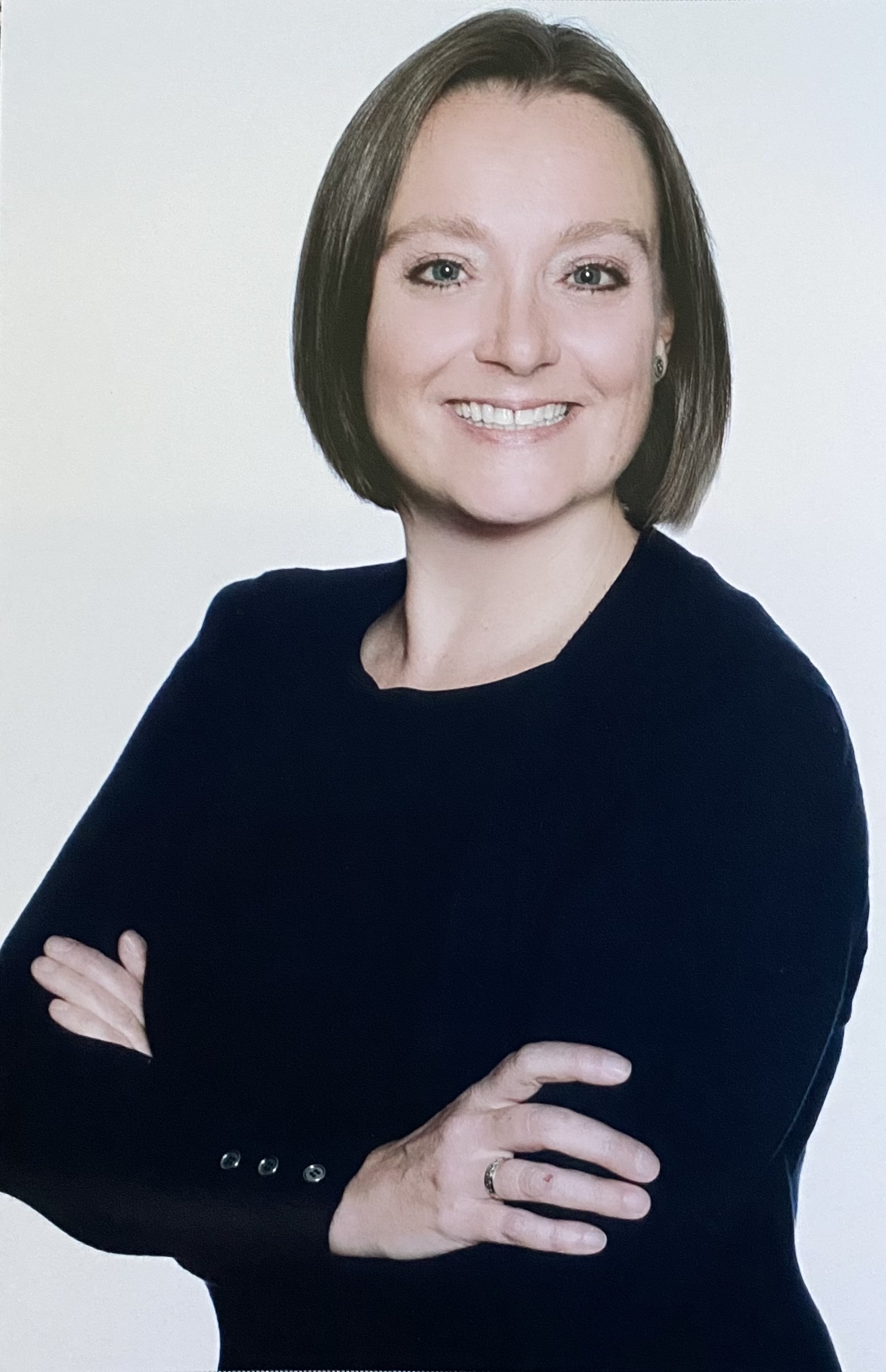
“What a lot of people miss is that the general conference environment is very busy and stimulating, as it should be, but that can make it hard for people with neurodiversity,” Cannon says. “It can be hard to step away” and reset.
She adds that conferences should have break rooms close by that are comfortable quiet places for people to “sit for a moment and decompress.”
Simms says that for virtual conferences, “it’s just as important to think through access at the start of planning to create an experience in which everyone can participate.”
Digital platforms often have accessibility features, such as chat and automated captioning, Simms says, but to work, the tools need to be enabled, and participants need to know how to access them.
While virtual access can “remove the need to travel,” Simms says, “it does not remove the need for rest.”
“Hours of continuous screen time can create a barrier to participation,” she says, adding that regular breaks should be built into the schedule.
In addition, Simms explains, if an event is hybrid, organizers should ensure that there are meaningful ways to engage with the program and other participants.
“A laptop at the front of a conference room does not by itself create an equivalent virtual experience,” she says.








