


In the wake of the Sept. 11, 2001, attacks, President George W. Bush and Congress quickly turned to boosting national security through executive orders and a speedy turnaround in passing laws intended to help fight terrorist threats and streamline intelligence-gathering.
The USA Patriot Act, passed in October 2001, allowed intelligence and law enforcement agencies, including the U.S. Justice Department, to share information that had previously been siloed. The DOJ and the FBI, the entities responsible for enforcing federal law and ensuring public safety, shifted their resources and priorities to national security and terrorism prevention.
In 2006, Kenneth Wainstein was the assistant attorney general in charge of the National Security Division. He’s now a partner at Mayer Brown, where he chairs the firm’s Global Investigations & White-Collar defense practice. He says federal prosecutors had to change their mindset so that, at times, “prosecution would take a back seat for the need to develop intelligence about a threat” so that the country “would be in the best position to derail that threat.”
“The immediate response to 9/11 was to overhaul the approach of the Justice Department so that we were using all our tools to prevent terrorist attacks, not just investigate or prosecute,” says Wainstein, who also served as homeland security advisor and FBI general counsel under George W. Bush. “That shift in approach was paramount.”

Twenty-five years after 9/11, some former federal prosecutors and members of Congress are concerned that in recent years, the Justice Department’s ability to focus on preventing terrorism has been compromised.
Greg Brower is a former assistant director and deputy general counsel at the FBI, and also served as the U.S. attorney for the District of Nevada.
He says that while counterterrorism remains a top priority at the FBI and DOJ, “for too many people in the public and Congress, 9/11 has become a distant memory.”
Brower adds that “there’s increasing concern” that the Justice Department’s ability to fight terrorism has been “potentially degraded” by funding cuts and increasing politicization, as well as the loss of key personnel with institutional knowledge and expertise.
Sen. Gary Peters, a Democrat from Michigan who is the ranking member of the Senate Committee on Homeland Security and Governmental Affairs, released a report in July saying President Donald Trump's administration was dismantling the counterterrorism infrastructure, firing personnel based on ideology and weaponizing resources against political opponents.
The report states that “the Trump administration’s misalignment of resources and ideologically driven decision-making on what counts as terrorism has created vulnerabilities in America’s national security preparedness and, in this moment of great threat, ultimately jeopardizes the safety of the American people.”
Justice Department spokesperson Kiersten Pels says that under President Trump’s leadership, “the Department of Justice and FBI are working relentlessly to identify, disrupt and prosecute terrorist threats to the United States.”
“Since President Trump returned to office, FBI data shows 4,260 arrests related to foreign terrorist organizations, including 1,039 individuals prevented from carrying out alleged terrorist attacks,” Pels says. “This marks a 38% increase in arrests compared with the Biden administration.”
This summer, budget negotiations and Senate confirmations of key Justice Department figures stalled over Justice Department funding, including a prolonged battle over an almost $1.8 billion “anti-weaponization fund” to compensate individuals who claim to have been prosecuted in a politically motivated way. Then-Acting Attorney General Todd Blanche in August agreed to drop the fund; after that, he was confirmed attorney general.
“We don’t want to let politics undermine our capabilities,” Brower says.
In the immediate aftermath of 9/11, the FBI created a team to investigate the finances of the 19 hijackers, including wire transfers, bank accounts and credit card receipts. Investigators traced the funding of the 9/11 attacks to high-ranking al-Qaida operatives in countries like Pakistan and the United Arab Emirates, according to The 9/11 Commission Report.
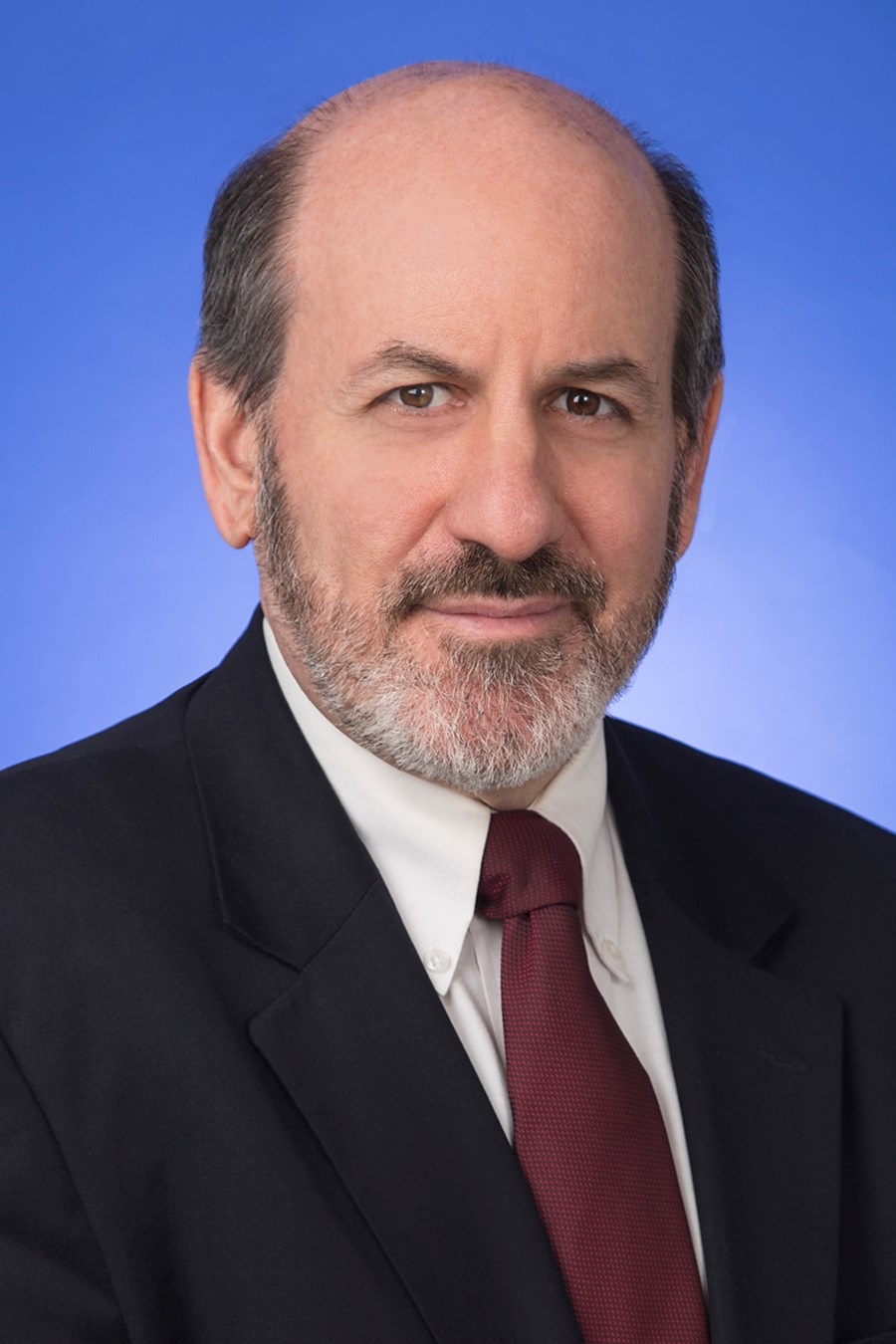
Jacob Frenkel is the chair of the Government Investigations & Securities Enforcement practice group at Dickinson Wright. He’s also a former federal prosecutor who specialized in public corruption and financial crimes.
He says after 9/11, the Justice Department expanded its ability to trace and pursue terrorism financing and money laundering as part of its effort to prevent further attacks both in the U.S. and abroad.
"How is the illicit money flowing? Who are the corrupt gatekeepers?” Frenkel asks. “Those were the questions being asked and pursued.”
Prosecutors also repeatedly charged individuals and organizations under federal laws criminalizing providing material support or resources to designated foreign terrorist organizations.
One highly publicized case against the Holy Land Foundation for Relief and Development accused the charity’s leaders of providing material support to Hamas. In 2009, its leaders received prison sentences ranging from 15 to 65 years. The case is considered landmark as well as controversial because there was no evidence presented that the charity directly gave money to Hamas.
David Kris, a former assistant attorney general for national security, said in 2009 that the sentences “should serve as a strong warning to anyone who knowingly provides financial support to terrorists under the guise of humanitarian relief."
The Trump administration continues to expand its use of terrorism-related charges, including material support, against transnational drug cartels and militant activist groups such as Antifa, which the White House has designated a domestic terrorist group.
In May, the White House released a memo on its counterterrorism strategy, focusing on “narcoterrorists and transnational gangs,” “legacy Islamist terrorists” and “violent left-wing extremists, including anarchists and anti-fascists.”

Mary McCord was the Justice Department’s acting assistant attorney general for national security from 2016-2017. She says there’s a “real danger” that the Justice Department’s tools for fighting terrorism are being misused by focusing on only one side of the political spectrum.
The government should be investigating individuals and groups on the “risk of violence” and not “based on viewpoint,” says McCord, executive director of the Institute for Constitutional Advocacy and Protection and a visiting professor at Georgetown Law.
In 2006, the Justice Department created the National Security Division to merge the department’s national security components into a single division overseen by the assistant attorney general for national security, designated as DOJ’s liaison to the intelligence community.
Wainstein, who was the first DOJ official to serve in that role, says the new division allowed for an increased focus on collaborating with the intelligence community and derailing terrorism efforts.
At the beginning of the second Trump administration, the White House pushed out some career attorneys specializing in national security.
In one publicized instance from February 2025, former Attorney General Pam Bondi reportedly visited the National Security Division on the seventh floor of the Justice Department’s headquarters, known as Main Justice. She noticed that portraits of Vice President Kamala Harris, President Joe Biden and Attorney General Merrick Garland had not yet been taken down.
She reportedly was so upset that she demanded the immediate demotion of Devin DeBacker, was who was acting chief of the National Security Division, according to a report by the New Yorker magazine.
DeBacker left in April 2026 and became a partner in the Washington, D.C., office of Covington & Burling. He did not respond to a request for comment.
Before 9/11, there were 34 active Joint Terrorism Task Forces operating in cities like New York, Chicago and Los Angeles. The task forces are multi-agency partnerships combining law enforcement and intelligence agencies, as well as prosecutors from local U.S. attorney’s offices.
After 9/11, the FBI mandated that all its field offices have the task forces. Eventually, there were at least 200 operating throughout the U.S. However, during Trump’s second term, agents and prosecutors have been rerouted to other Trump administration priorities such as immigration enforcement.
In addition, by the end of 2025, the Justice Department had lost about one quarter of its lawyers, according to Justice Connection, an organization of DOJ alums supporting the department’s current and former employees.
“It’s devastating to lose so many prosecutors with a high level of experience and institutional knowledge,” McCord says. “Some of these people were the ones who had built relationships overseas to help share information and collaborate on international threats. It’s worrying that we may not have access to the same information, and we could miss some important intelligence.”








