It’s notoriously challenging to break into entertainment law.
The entertainment industry is complex and dynamic, encompassing music, film, television, streaming platforms, video games and other digital media. Lawyers who work in these disciplines are tasked with handling different areas of law, including contracts, intellectual property, labor and employment, finance and litigation.
Aside from required legal skills, these lawyers stress the importance of networking and building connections not only in New York City and Los Angeles, but all around the country. Staying persistent is key, they say, as is being nimble and open to diverse and sometimes unexpected opportunities.
The ABA Journal talked with six entertainment lawyers about the unique paths they took to the practice and the advice they would share with anyone interested in pursuing similar careers.
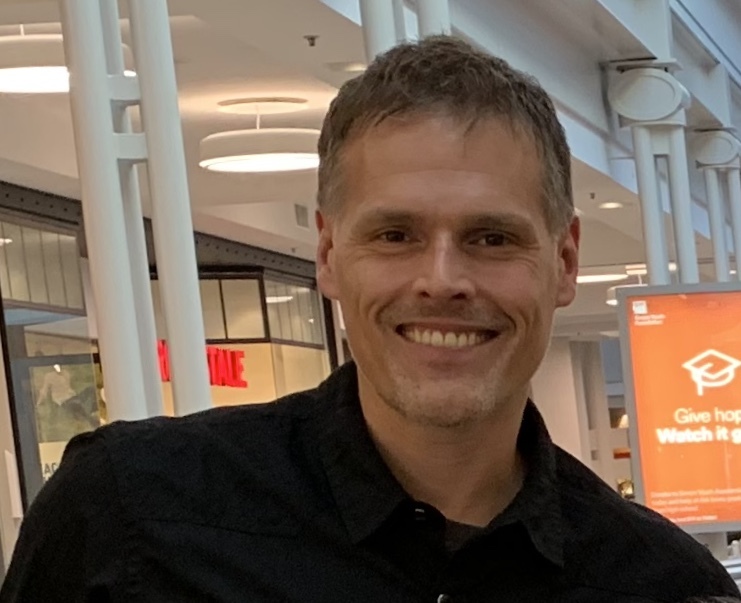
In the late ’80s and early ’90s, Jonathan Faber was playing lead guitar in a hard rock band in Ohio that hoped to make it big. The band, Surrender Dorothy, went so far as to meet with a record label before Nirvana and other grunge bands exploded onto the scene and transformed rock music.
Even though Faber missed his shot at the stage, he didn’t intend to give up his dream of experiencing the music industry. After graduating from Wittenberg University with his bachelor’s degree in English in 1994, he wanted to head to the West Coast. He enrolled first in the Denver Publishing Institute, a book publishing program by the University of Denver, where he met a guest lecturer who had a connection in the industry.
“I went to Los Angeles with my soon-to-be wife, and I had a name in my pocket—probably on a little Post-it note, because this is the mid-’90s,” Faber says. “That individual was a rising executive at Atlantic Records, and he said, ‘Well, I can get you an internship here, but then it’ll be up to you to run with it.’”
Faber soon realized “some of the most powerful people” at Atlantic Records had gone to law school, so he decided that was his next move. While at the Indiana University School of Law-Indianapolis (now IU Robert H. McKinney), he got another internship with CMG Worldwide, a company in Indianapolis that managed and licensed the rights of James Dean, Marilyn Monroe and other iconic personalities.
Faber considered returning to Los Angeles after graduating law school in 1999, but he stayed on at CMG Worldwide and eventually became its president in 2003. He took advantage of any other opportunity that expanded his credibility in the entertainment business, he says. He wrote articles for trade publications and taught CLEs. He served as an expert witness in litigation involving celebrities and brands and developed a right of publicity course at IU McKinney.
“Put yourself out there,” Faber says. “If you get an opportunity that isn’t exactly your dream job, but it’s related, you can start to acquire some experience. You never know where that will lead you.”
Faber founded rights representation company Luminary Group in Indianapolis in 2006, and he serves as its managing partner and general counsel. The company's clients include the families and estates of Babe Ruth, Vince Lombardi and Jesse Owens. Faber also says he has testified on behalf of celebrities like Zooey Deschanel, Nikki Sixx of Motley Crue, 50 Cent and Drake. He is also an attorney at McNeelyLaw, where he practices in intellectual property and licensing.

If you asked Sophia Sofferman in law school where her career was headed, she wouldn’t have said entertainment law.
Sofferman worked as a news producer in Albany, New York, before going to Pace University’s Elisabeth Haub School of Law with the intention of pursuing a civil rights career. After graduation in 2014, she was a legal fellow with the Westchester County Human Rights Commission when a colleague asked if she would help Eagles guitarist Joe Walsh with some production work.
Sofferman, who was on a two-week break from her fellowship, agreed.
“It was two weeks that changed the rest of my life,” says Sofferman, who continued working for Walsh after her fellowship ended. She served as a production coordinator and backstage manager during his solo tour in 2015 and while he toured with Bad Company in 2016 and Tom Petty and the Heartbreakers in 2017.
“I lived on a tour bus on and off for two years, and being on the road gave me an education that I could not have received from a casebook,” Sofferman says. “I saw this enormous operation behind what an audience experiences and learned about all the decisions that go into major productions and a legacy artist’s life.”
Sofferman brought these insights to her legal career, which has included serving as legal counsel at Rimas Entertainment, Bad Bunny’s longtime music label. After that, she was an associate in Pryor Cashman’s Media + Entertainment group in Miami; and in 2025, she co-founded NTSS Law. She represents music and entertainment companies, recording artists and songwriters in various transactions and litigation.
Sofferman is a regular guest lecturer at the University of Miami School of Law, where she received her LLM in entertainment, arts and sports law. Her advice for law students is not to discount opportunities that make their resumés look different.
“I really believe in knowing your cards and playing them,” says Sofferman, who serves on the ABA Forum on the Entertainment and Sports Industries’ Governing Committee. “For me, I had one opportunity to go on tour. The position I came in on was low on the totem pole, but I saw a vision. This was my one card, and I was going to play it.”

In her senior year at the University of Miami, Leah Stevenson interned at the marketing agency that puts on Jazz in the Gardens, a long-running music festival in Miami featuring jazz, R&B and hip-hop artists.
Stevenson intended to go to law school, but it wasn’t until then that she wanted to be an entertainment lawyer. At the University of Miami School of Law, she competed against her peers for a smaller number of internship opportunities than what might have been available had she gone to school in Los Angeles, New York or Nashville, she says. For her, the key was being persistent and creative.
She met often with Marcy Cox, who was then the law school’s assistant dean of career development. With Cox’s help, she created a “dream list” of companies and law firms that did cool things in entertainment and connected with alumni who worked in the industry. This led to legal internships with the Adrienne Arsht Center for the Performing Arts of Miami-Dade County, BBC Worldwide and Akerman, where she assisted with entertainment litigation.
“I was able to get opportunities throughout law school that were all over the entertainment industry, but I think anyone that read my resumé at that time would understand that I was just trying to get experience,” says Stevenson, who graduated in 2019.
She planned to move to Los Angeles but needed to stay with her family in Houston during the COVID-19 pandemic. After passing the California bar on her second try, she faced another “uphill battle” because she didn’t have a network in the area, she says.
Stevenson did a lot of cold outreach, which first landed her a local mentor and then a job as a contract entertainment litigation attorney in Beverly Hills. She later worked at a labor and employment firm until she could apply to MGL, an entertainment law firm in Los Angeles where she has been since 2021.
Now as senior counsel, Stevenson handles corporate and intellectual property matters for music, film, television and digital entertainment clients.
“Monitor opportunities, and don’t be afraid to reach out to people,” Stevenson says. “If you’re shy or introverted, it can seem like you’re bothering them. But you never know who will see your drive and determination and be willing to help you along the way.”

Steve Weizenecker was a junior at Emory University in the late 1980s when he started managing Question of Balance and other rock ‘n’ roll bands.
Weizenecker wasn’t a business major—he was studying political science—but he had good business sense because his dad was a doctor and his mom was a registered nurse who ran his office, he says. He assisted his bands with everything from negotiating higher rates and getting paid to going on tour, and he figured it out along the way.
But Weizenecker soon realized that being a manager wasn’t exactly what he expected and decided to do something else.
“I figured out from working with our lawyers that it seemed like the right gig for me,” Weizenecker says. “Because they sat in an office, and I was on the road, up until 3 or 4 in the morning.”
While at Cooley Law School, Weizenecker took an entertainment law class from an adjunct professor who had a talent-buying agency, which secures artists for event venues. To get more experience, he began working on contracts and other tasks for his professor.
Weizenecker started building his practice in Atlanta after graduating in 1995 but says it wasn’t easy. Early in his career, he got a job at a labor and employment firm, so he had to pursue entertainment law matters in his free time. But he worked to make connections and kept them, he says.
“It’s important to build networks, because a lot of the entertainment industry is not just what you know but who you know,” says Weizenecker, who later was of counsel at Greenberg Traurig and a partner at Lewis Brisbois Bisgaard & Smith. “A lot of folks I worked with in the beginning, they were at the same level, and as they moved up, they took me with them.”
Since 2013, Weizenecker has been a partner at Barnes & Thornburg, where he serves as counsel on tax incentives and financing for film, television and video game clients. Pinewood Studios, Viacom and Legendary Pictures have been among these clients.
He also chairs the ABA Forum on the Entertainment and Sports Industries. He recommends that young lawyers apply to its mentorship program and attend its events to make their own headway.
“It’s really important if someone wants to go into this space that they take those kinds of opportunities,” Weizenecker says.

In 2001, Rina Yano decided to go in-house after working as a corporate lawyer for several years.
By that time, Yano lived in Los Angeles and found a lot of available in-house opportunities at entertainment companies. She had always been interested in entertainment and jumped at the chance to work as the director of business and legal affairs at Sony Pictures Entertainment. She took a significant pay cut, but the trade-off was worth it, she says.
“It’s really hard to get into studios, and I felt like this was a great stepping stone,” says Yano, a graduate of Washington University in St. Louis School of Law. “Even if the salary was low, I could find other opportunities if I had Sony Pictures on my resumé.”
For the next 25 years, Yano had myriad experiences in the entertainment business. She was counsel for Warner Bros. and senior counsel for the Wonderful Company, where she negotiated agreements for TV and online commercials for Wonderful Pistachios and other consumer brands. She also served as senior vice president for business and legal affairs for Westbrook, an entertainment venture company co-owned by actors Will Smith and Jada Pinkett Smith.
Yano, who negotiated a lot of Will Smith’s brand deals, lost that job after his Oscars debacle in 2022, she says. She then worked for the Wonder Project, a faith-driven film and television studio, for a couple years before also being laid off from that job.
In July, Yano became the head of business and legal affairs for Tokyo Broadcasting System International, the Japanese company that owns the format license to American Ninja Warrior. As a senior-level entertainment lawyer, she doesn’t think she would’ve landed her new job so quickly if she only had experience in one aspect of the industry, she says.
“A lot of senior colleagues have reached out to me, and they are having a hard time finding a job, especially with the entertainment business changing,” Yano says. “You have to be very nimble. The old ways of being at a studio for 20 years doing the same thing isn’t going to cut it.”
Yano also emphasizes the importance of networking, particularly at entertainment conferences at law schools that are attended by the industry’s legal and business professionals. She recently wrote about this in In-House Entertainment Jobs, her LinkedIn newsletter in which she shares job listings and other insights.
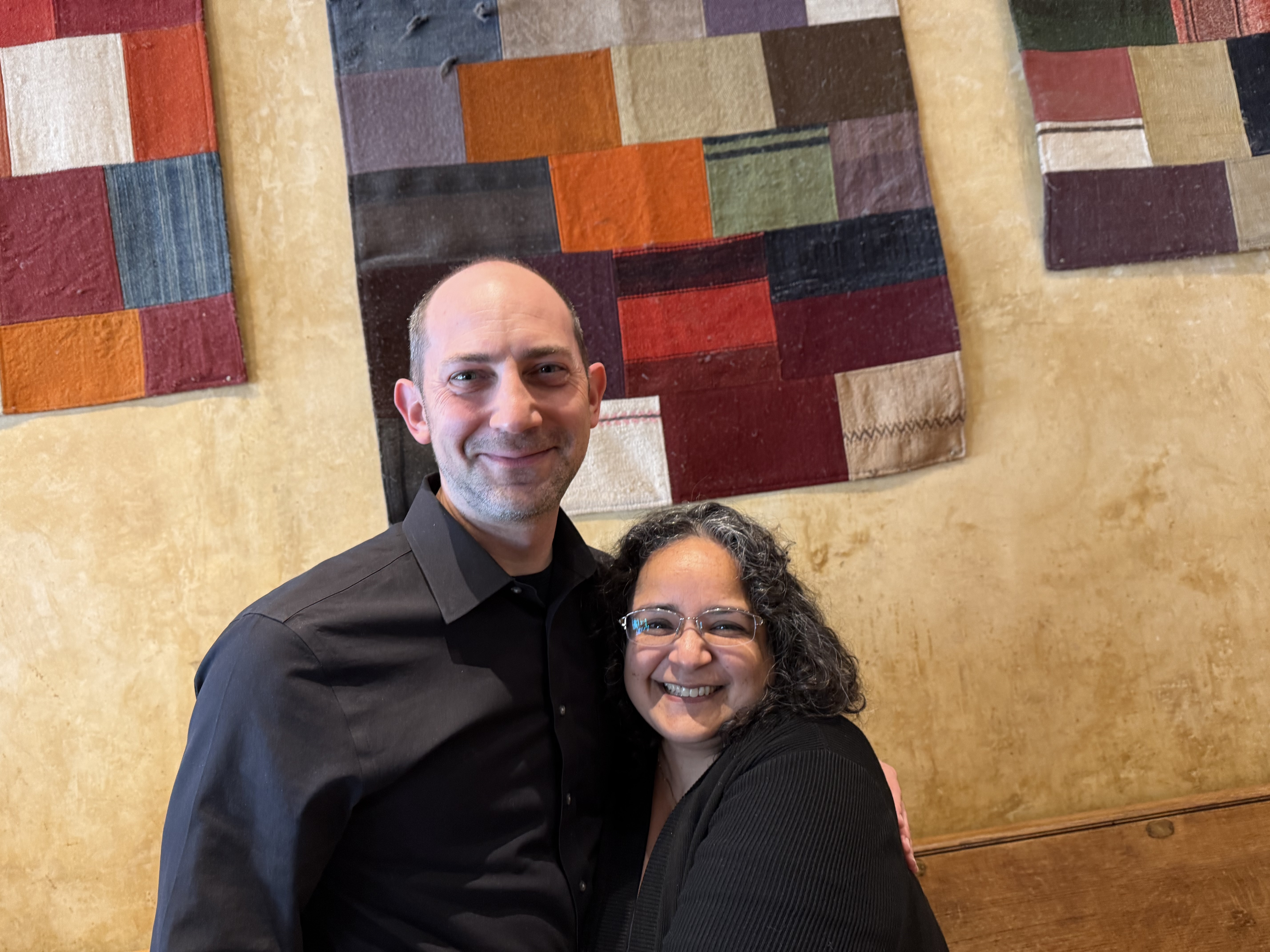
Ari Solotoff grew up in New York, where he played the oboe in orchestras and ensembles and attended the pre-college program at The Juilliard School.
While studying classical languages at the University of California at Berkeley, Solotoff performed with the San Francisco Symphony Youth Orchestra. He also began a public relations internship with the symphony and became fascinated by orchestra management, he says.
After graduating in 2002, Solotoff secured a yearlong fellowship with the League of American Orchestras, during which he worked with the Pittsburgh Symphony Orchestra and several others.
Then, at 23, Solotoff became the executive director of the Pensacola Symphony Orchestra in Florida, where he worked for two years before taking the helm of the Portland Symphony Orchestra in Maine. He later served as executive vice president of the Philadelphia Orchestra and came to realize that legal training could make him even more effective, he says.
“I learned along the way that there were many questions I had about the way that arts organizations, and specifically symphony orchestras, needed to operate, and all those questions seem to lead to legal questions,” Solotoff says.
Solotoff helped guide the Philadelphia Orchestra through the Chapter 11 bankruptcy process, in which he worked “with an incredible group of lawyers” who also inspired him, he says. After graduating from the University of Maine School of Law in 2015, Solotoff joined Bernstein Shur in Portland and benefited from his strong connections.
“I worked with clients locally, and eventually, nationally, that allowed me to build a unique practice in Maine that maybe nobody thought could be built,” says Solotoff, noting that among his first clients was the Crewe Foundation. It was co-founded by Bob Crewe, who co-wrote and produced several hits for Frankie Valli and the Four Seasons, to support music and the arts and LGBTQ+ rights in Maine.
Solotoff, who focuses on copyright cases, opened his own firm in Portland in 2020. Nearly five years later, he moved to Drummond Woodsum, where he now leads its entertainment, media and arts practice. His clients include Rock & Roll Hall of Fame producers, Pulitzer Prize-winning musicians and literary authors and Top 20 podcast producers.
He also chairs the ABA Forum on the Entertainment and Sports Industries’ Theater and Performing Arts Committee.
“I think people thought going back to law school was an unusual move,” Solotoff says. “So it took a lot of courage, but I felt like it was the right thing for me.”