The Kings of Tupelo: A Southern Crime Saga explores an assassination attempt on former President Barack Obama and how it all tied back to an alleged discovery by an Elvis Presley “tribute artist” of severed body parts in a hospital refrigerator.
Benchmark data can prove to be invaluable when making decisions about the future of your law firm. Understanding how others in the legal profession are using technology to streamline workflows and increase revenues can make all the difference.
Ari Kaplan recently spoke with Edward Chick, the chief revenue officer at NopalCyber, a managed security services provider that offers outsourced cybersecurity support while seeking to democratize enterprise-level security for law firms and organizations in other sectors.
For decades, ABA Day has brought together legal professionals from across the country to advocate for critical issues affecting the legal profession and access to justice. In 2025, we are expanding this tradition to ensure that every lawyer—whether in Washington, online, or at home—can play an active role in shaping the future of the law.
Peak performance in high-stress environments. It’s the goal for the basketball players taking the court during March Madness but just as much for players on a different kind of court. Lawyers can and should learn a lot from elite athletes.
Lawyers are big on adhering to statutes and caselaw precedents, contractual provisions and the clauses of internal governance documents, employee handbook policies, and terms from codes of conduct. But what happens when there is ambiguity?
For five decades, Daniel R. Ortega Jr. has remained steadfast in his advocacy for and empowerment of farm workers and the larger immigrant community in Arizona. In January, he was awarded the inaugural Impacto Award by the ABA Commission on Hispanic Legal Rights and Responsibilities.
In his book, The Speed of Trust: The One Thing That Changes Everything, Stephen M. R. Covey writes of a theoretical tax that is imposed in low trust environments—what he calls the “trust tax.”
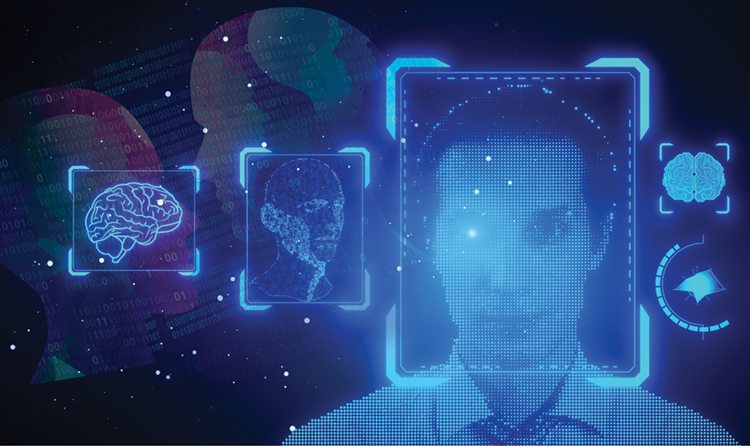
There’s nothing fake about it. The legal industry is facing a big problem with deepfakes. Courtrooms are not yet flooded with a tsunami of deepfake evidence, but with this artificial intelligence-generated technology playing with great success on social media and in fraud schemes, it’s only a matter of time before deepfakes regularly drop into the exhibit list.
Oral argument is the most visible part of appellate practice. And while lawyers differ on whether a good argument will change the outcome of your case, we can all agree that it’s the thing your clients and colleagues are most likely to see you doing. Not to mention the thrilling proposition that there may one day be a blurry artist’s rendering of you inside the Supreme Court.
While others were baking sourdough bread, stockpiling toilet paper and watching Tiger King during the COVID-19 pandemic, Florida lawyer Claudia Cobreiro spent her time on Instagram. “I felt like I couldn’t spend COVID waiting for it to pass,” Cobreiro says. “I wanted to grow my network.” It ended up transforming her practice and her life. For her, it was all about “the ’gram.”
Last fall, I attended a continuing legal education conference focused on sex crime defense and an outstanding speaker—who discussed the emerging field of forensic genetic genealogy—mentioned The Genetic Detective, a six-episode reality TV series that aired on ABC in 2020. The reference came from a credible source, so I figured it was worth viewing.
We all appreciate a showing of gratitude when we do good. But how often do we get it from our clients? Let me share some of my experiences that often made my day, while trying to manage the usual three-ring circus most lawyers experience. I’ll start with George. George owned…