

The murder trial of Lindsay Clancy, a former labor and delivery nurse who strangled her small children in 2023, began last week, bringing with it media attention and a renewed debate over the impact of postpartum psychosis.
Clancy, 35, faces three counts of first-degree murder for killing her three children—Cora, 5; Dawson, 3; and Callan, 8 months—in the basement of their Duxbury, Massachusetts, home.
Both sides agree on how the children died and who killed them. But Clancy’s lawyers are arguing she should not be held criminally responsible as she was suffering from overmedication, bipolar disorder and postpartum psychosis—a rare mental illness linked to sleep deprivation, stress and hormonal changes after childbirth.
Michelle Oberman is a professor at Santa Clara School of Law, where she studies the legal and ethical issues at the intersection of motherhood and criminal law. While awareness of postpartum depression and psychosis has increased in recent years, Oberman says the legal system still struggles with how to handle cases in which a mother kills her own children.
“Every time we encounter a case like this, it’s like it is the first time because it’s so horrifying to imagine,” Oberman says. “The iconic image of a mother and child is rent asunder.”
In addition, there’s a clash between the legal standards for conviction and criminal responsibility and how we understand mental health, she says.
In Massachusetts, prosecutors must prove that a defendant is criminally responsible for their actions. The trial is focused on whether Clancy suffered from a mental disease or defect and, as a result, lacked the capacity to appreciate the wrongfulness of her conduct or conform her conduct to the requirements of the law.
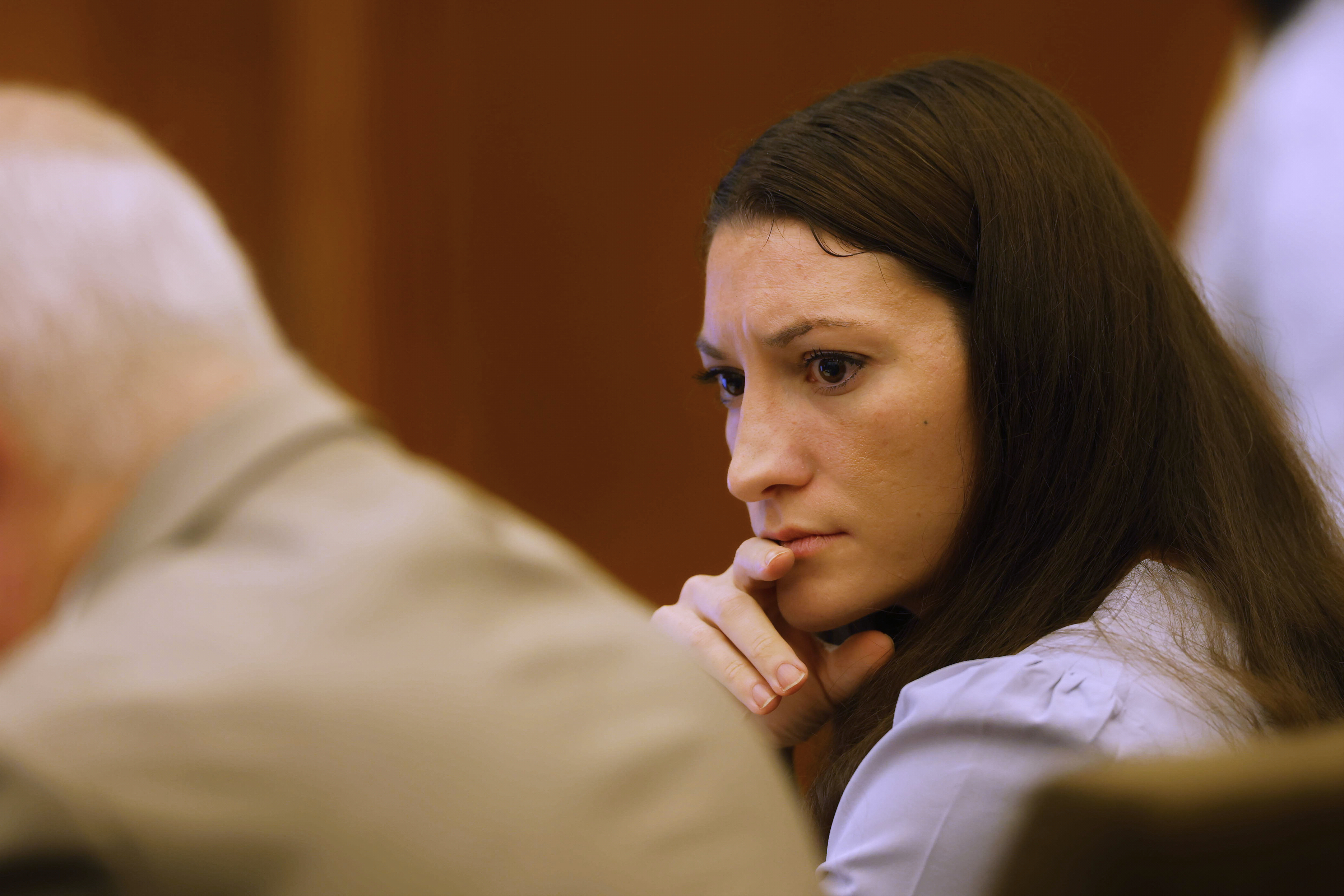
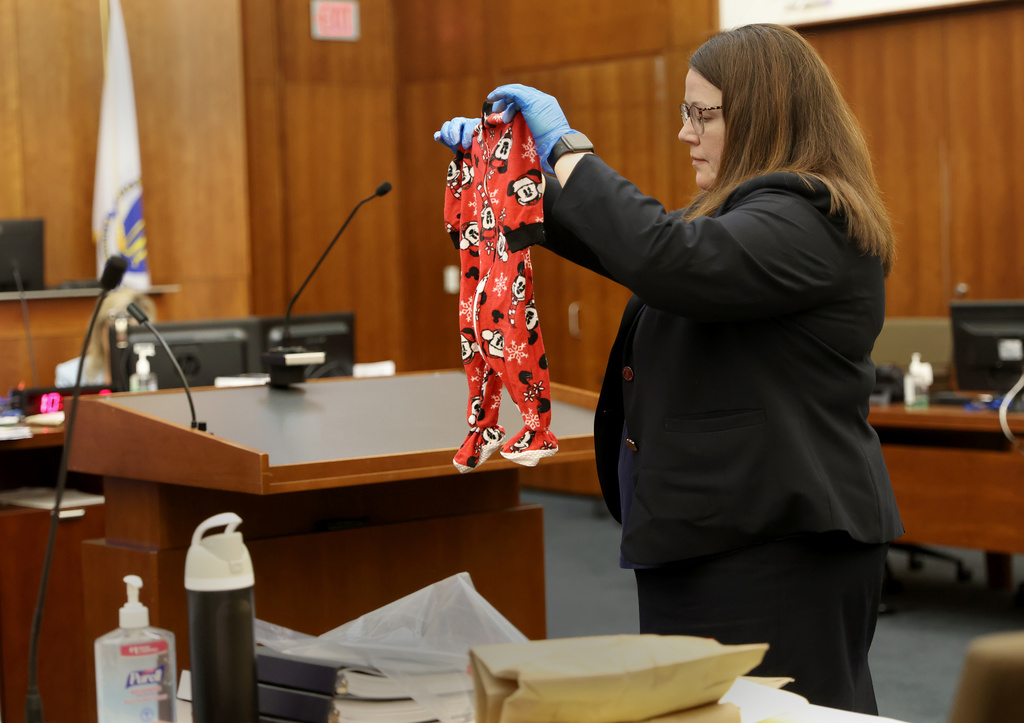
Clancy’s murder trial in Plymouth Superior Court in Plymouth, Massachusetts, is expected to last several weeks. On Friday, jurors walked through the home where Clancy killed her children. They also have heard evidence that Clancy was discharged from a psychiatric facility 19 days before she killed her children.
Neither Assistant Plymouth County District Attorney Jennifer Sprague nor Kevin Reddington, Clancy’s lawyer, immediately returned requests for comment.
On the evening of Jan. 24, 2023, Patrick Clancy, Clancy’s then-husband, went out to run errands. Once he was out of the home, Clancy strangled her children with exercise bands, cut herself and then jumped out of a second-story window. She is paralyzed from the fall.
Clancy heard a voice in her head saying, “This is your last chance. Kill the children so you can kill yourself,” according to defense lawyers.
She and her ex-husband have both sued her medical providers, alleging that they failed to properly diagnose and treat her after the birth of her third child, as well as failed to properly monitor her reaction to the medication she had been prescribed.
Jennifer S. Bard is a law professor at the University of Cincinnati, Donald P. Klekamp College of Law. She’s also a professor in the Department of Internal Medicine at the University of Cincinnati College of Medicine. She says that the verdict will hinge on what the jury hears from medical professionals who treated Clancy and the experts brought in to interpret their records and statements.
Postpartum psychosis “can happen to someone who does not have a history of psychosis,” Bard says.
Clancy’s case comes more than 20 years after the murder trial of Andrea Yates, who drowned her five young children in a bathtub. Yates had a documented history of mental illness, including evidence of postpartum psychosis, but she was still initially found guilty in 2002. In a later retrial, she was found not guilty and was committed to a state mental hospital.
Marilyn Lemak, a Naperville, Illinois, woman who drugged and smothered to death her three children, was found guilty of murder in 2001. And Sheryl Lynn Massip, an Anaheim, California, woman who ran over her 6-week-old son, also was found guilty of second-degree murder in 1988 despite testifying that she heard voices telling her to put her child “out of his misery.” A judge set aside the verdict, finding her not guilty by reason of insanity.
While mental health awareness has increased in recent years, there hasn’t been much of a shift in the law, with a few exceptions, such as Illinois. In 2018, the state passed a law specifically allowing for undiagnosed or untreated postpartum depression or psychosis to be a mitigating factor in sentencing.
If Clancy is found guilty on the three counts of first-degree murder, she faces a sentence of life in prison without the possibility of parole. If she’s found not guilty, she’ll be committed to a state psychiatric hospital.
Margo Lindauer, a legal consultant who has taught classes at Vermont Law and Graduate School, says that the defense will have to prove that Clancy lost touch with reality and didn’t understand her actions. She adds that while there’s been a shift in public discussion over postpartum mental health in recent years, it’s unclear whether that will help or hurt Clancy.
The public awareness “may generate more compassion for Lindsay from people who've experienced postpartum depression, anxiety, or psychosis themselves, but it may also fuel backlash from people who had similar diagnoses and didn't harm their children,” she says.
Lindauer also says jurors may respond to the emotionally charged atmosphere and react negatively if “prosecutors come across as unnecessarily targeting Lindsay or any witness.”
“There’s no disputing how excruciating this case is for everyone involved” including the jurors, Lindauer says.








