Proposal for California-specific bar exam draws mixed response


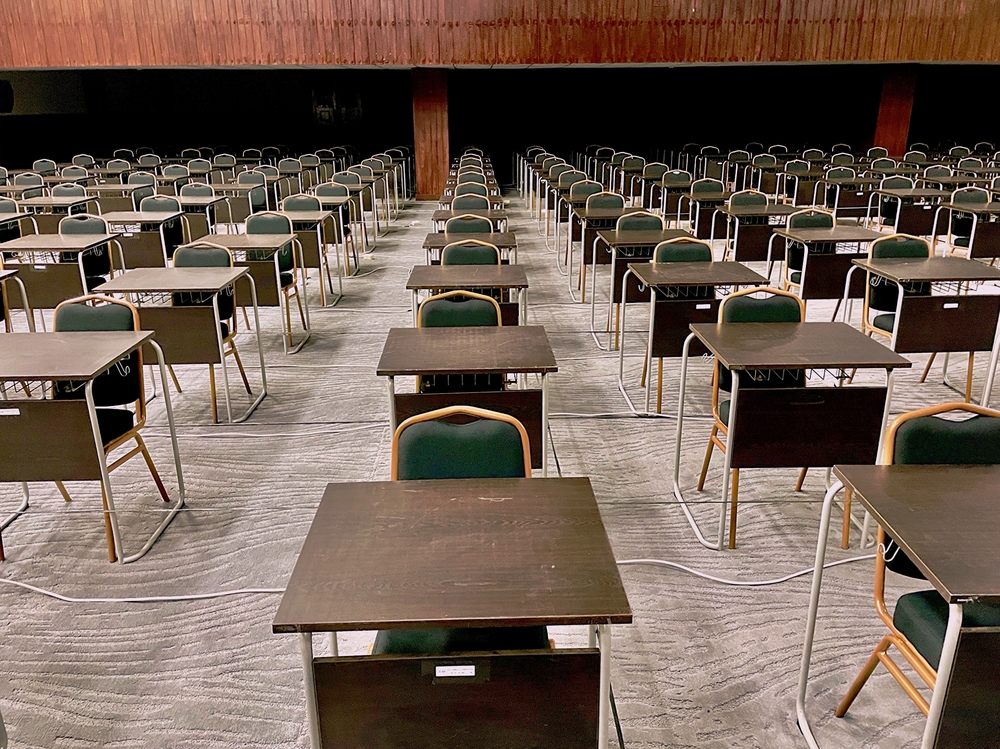
The State Bar of California’s Committee of Bar Examiners’ preliminary blueprints for a state-specific test that bar candidates could take remotely as early as the start of their final year of law school has upsides and downsides, law school academics say.
“The recommendations are two steps forward, one step back,” says Susan Smith Bakhshian, director of bar programs at Loyola Law School, about the test that would launch in July 2029.
California is one of 14 jurisdictions that require passing a state-specific exam as part of the licensing process, according to the National Conference of Bar Examiners.
The state supreme court is retiring the current exam as the legacy Uniform Bar Exam is scheduled to be administered for the final time in February 2028. The proposed closed-book, multiple-choice, California-specific test would launch a year and a half later. In the meantime, the July 2028 and February 2029 administrations will not include a California-specific component.
California’s proposal retains the subjects the current state exam covers: civil procedure, community property, employment law, evidence, family law, professional responsibility, and wills and succession.
But it has shades of the New York Law Exam, which requires candidates to take an online course, then pass an online multiple-choice exam on state-specific rules along with the UBE, says Deborah Jones Merritt, bar exam expert and professor at the Ohio State University Moritz College of Law.
Like New York, California’s plan would offer an online exam four times a year, and applicants could take it up to a year before they take the NextGen UBE, she notes.
One big difference is that New York’s exam is open book, and candidates are given materials they can use during the exam.
“Some New York folks think that makes the exam too easy,” she says.
California’s exam would be closed book, which legal educators say would cause additional stress and expense for applicants without creating additional public protection.
“I don’t like the California plan,” Merritt says. “New lawyers need to know that states have distinctive legal rules, but memorizing those rules is counterproductive. A new lawyer should always research state rules and local practices rather than trying to recall them from memory.”
Merritt, who serves as a consultant on several states’ licensing processes, has been “encouraging states to create interactive online courses to educate bar applicants about state law and to show them the best ways to research that law,” she says. “California, however, has chosen an outdated, closed-book test of rote memory.”
“Absolutely a step in the wrong direction,” says Mary Basick, assistant dean for academic skills at the University of California at Irvine School of Law. “This format highly overvalues the skill of memorization, though everyone agrees memorization is not a valuable lawyering skill, and as technology advances, memorization is increasingly irrelevant.”
The clock is ticking
Despite the protests about the proposed format, the academics interviewed by the ABA Journal agree that the plan to offer the test at least four times a year is a good move.
Basick adds that allowing 3Ls to take the exam would be “alleviating their need to take additional time off work to study for the California component.” She notes there could be pushback that some students would neglect their school responsibilities to prep for the exam.
And conducting the test online is “a good decision, so long as the provider can handle the testing volume,” Basick says, adding that offering the exam several times a year could ease the strain.
But Loyola Law’s Bakhshian is not so sure. “California’s plan to draft, vet, calibrate and pretest everything before launching a remote component by July 2029 ignores today’s budget constraints and the practical limits of current software and security protocols,” Bakhshian says.
In-person testing at centers is “likely more secure and less expensive than remote proctoring at California’s scale, particularly given the California Supreme Court’s timetable,” she adds. State law requires the California Supreme Court to give two years’ notice before making major changes to the bar exam, allowing law schools to help prepare future candidates for the exam.
To meet this deadline, the committee and the Board of Trustees will meet next month to refine their recommendations, says Rick Coca, spokesperson for the State Bar of California. In January, the committee and board will meet again to approve sending the final recommendations and cost-benefit analysis to the California Supreme Court, which will make the ultimate decision.
For the past two years, California has been making changes to the bar exam, in part to relieve financial strain. That resulted in a flopped attempt at delivering its own remotely administered test in February 2025. Later, the state supreme court ordered the exam to be moved back to in-person testing and that the NCBE-created Multistate Bar Exam be used until it sunsets.
California tests the second-highest number of bar examinees, according to the NCBE, behind only New York. In July 2025, 7,362 examinees took the California bar exam.
Write a letter to the editor, share a story tip or update, or report an error.