Dec. 14, 1982: Conviction in murder of federal judge


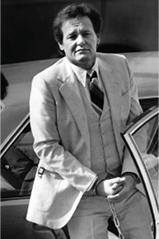
Charles Voyde Harrelson was on the lam when he was arrested on a West Texas roadside just outside of the town of Van Horn. He arrived in a borrowed Corvette, and when local officers showed up, he was standing shirtless, tripping hard on cocaine, holding a gun to his head and babbling his confession to the murder of John F. Kennedy and, what proved more significant, the assassination of a federal judge.
Judge John H. Wood had been killed on May 29, 1979, in front of his San Antonio condo by a single .243 bullet to his back. It was the first assassination of a federal jurist since 1867. And in the 15 months leading up to his roadside arrest on Sept. 1, 1980, the FBI investigation—its largest since the Kennedy assassination—had been circling Harrelson as the suspected triggerman.
The very day of his murder, Wood had been scheduled to begin the trial of Jamiel “Jimmy” Chagra, a drug smuggler from El Paso, Texas. Wood was an appointee of President Richard Nixon whose harsh sentencing gained him the sobriquet “Maximum John.” The trial had been postponed, but the coincidence had always been too much to be ignored.
Harrelson was a professional gambler and a former salesman of charm and intelligence with a background of ruthless violence. He was convicted of armed robbery in 1960, acquitted of murder in 1970 and convicted in 1973 in the murder-for-hire of a South Texas grain dealer. Incarcerated since 1968, he was released from Texas prison to serve time in federal prison, from which he was finally released in 1978.
Chagra and Harrelson appeared to be on the same troubled arc. Chagra’s federal drug trial proceeded despite Wood’s murder. Chagra was convicted in August 1979 but jumped bond before he would begin his 30-year sentence.
He was arrested on the Las Vegas strip six months later. That same month, February 1980, Harrelson was arrested in Houston on another drug and weapons charge. He posted bail, then fled.
While hiding under an assumed name in El Paso, Harrelson was introduced to Jimmy’s younger brother, Joseph Chagra. Joe was a lawyer, and the two held two mutual interests: the Wood investigation and cocaine. By the time Harrelson called from Van Horn, Chagra was attorney of record for both his brother Jimmy and Harrelson.
The tapes
Long before his West Texas apprehension, Harrelson had testified before a grand jury. Although witnesses verified his presence in Dallas the morning of the murder, most federal investigators remained unconvinced. But now, with both suspects in jail, they were able to record hundreds of hours of conversations between the two main targets and their wives, ex-wives, friends and jailhouse snitches.
As an attorney for both men, however, Joe Chagra’s visits were more complicated.
Like Harrelson, Joe Chagra had been interviewed by investigators. He had acknowledged his brother’s animus toward the judge but denied any knowledge of an actual plot. However, his subsequent involvement with Harrelson allowed federal investigators to claim him as a potential co-conspirator obstructing their investigation. They began recording his conversations with both men, using a court-approved filter team to screen potentially confidential conversations.
The resulting tapes were stunning: Harrelson drew Chagra a map showing the location near Dallas where he had scattered pieces of the Weatherby Mark V rifle he had used in the killing. Jimmy discussed details of a Las Vegas cash drop between his wife and Harrelson’s stepdaughter. In one of the most critical moments, an angry Jimmy was heard telling Joe: “You’re the one was all hot to do it.”
Leveraging the recordings in their interviews with suspects, they were able to finally turn the conspiracy against itself. In a deal that did not require him to testify against his brother, Joe Chagra pleaded guilty to conspiracy. On Dec. 14, 1982, with Joe’s testimony in hand, Harrelson was convicted of Wood’s murder and sentenced to two life terms in prison.
In a later trial in Florida, and without Joe’s testimony, Jimmy Chagra was acquitted of the killing but convicted on additional drug and conspiracy charges.
Write a letter to the editor, share a story tip or update, or report an error.