Judge orders Tennessee to preserve evidence in failed execution of Christa Pike


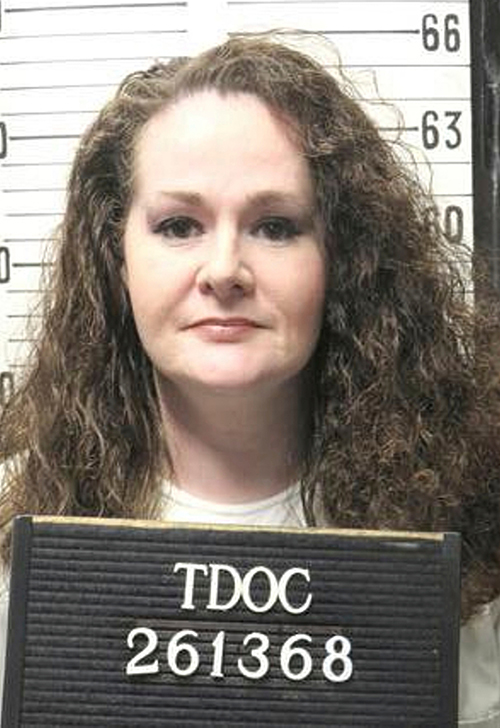
NASHVILLE—A Tennessee judge on Wednesday ordered state officials to preserve all evidence related to the botched attempt to execute inmate Christa Pike, who survived two lethal doses of pentobarbital last week and remains hospitalized in Nashville.
Pike, 50, was scheduled to die by lethal injection on Sept. 30. Her sentence was handed down decades ago for her role as a teenager in the torture and murder of 19-year-old Colleen Slemmer in 1995.
But the drugs, which officials expected to kill Pike within minutes, did not work, and state officials rushed her to a hospital for lifesaving medical care.
Wednesday’s hearing in Nashville was the first court appearance her lawyers have made since the failed execution. They asked Judge I’Ashea Myles in Davidson County Chancery Court to require the Tennessee Department of Correction to maintain logbooks, surveillance footage, equipment, medical records and other information related to the events that transpired before and after the failed execution.
“I want to ensure that you all take special care not to lose, misplace, or accidentally delete any information that may be pertinent to this litigation,” Myles said in court.
She also ordered the state to claw back any information or materials that may already have been discarded.
A spokesperson for the Tennessee Department of Correction declined to comment, but an attorney representing the state said in court that prison officials had already begun preserving evidence as required by a separate, federal court case related to execution protocols.
Pike, who is still receiving critical medical care at a private hospital, was not in court for the hearing. She was unconscious and on a ventilator for nearly a week before regaining consciousness.
Luke Ihnen, one of Pike’s attorneys from the Federal Defender Services of Eastern Tennessee, told the judge that the Tennessee Department of Correction had limited Pike’s access to her legal team.
Ihnen also said prison officials had ordered Pike be handcuffed and shackled to her hospital bed, against the wishes of her medical team and despite injuries to her arms from the failed injections.
Pike’s counsel asked the judge to order state prison officials to remove the shackles and allow Pike to contact her lawyers without hurdles, including through a digital tablet similar to what she used while incarcerated at the Debra K. Johnson Rehabilitation Center for women.
Myles declined to immediately rule on the requests to remove the shackles and provide a tablet, seeking additional information.
But she did order the state to respond within two hours to written requests for access to Pike from her lawyers.
“Access should be given as it would be if she were incarcerated at the women’s prison,” Myles said. “Just because Ms. Pike is currently in a hospital does not mean she should have any less access to an attorney than she would in the women’s prison.”
At a news conference after the hearing, Ihnen criticized the state for what he called a lack of transparency over Tennessee’s execution protocols.
“Today’s hearing was about transparency, about why Christa, the courts, the media and the public should not simply take the state’s word about what happened last Wednesday,” Ihnen said. “Because as we saw a little bit today … their word is shrouded in secrecy, in legal jargon, in attempts to obfuscate and obscure what really happened.”
Another of Pike’s attorneys, Randy Spivey, said Pike is experiencing a lot of “cognitive confusion.” She is aware, he said, that the state tried and failed to execute her—but he would not elaborate on the specific details of her recollections.
“I think she is angry and confused about everything right now,” Spivey said, adding that Pike has asked about her team and Slemmer’s family.
The attorneys said Pike faces an unprecedented recovery.
“She has a blood clot in one of her arms. She has pneumonia. She is not able to swallow yet, so she has not eaten. She cannot move either of her arms. Both of her arms and hands are tremendously swollen, and we do not know what, if any, function she will regain in her arms,” Spivey said.
He described Pike’s swelling as “extraordinary” and said her hands “looked like if you were to blow up a surgical glove.”
Hours after the attempted execution, Gov. Bill Lee (R) halted all scheduled executions in the state and ordered a third-party review into what happened. Frank Strada, the state’s prison chief, resigned over the weekend.
Tennessee prison officials had botched another execution under Strada this year. In the spring, the execution of convicted murderer Tony Carruthers was called off after personnel could not establish a backup IV line, as required by state protocol. Lee granted Carruthers a one-year reprieve.
Before her execution date, Pike’s attorneys raised concerns over the incident involving Carruthers and asked the courts to grant Pike an alternative method of death, warning the woman’s IV could fail because of her small veins and a blood disorder. But the request was denied.
Separately, Lee declined Pike’s clemency request asking him to commute her sentence to life in prison without the possibility of parole.
Her attorneys have renewed the call for clemency since the failed execution and have asked Lee to reconsider. A spokesperson for the governor did not immediately respond to a request for comment Wednesday.
Before addressing the motion on preserving evidence filed by Pike’s attorney, the judge sought to determine whether her court or the Tennessee Supreme Court had jurisdiction over ongoing matters related to Pike’s case.
After hearing arguments from Ihnen and Tennessee Assistant Attorney General Will Ayers, Myles ruled that the Davidson County court is the appropriate judicial venue.
Pike and two other teenagers—her boyfriend and another girl—lured Slemmer into a wooded area in Knoxville in 1995. The teenagers knew each other through the Knoxville Job Corps, and prosecutors argued that Pike believed Slemmer was interested in her boyfriend.
Pike admitted to hitting the girl in the head with asphalt, cutting her throat and taking a piece of her skull as a souvenir, court documents say.
Slemmer’s mother, May Martinez, traveled from Florida to witness the attempted execution last week and told NBC News afterward that she was furious with state officials. Martinez called the botched execution “a mess” and said prison officials failed to properly communicate with her about it.
Mettler reported from Indiana.
Write a letter to the editor, share a story tip or update, or report an error.