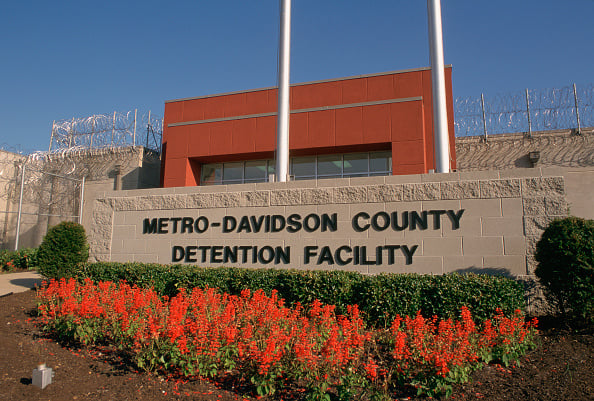
I was hopeful that Max’s Justice, USA, a six-part documentary series about Tennessee’s criminal justice system, would deliver its marketing promise of a “compelling, insider’s view of Nashville’s criminal justice system.” Sadly, it fell short.
A little over a year ago, ChatGPT-4 was released, and in that short time, the functionality of generative artificial intelligence has been added to many of the tools that we regularly use in our day-to-day workflows. From research and brainstorming to data analysis and translation, generative AI is changing how work gets done.
I recall as a kid growing up in Montreal, we had difficulties with a next-door neighbor. Among other things, Madame Poirier owned a large mut, Roger, which she allowed the run of the land. This included Roger doing his business on our land. It often led to confrontations with my mother, as Madame Poirier insisted that Roger was just doing what dogs do.
Recently, my wife mentioned watching American Nightmare, a new Netflix true-crime documentary. Numerous other folks told me that I had to watch and report. Couple that with the program having 21.4 million views shortly after it was released, I figured that it was a three-part documentary worth digging into. Warning: Spoilers ahead.
If the legal work your firm handles involves lots of document creation, then you would benefit from document automation software. It facilitates quick and easy document assembly by creating templates that reduce redundant data entry.
As 2024 begins, so does the business of legal recruiting. And not surprisingly, we have already seen numerous transfers of law firm partners and groups. The market also anticipates several more major firm mergers this year. As we start this new year, I would like to broach the question, do you know who your legal recruiter is?
Ari Kaplan recently spoke with Alaa Pasha, the CEO of Maptician, a cloud-based workplace management software company and an end-to-end solution for law firm hybrid operations.
How the U.S. Supreme Court writes its opinion in Trump v. Anderson could have enormous long-term implications. The oral arguments on Feb. 8 left no doubt that the Supreme Court will reverse the Colorado Supreme Court and hold that Donald Trump is not disqualified from being on the ballot for the Republican primary in that state.