'A Killer Story': When everyone knows who did it, nobody knows anything


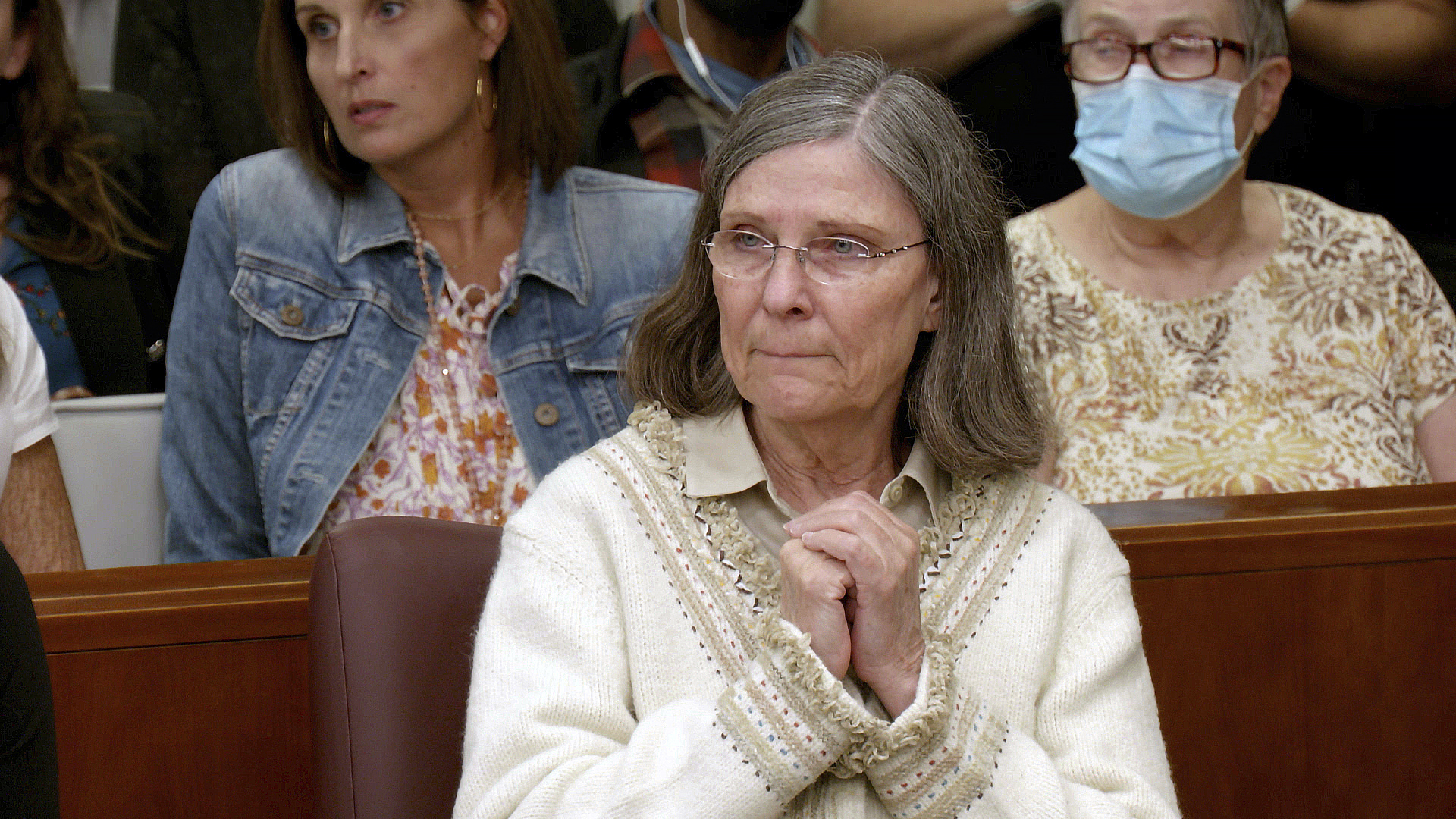
Convicted murderer Dana Chandler at her 2022 retrial. (Story Syndicate via AP, Pool)
I get quite a few online inquiries about old convictions people want me to investigate. I’ve learned over my career that it isn’t always about the merits of the case; sometimes, people just want closure.
That’s why the first few minutes of the HBO original documentary series, A Killer Story, drew me in so quickly. As investigative journalist Joe Sexton explained how Eileen Umbehr banged on his digital door for months before he finally listened to her about Dana Chandler’s conviction for the 2002 shooting murders of her ex-husband and his then-girlfriend, I understood the skepticism of Sexton, a Pulitzer Prize winner who had worked for the New York Times and ProPublica.
The difference, though? Eileen Umbehr ultimately contacted Sexton with a Kansas appellate reversal of the conviction in question. That’s rare, but so is a case that offers nearly every other procedural complication you could imagine: a near-absence of direct evidence, prosecutorial misconduct, a hung jury, competing suspect theories, the hazards of witness credibility and a pro se defendant.
Welcome to A Killer Story.
A different type of advocate
Most murder prosecutions hope to establish motive, means and opportunity at a bare minimum. The prosecutors in Chandler’s first trial, however, were simply content with the first angle. In my last column, we touched on the problem of establishing motive and intent after the fact. Means and opportunity, though, should be easier to prove. By relying on Chandler’s hostility and hatred for her ex-husband, Mike Sisco, and his girlfriend, Karen Harkness, the prosecution was certain they had the right person, even though almost a decade passed before she was charged—charges that seemed more the result of a 48 Hours television investigation than law enforcement intervention.
When all the evidence is circumstantial, it leaves plenty of room for the defense to argue. Sadly, it also gives the prosecution space to exaggerate the strength of its evidence. In Chandler’s case, even though the prosecution ultimately achieved a conviction the first time around, their misconduct in misstating—and at times outright lying about—the evidence ultimately led the Kansas Supreme Court to reverse the conviction and remand for a new trial.
Who pushed that appeal process? No one other than Eileen Umbehr, who initially contacted Sexton; and Umbehr’s husband, Keen, a garbageman who later became an attorney. So not only were the Umbehrs actively engaged in Chandler’s defense when they reached out, they were also stalwarts of her appeal. That’s some heavy lifting for seasoned defense firms, let alone a husband-and-wife team.
I got to thinking: Could the Umbehrs occupy an interesting category in true-crime lore? Could they separate themselves as truly objective citizen sleuths? True-crime fans with not only the gumption and diligence to gather the evidence, but also the knowledge and the experience to do something with it in a court of law?
Over the next two episodes, I saw that possibility play out for both better and worse. Both the defense and prosecution theories of their evidence changed along with the procedural posture of Chandler’s case. For each side, new witnesses and suspects appeared, and attempts to manufacture proof after the fact ended up more like ill-fated interceptions than last-second Hail Mary touchdowns.
Amateur hour at the county courthouse
Obviously, the couple weren’t out of their depth. While working in sanitation, Keen Umbehr had an agreement with the courthouse janitor to receive sensitive documents in a separate trash container. Prior to becoming an attorney, he used those documents and the information he gained to write a newspaper column criticizing and exposing various county officials, such as Jeff Sutton, a former prosecutor in the area.
Sutton was also Karen Harkness’ son-in-law, and the Umbehrs were certain he had committed the shootings. The couple went so far as to utilize a Kansas law that allows private citizens to present an affidavit of probable cause to a judge to open an investigation into Sutton.
It seemed their certainty about his guilt and Chandler’s innocence would be rewarded until DNA evidence gathered during the investigation cleared Sutton in law enforcement’s eyes. Keen Umbehr was left with a bit of egg on his face once the former feud and bad blood between the two came to light.
Chandler proceeded to her second jury trial, where, days in, the prosecution solicited testimony from a never-before-seen witness who was certain she’d seen Chandler in the area of the murders on the night in question. But once the defense attorney thoroughly dismantled that theory and testimony, the prosecution was also left eating crow: The jury deadlocked, and the judge declared a mistrial.
Not to be outdone, Chandler raised the stakes of certainty on her own behalf. When the prosecution decided to try her a third time for the murders, Chandler fired her attorneys on the morning of trial, thinking she knew the case better than anyone else. Chandler was ultimately convicted of both counts.
Sexton, through his narration, put it best: “Knowing your case really well and arguing it effectively are two different things.” Honestly, that goes for licensed attorneys too.
Certainty in the courtroom
Certainty, as A Killer Story shows, is often more harmful than beneficial.
Certainty doesn’t really fit into criminal litigation. The prosecution carries the burden of proving guilt beyond a reasonable doubt, but it isn’t required to eliminate every conceivable argument for innocence. A defense attorney may insist those arguments for innocence should cast significant doubt, all the while reminding the jury they have no obligation to prove an alternative explanation.
Arguably, uncertainty is the backbone of the criminal justice system. Very rarely should anyone feel certain during trial. After all, the only way to be certain is to have been there yourself.
A juror who believes a defendant probably committed a crime, but is uncertain, may be required to acquit. A defense attorney who believes their client is guilty, but is uncertain, still carries the obligation to zealously represent them. And a prosecutor who wholeheartedly believes in the defendant’s guilt, but is uncertain, still has the ethical obligation to turn over exculpatory evidence.
The system breaks down when certainty becomes a substitute for scrutiny.
A prosecutor who is certain may refuse to listen to exonerating evidence during plea negotiations, pushing a case to trial and wasting taxpayers’ time and money. A defense attorney who is certain may overlook a weakness in their case and fail to counsel their client against risking more time by going to trial. A juror who is certain may fail to look at all of the evidence in the grand scheme of the case and fail to honestly and truthfully engage in open deliberations.
Verdicts bring legal resolutions to a case; they do not resolve every historical or moral uncertainty.
Final verdict
A Killer Story accomplishes something I’ve rarely seen while writing this column: It effectively navigates many true-crime tropes while also presenting a story with all the hallmarks of a judicial landscape that constantly reminds me Murphy’s law is real—and rampant as well.
For attorneys, the documentary offers an exposé on trial strategies, witness credibility, attorney-client dynamics and prosecutorial responsibility. For true-crime fans, it offers an opportunity to look inward and ask why and how we become so attached to the plights of someone we’ve never known—even though we can’t be certain as to their ethical, moral and legal culpability.
The ultimate takeaway? The most dangerous person in a jury trial isn’t the one who acted wrongfully; it’s the one incapable of believing they might be wrong from the get-go.
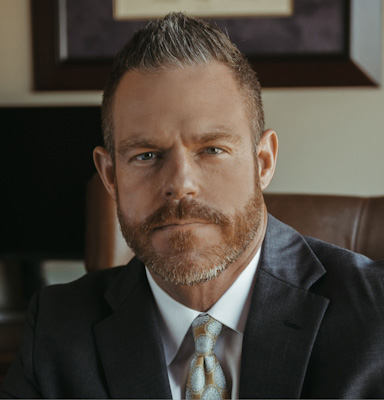
Adam Banner
Adam R. Banner is the founder and lead attorney of the Oklahoma Legal Group, a criminal defense law firm in Oklahoma City. His practice focuses solely on state and federal criminal defense. He represents the accused against allegations of sex crimes, violent crimes, drug crimes and white-collar crimes.
The study of law isn’t for everyone, yet its practice and procedure seem to permeate pop culture at an increasing rate. This column is about the intersection of law and pop culture in an attempt to separate the real from the ridiculous.
This column reflects the opinions of the author and not necessarily the views of the ABA Journal—or the American Bar Association.