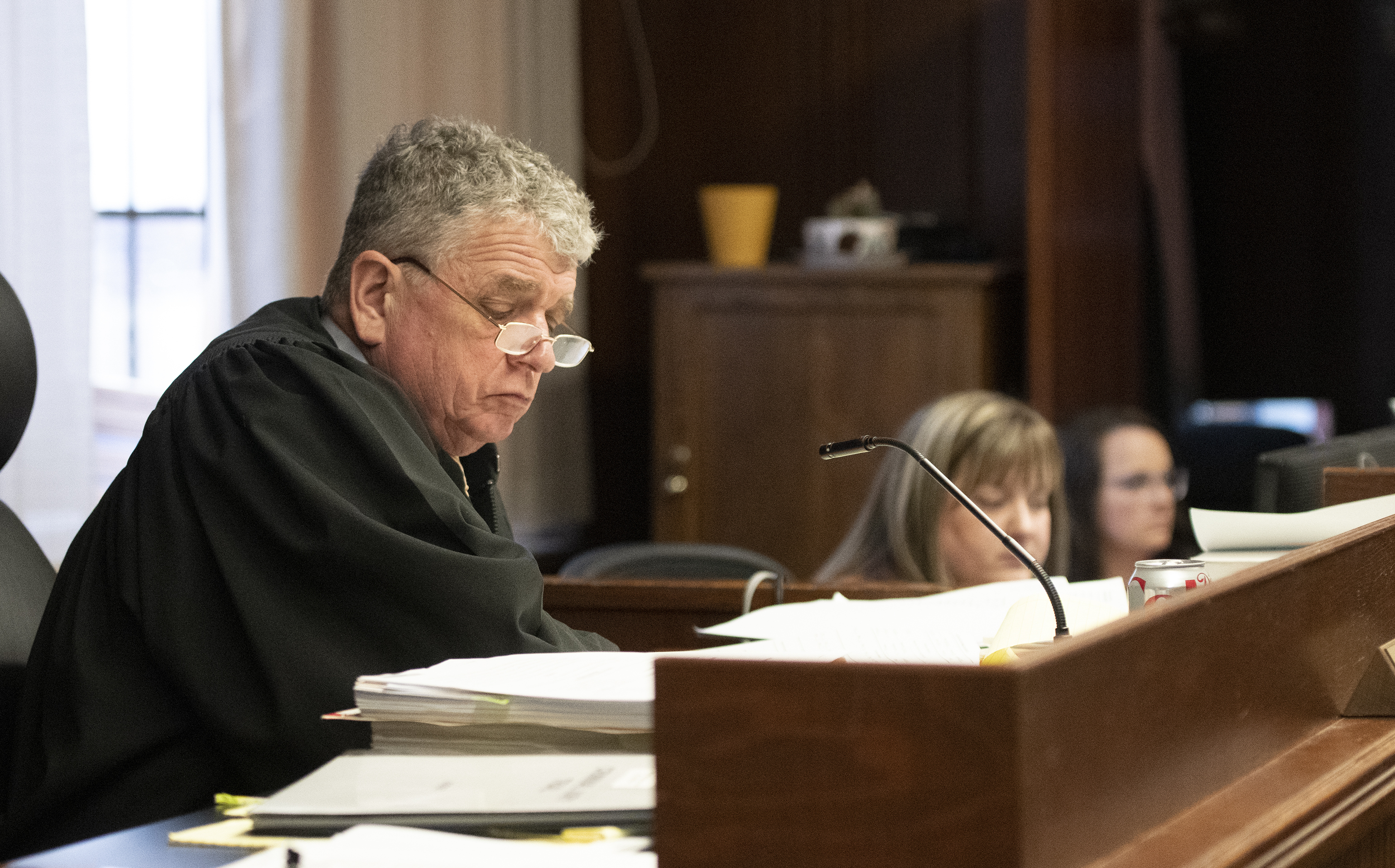
Lindsay Clancy trial shows how hard it is to prove intent retroactively


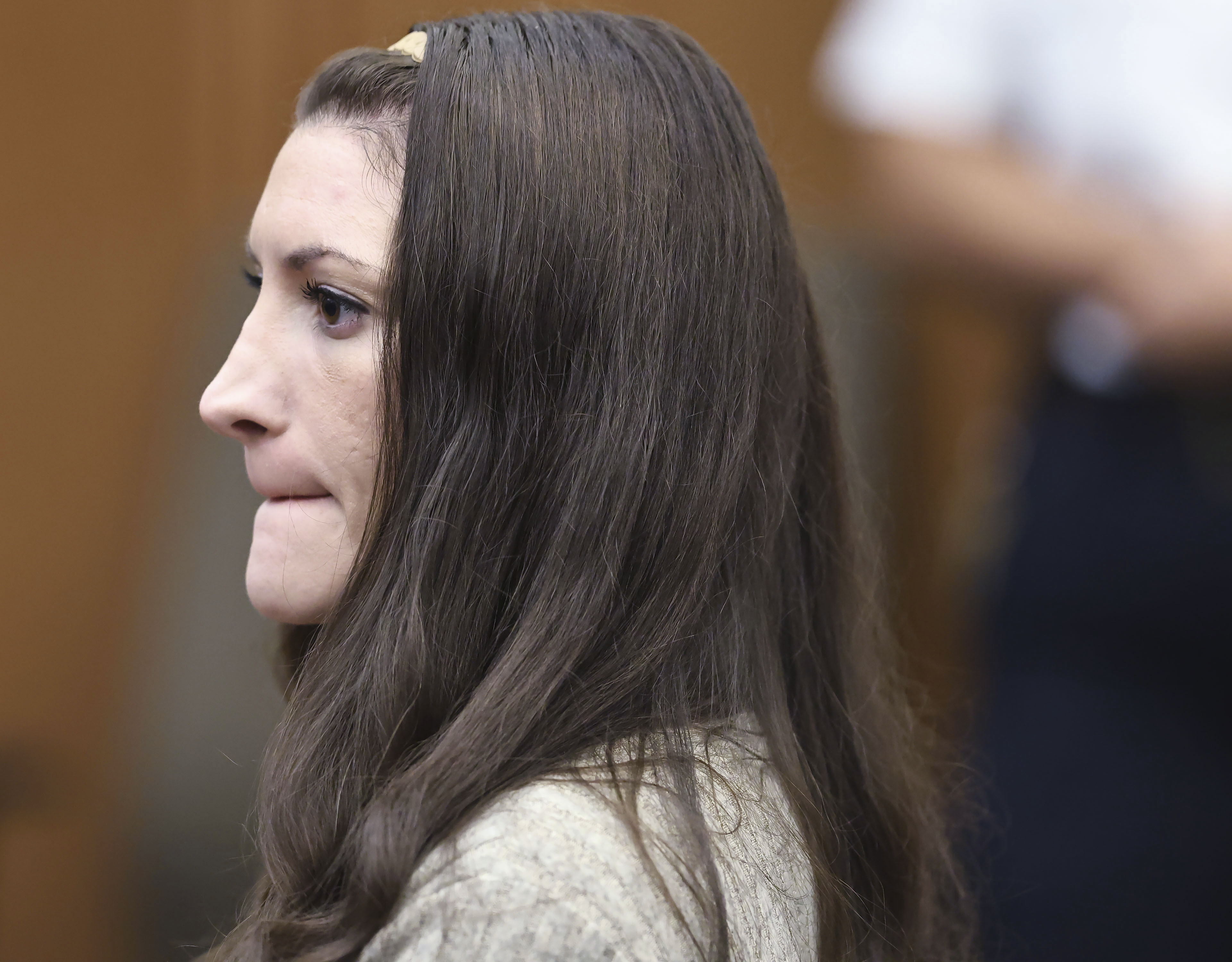
Lindsay Clancy’s trial shows how hard it is to prove intent, writes Adam Banner. (Photo by Greg Derr/The Patriot Ledger via AP, Pool)
The coverage of a televised, livestreamed trial like the Commonwealth v. Lindsay Clancy occupies the post-Depp v. Heard, post-Karen Read world where viewers no longer watch a trial from an objective perspective. They spend countless hours overanalyzing cross-examinations; they diagnose witnesses between TikTok advertisements; and they render nonunanimous verdicts in comment sections long before the actual jury has even been sequestered.
Nevertheless, Clancy’s trial is not a conventional whodunit. In fact, the defense doesn’t dispute that on Jan. 24, 2023, Clancy strangled her three children to death with exercise bands in the family basement. The only question is whether, because of some mental disease or defect, she is criminally responsible. By now, you likely know that the jury wasn’t able to answer that unanimously.
Still, much like the Depp v. Heard case, audiences have watched as dueling clinicians render conclusions that seem—to a lay viewer at least—to describe two different versions of the same defendant, each inhabiting their own time stream in the witness multiverse.
The Karen Read cinematic universe
Interestingly, the parallels don’t stop with the Depp v. Heard trial. In fact, it’s downright eerie how closely related the Clancy trial is to Commonwealth v. Karen Read. Both are murder prosecutions from Massachusetts. Both were followed in real time by innumerable swaths of online audiences emotionally invested in the plight of a person they’ve never met and likely never will.
Moreover, both cases asked the jury to process digital and medical evidence. Both showed a common defense trial theory: Law enforcement agents and prosecutors began their investigation with a perpetrator in mind, and they selectively filtered the available evidence through a lens that allowed them to come to a conclusion they’d already drawn.
And even though the cases differ in the prosecution’s process of proving culpability, they still share witnesses.
Dr. Elizabeth Laposata appeared in both cases. The defense used her testimony in the Read case to challenge aspects of the prosecution’s theory, specifically aimed at the issue of causation: Did Read strike the decedent with her vehicle, or was his death caused by something else? In Clancy’s case, she gave insight into the defendant’s plunge, describing it as a headfirst, free-fall dive.
In Clancy’s case, the question wasn’t causation, but both sides did what they could to present circumstantial evidence as to her state of mind at the time of the killings.
Ian Whiffin, a digital forensics expert at the intelligence company Cellebrite, which helps law enforcement analyze data from digital devices, appeared in both trials as well. Likewise, his testimony in each case gave us valuable insight, specifically into the benefits and limitations of digital evidence. In Read’s retrial, he testified regarding the timing of the infamous “hos long to die in cold” Google search. In Clancy’s trial, he interpreted Apple Health information from the defendant’s phone.
While Whiffin’s testimony in Read’s retrial showed how digital evidence can greatly assist investigators and litigants in showing how and when something may have happened, his work in the Clancy trial demonstrated specific limitations to that benefit. Although digital evidence may be useful in reconstructing activity and thus creating circumstances to assume specific thoughts, it still can’t reconstruct specific thoughts.
In essence, that comparison of both witnesses’ testimony leads to the heart of the issue in the Clancy case: How do you measure mental intent—and how can you be sure beyond a reasonable doubt?
What do we do about intent?
In many situations, it’s impossible to prove what someone was thinking beyond a reasonable doubt. All my prosecutor buddies will scream from the top of their collective lungs that they can always prove intent through circumstantial evidence.
I disagree.
It’s a fallacy in the legal system; after all, intent is either easily apparent, or it’s subject to various factors a jury must weigh after the fact—not in real time. In those circumstances, a jury must rely on isolated portions of the entire picture. Some might say that even if you are missing a few pieces to a puzzle, you can still make out the image. I’d argue it depends on how many pieces there are in total.
But even in those situations where the evidence seems to show one thing or another about a defendant’s state of mind, it’s downright incredible to say with a straight face that, within a collection of 12 individuals from various walks of life, not one of them has at least one reasonable doubt—it’s beyond a reasonable doubt, after all—about something that can’t be seen, measured or gauged.
The process of sifting through those reasonable doubts becomes even more challenging when the fact finder is faced with judging the inner workings of a mind that might be dealing with mental health issues. I’ve seen it firsthand, and honestly, it’s challenging from an advocate’s perspective as well.
Again, so often it’s a matter of what is easily apparent. I’ve had clients who are obviously not within their rational selves long after a crime is committed. That continuing behavior—along with treatment records, diagnoses and medications—gives a pretty clear indication of their mental state during the commission of the crime.
It’s another situation entirely, though, when you sit face-to-face with someone accused of something outright horrendous, and they tell you they were lacking in their mental faculties—although all signs point presently to their sanity—as they explain their recollection, or lack thereof, of what happened.
After hearing hours upon hours of testimony regarding Clancy’s attempts to seek help, her various medications, her actions around her family and the outward manifestations of her mental health prior to the deaths, it’s no wonder the jury had legitimate questions as to her culpability. And regardless of the prosecution’s focus on her errands, selection of the bands, and sequence of killings, that at best only shows purposeful behavior.
But as at least some members of the Clancy jury agreed that purposeful behavior does not automatically prove legal sanity. A delusional person can plan how to accomplish the object of their delusion.
Final verdict (for now)?
While the trial ended in a somewhat unusual dispute as to the fitness of one of the jurors, that type of development isn’t completely out of the ordinary, especially in high-stakes deliberations. I once had a jury in a murder case send notes to the judge that one of the jurors was not mentally stable enough to continue deliberations after only about eight hours. It happens. Sometimes that juror continues to hold out, and sometimes they get shook off their position one way or the other.
Nevertheless, no attorney likes a mistrial. It’s one of the most anticlimactic things that can ever happen in an extremely dramatic course of events. The uncertainty of the next step is maddening. Sure, there are times when the prosecution knows for certain they will retry the defendant, but that does nothing to quell the questions about how Round 2 will look from both sides of the ring.
Each litigant will have to make a gut call: Do you double down on your previous theory of the case, or do you go back to the lab and see what else you can concoct? As someone who’s been there before, I can assure you the second-guessing will keep both sides up at night with one question. “What do we do about intent?”
Adam Banner
Adam R. Banner is the founder and lead attorney of the Oklahoma Legal Group, a criminal defense law firm in Oklahoma City. His practice focuses solely on state and federal criminal defense. He represents the accused against allegations of sex crimes, violent crimes, drug crimes and white-collar crimes.
The study of law isn’t for everyone, yet its practice and procedure seem to permeate pop culture at an increasing rate. This column is about the intersection of law and pop culture in an attempt to separate the real from the ridiculous.
This column reflects the opinions of the author and not necessarily the views of the ABA Journal—or the American Bar Association.