What can lawyers learn from law students?


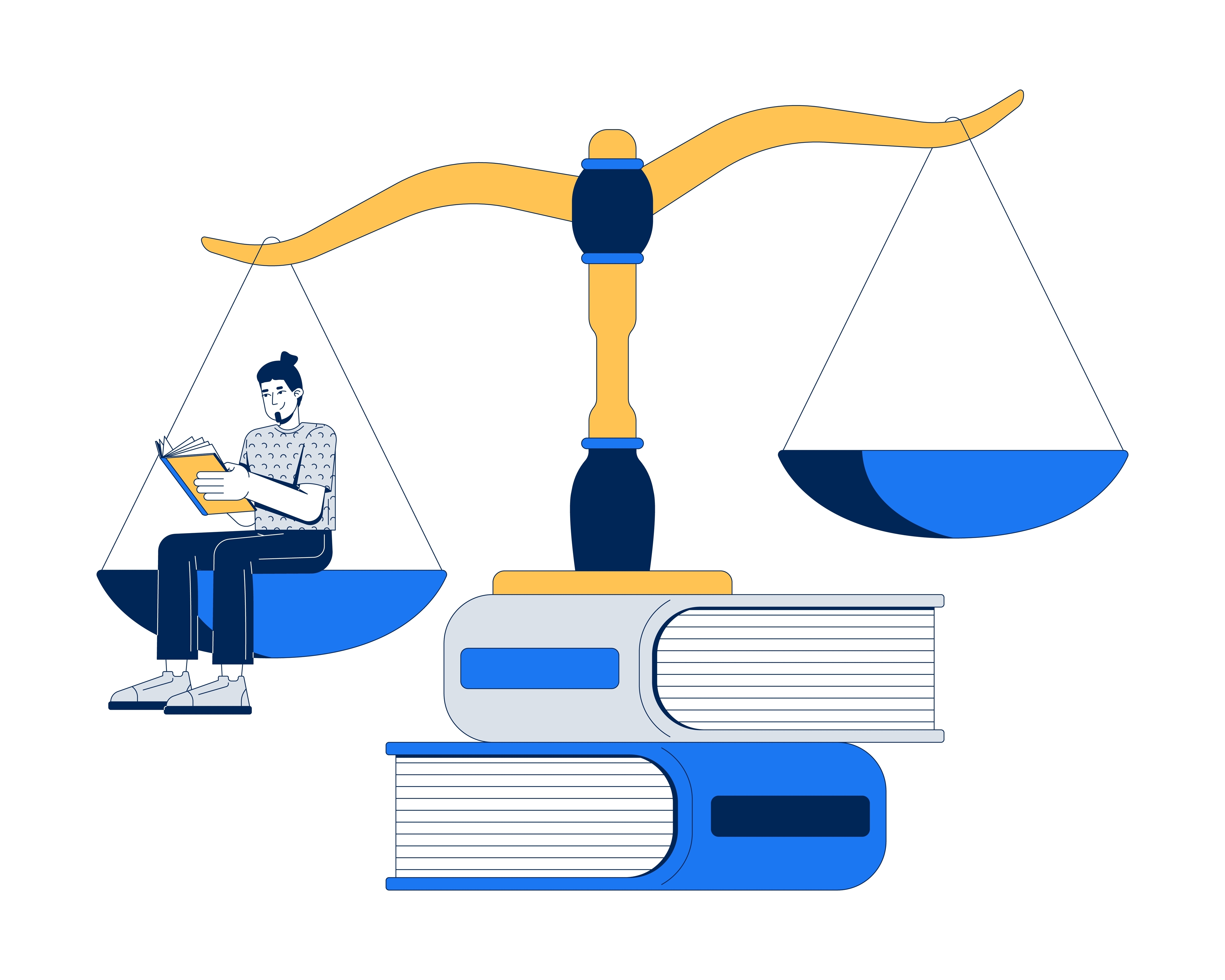
As a writing excercise, Brian Garner assigns students to pull a brief from an appellate court website and rewrite it by locating the argument’s primary major and minor premises: the argued-for rules and the facts that make those rules applicable. (Image from Shutterstock)
The brief made the student feel stupid. That was its first accomplishment. Whether it accomplished anything for the client remained uncertain. The student had read, reread and struggled to understand what an experienced lawyer presumably considered fit for judicial consumption.
“Some of the briefs I looked at,” the student wrote, “didn’t seem to make any sense to me at all.
Notice the modesty. Students commonly suspect that incomprehension reveals their own inadequacy. Practicing lawyers might consider the alternative. Sometimes the reader hasn’t failed the prose. The prose has failed the reader.
For years, I’ve given my upper-division law students an overnight assignment that puts them on the receiving end of professional advocacy. Visit an appellate court’s website. Find a brief. Examine its issue statements. Then rewrite one by locating the argument’s primary major and minor premises: the argued-for rules and the facts that make those rules applicable. Their conjunction should lead naturally to a cogently stated question. The revision must make sense to a reasonably intelligent high-school student, reach the question mark by the 75th word, and make every word and syllable contribute to crystallizing the problem. Finally, I ask the students to reflect on what they noticed.
The observations are always enlightening, often poignant and occasionally devastating. One student was “truly surprised by the number of briefs that are next to impossible to understand.” Another found “almost everything to be extremely distressing in light of today’s lecture.” Yet they aren’t indiscriminate faultfinders. One felt “uncharitable” correcting a brief chosen because it was “generally well-written and easy to understand.” Its intelligibility made revision possible. Other briefs were too muddled for the students even to identify the issue they were supposed to clarify. A lawyer might reasonably prefer the indignity of correction to the distinction of being beyond it.
Students naturally assume that practicing lawyers know what they’re doing and why. A filed brief acquires the spurious authority of an accomplished fact: Someone wrote it, signed it and entrusted a client’s interests to it. Surely its peculiarities serve a purpose. Perhaps that impenetrable sentence reflects strategic subtlety. Perhaps the missing explanation would insult the court. One student checked circuit rules to discover whether bizarre formatting was compulsory. Another preserved unwieldy formulations because “legal minds far brighter than mine had crafted them.” Then came the emancipating discovery: “These attributes are not sacrosanct.” Professional judgment begins where indiscriminate deference ends.
Although experience may explain a choice, it doesn’t necessarily vindicate one. A lawyer can perpetuate a bad habit for 30 years without it becoming any sounder in practice. These students stand at a revealing threshold. Soon they’ll join the people filing briefs. Meanwhile, they’re discovering what reading them might mean to a law clerk or judge. One found a bare question on page 10, the relevant fact on page 14, and the governing law on pages 21 and 22. Another supplied the verdict: “It feels like the writer wants me to do her work for her.” Everything necessary may be somewhere inside. So it is in a warehouse.
Consider a Connecticut marshal’s fee dispute. The original opened with a bare question: “Was Marshal Marcusi entitled to a 15% fee under the terms of Conn. Gen. Stat. section 52-261a(a)(F)?” A second question supplied the crucial circumstance: The judgment creditor, not the marshal, had pursued the proceedings that produced the money. But neither question explained the statutory language that made this division of labor significant. Fifteen percent of what? For performing which service? Must the marshal personally procure collection, or is serving the writ enough? The reader gets a factual contrast without the legal proposition needed to evaluate it. Instead of exposing the statute’s interpretive fork, the lawyer points down the road toward the statute and leaves us to find the junction. This isn’t so much an issue statement as a research assignment: a name, a percentage, a statutory address—and some assembly required.
The student found what the lawyer’s bare question concealed: a dispute about who must do the collecting. The issue comes into focus in 75 words:
“Connecticut law allows a marshal a 15% fee when ‘money is actually collected and paid over, or the debt or a portion of the debt is secured by the officer.’ Marshal Marcusi served a writ of execution but did nothing further for four years. The creditor collected the money through its own efforts. Does ‘by the officer’ modify both alternatives, requiring Marcusi himself to procure recovery, or only the second, allowing him a fee here?”
The student’s breakthrough was to connect the claimed commission to the work actually performed. The statutory language then exposes the interpretive hinge: Does “by the officer” reach backward across “or”? What began as an invitation to look something up has become a question worth deciding.
The revision doesn’t resolve the statutory ambiguity. It does something more useful at this stage: It makes the ambiguity impossible to miss. Whether the marshal must personally accomplish collection is no longer a gap in the explanation. Rather, it’s the question requiring decision. The reader can now examine the competing constructions instead of excavating the controversy. Clear writing doesn’t abolish legal difficulty. It separates the difficulty inherent in the law from the difficulty inflicted by the lawyer. The exercise is therefore an audit of reasoning, not merely an exercise in verbal economy. Compressing an argument brought one student to an uncomfortable discovery: “I was originally trying to ‘prove up’ the wrong thing.” The scissors had become a diagnostic instrument.
Nor does economy mean indiscriminate amputation. Shortening an already terse statement made it “less clear and less pleasant to read or hear,” one student observed. Another repeatedly revised the facts because the existing version “would mislead a first-time reader about the true nature of the case.” That’s the right anxiety. We’re not rewarding the fewest words left standing, much less the most convenient account of events. A lucid misrepresentation remains a misrepresentation. The challenge is to omit what the reader doesn’t need without suppressing what the reader would need to disagree intelligently. Brevity earns no exemption from candor.
The students also distinguished persuasion from indiscriminate belligerence. One noticed lawyers “too keen to include any piece of information that cast their opponents in a bad light.” The result? “Burying the truly important issues.” The novice had recognized what the veterans apparently hadn’t: Making someone look bad and showing why someone should lose are different undertakings. Another deplored opposing briefs that resembled “ships passing in the night,” wishing instead for fair constructions followed by direct confrontation. These students weren’t asking lawyers to abandon advocacy. They were asking them to identify the actual disagreement and have the intellectual courage to address it.
The most valuable criticism, though, turned inward. One student had assumed that poor issue drafting was “merely an irritant,” only to discover “serious challenges to understanding the legal arguments.” Then came a confession: “I have a bad habit of assuming my first drafts are close enough and moving on.” That’s the professional danger in miniature—not necessarily ignorance, but premature satisfaction. The student had caught the habit before it acquired a letterhead.
Whatever disillusionment this homework assignment produces, it also produces something healthier: the recognition that the failures they deplore are temptations they themselves will soon have to resist.
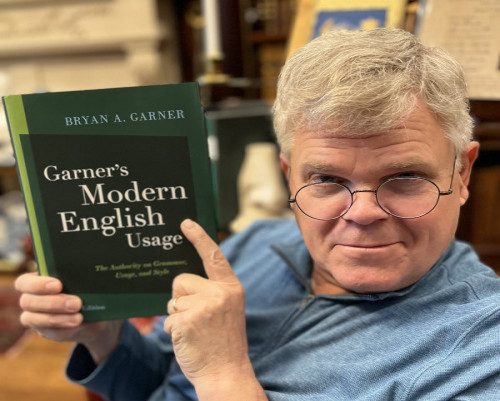
Bryan A. Garner. (Photo by Karolyne H.C. Garner)
As the principal at LawProse Inc., Bryan A. Garner has taught more than 3,500 CLE classes over the past 36 years. He now incorporates into his seminars instruction on using artificial intelligence effectively.
This column reflects the opinions of the author and not necessarily the views of the ABA Journal—or the American Bar Association.