With increased adoption of algorithmic sentencing tools, defense attorneys raise due process concerns, policymakers struggle to provide meaningful oversight, and data scientists grapple with ethical questions regarding fairness and accuracy.

Cybersecurity is evolving. This is more than just a technology issue or an added clause in the retainer agreement—it’s the biggest risk that law firms face in 2017. Two of the largest firms in the United States got caught in a major cybersecurity breach later linked to a $4 million-plus insider-trading scheme.
To Kill a Mockingbird, Anatomy of a Murder, Presumed Innocent, The Firm. Most legal fiction top 10 lists include one or more of these recognizable titles. But what about more recent fare? After all, it's been more than 55 years since Harper Lee introduced us to Atticus, and more than 25 years since the name "Grisham" became synonymous with the legal thriller. To compile a more recent collection, I enlisted the help of some fellow lawyer-authors—10 of the best in the business—to identify their favorite law novels published in the past 10 years.

Since 2009, seven states have raised the age of adult prosecution to 18, and five more tried during their 2015-2016 legislative sessions. In 2017, advocates are expecting “raise the age” bills in at least five states—more if you count proposals to increase the age to 21. These aren’t bleeding-heart liberal states; one of the early adopters was reliably conservative Mississippi.

While juvenile justice advocates have been winning the battle to raise the age in courts that consider defendants as adults, they’ve also been winning a smaller but important reform: limits on the practice of shackling young people in court.

In his effort to shed light on the investigation, Barry King has filed freedom of information lawsuits seeking case files. He’s also hounded authorities to explain why some suspects were cleared, particularly a man he believes was the most promising: the now-dead son of a former General Motors executive who had been questioned and released just before his son Tim’s murder.

Nine class action suits against Subway consolidated into one, and the sides reached a settlement in February 2015. But consumers shouldn’t get their hopes up about getting any money—or even a coupon. That’s because it’s all but impossible for people to prove that they ate a subnormal Subway sub. The plaintiffs and putative class members literally “ate the evidence.”

Although Hillary Clinton was the focus of the email-related brouhaha last year, similar controversies have been playing out in local governments across the country as other public employees use private email accounts to circumvent “sunshine laws” that mandate open meetings.

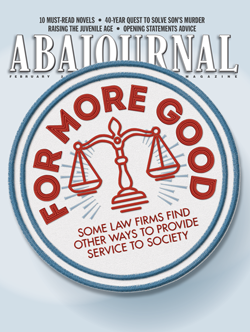
Programs that combine financial donations, hands-on community volunteerism and coordinating good works with clients are emblematic of a shift in how lawyers are thinking about working for good.

Compared to the European Union, where personal data has significant privacy protections, much more information about Americans is available to buy from data brokers—companies that gather information from public records, social media posts, online searches and purchases, and other footprints from life carried out increasingly on the internet.