Audrey Edmunds, now 50: “I’m not the monster they made me out to be.” Photo by Keri Pickett Is Audrey Edmunds an otherwise kind and caring wife, mother and neighborhood child care provider who snapped into a homicidal rage one day under the stress of caring for a sick baby?…
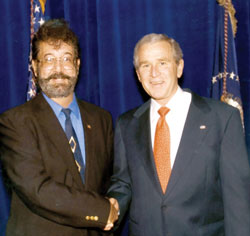
For a boiler room operation, the U.S. Navy Veterans Association was particularly successful. Since launching in 2002, the group raised an estimated $100 million from donors throughout the country. Its leader, supposedly a retired lieutenant commander going by the name Bobby Thompson, made contributions to the campaigns of several Republican…
It was a long time coming. But after six years of struggle and stalemate on Capitol Hill, patent reform finally made it through Congress. The America Invents Act, which President Barack Obama signed into law Sept. 16, dramatically alters the nation’s patent system. Among its legislative changes, the statute: adopts…
Lisa A. Alfaro joined Gibson, Dunn & Crutcher in 1995 after receiving her JD from Stanford Law School. Now she is partner in charge of the firm’s São Paulo office in Brazil, and she co-chairs the Latin America practice group. She is fluent in Portuguese and Spanish, and she is licensed in California and New York.
But there is one thing Alfaro can’t do: engage in any kind of local law practice in Brazil.
As a registered foreign legal consultant, Alfaro may advise her clients—primarily multinational companies—on U.S. and international law relating to such things as mergers and acquisitions, and project finance.
But under rules promulgated by Brazil’s national bar association, she is barred from giving clients any advice on Brazilian law, even though she is well-versed in it.
“The fact that we can’t practice locally is certainly the largest challenge we face,” says Alfaro. “I make it clear to each client that they have to talk to the Brazil counsel about an issue, even if I am up-to-date on the law.”
And now it might become even more difficult for foreign lawyers like Alfaro to work closely with local counsel.
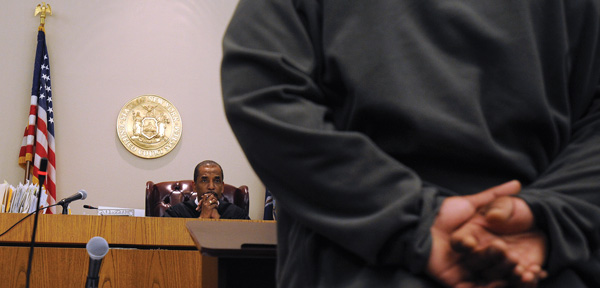
Photo of Judge Robert Russell by Jennifer S. Altman. When Assistant District Attorney Ray Herman first became involved with Buffalo, N.Y.’s alternative treatment program for military veterans who’d found themselves on the wrong side of the law, he had his doubts. “The whole program seemed a little—I don’t know—touchy-feely,” says…
Jefferson County is wrestling with $3 billion in bond indebtedness left largely from an ambitious sewer system upgrade that was plagued by waste and corruption. If the Alabama state legislature rejects a proposed settlement, the state’s most populous county may be forced to file the largest municipal bankruptcy in history.…
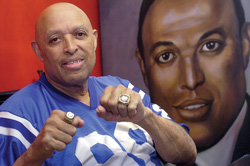
Legendary Baltimore Colts tight end John Mackey left a mark on football as few players have. Before Mackey came to the National Football League in 1963, tight ends generally were big oafs who blocked and caught short passes over the middle. But the Colts had something else in the 6-foot-2-inch,…
While same-sex couples are gaining recognition, the variety of such relationships—marriages, civil unions or domestic partnerships—and each one’s rights are creating a mishmash of legal problems. States differ among themselves and with the federal government over what properties each relationship has, forcing lawyers to keep track of which jurisdictions allow…
Editor’s note: This article, though anecdotal in narrative, is based on an in-depth study of Latino professionals in Washington state involving interviews and detailed surveys of personal histories from a scientific sample of 102 Latino lawyers. Washington’s Latino population closely resembles that of the greater U.S., and includes immigrant populations from Cuba, Mexico, Puerto Rico and virtually every country of Hispanic culture. The study is detailed in book length in Everyday Injustice: Latino Professionals and Racism by Maria Chávez.
There are dozens of different reasons why someone would choose to go to law school and become an attorney. Some may want to go into politics or trial work. Others may want to work for social justice, a nonprofit or a cause they are passionate about, such as the environment. Some view it, like many others, as a stylish path to making money. But many want a challenging profession with the rewards that can bring, both personally and financially. Some are influenced by parents or by lawyers they have known, or even by an experience they have had with the law. The judiciary or corporate practice or public defense or child protection advocacy—all the varied uses of a law degree beckon thousands of people each year to apply for law school to eventually become attorneys. For some, however, the motivation that drives them to become attorneys is a bit different, motivated by a sense of feeling they have experienced wrongs in their lives. For many Latinos, the decision to become a lawyer can be very personal.
Also see: The Rise of the Latino Lawyer. In 1972, Stephen N. Zack was a recently minted lawyer in court in Miami with a Cuban-American friend. The judge was miffed at his friend’s heavy Cuban accent, Zack says, and dismissed him from the courtroom. “ ‘Get out of here until…