Judge doesn’t like your objections? Here are some tips to keep them coming in a meaningful way



Juli M. Porto gets calls all the time from lawyers or litigants who want to appeal a verdict from a case that went horribly wrong.
Sometimes the problem is a bad jury instruction. Sometimes it’s a devastating ruling on key evidence. Sometimes the issue is the judge’s failure to stop opposing counsel from badgering a witness.
Porto, who specializes in appellate civil issues, wants to be able to deliver good news, but it’s not always possible, particularly if the attorneys failed to object in proper, timely way.
 Attorney Juli Porto
A principal at Blankingship & Keith in Fairfax, Virginia, Porto warns that typically, no matter how “egregious a trial judge’s error was, if it’s not preserved, it can’t be appealed.”
Litigators know they need to preserve the record during court hearings, depositions or trial. And they’re aware that they generally can’t raise an objection for the first time on appeal.
But still, even the most experienced lawyers hesitate on how much to object and how far to go when advocating for their clients, particularly when judges appear to lose their patience.
“It can be a delicate balance,” says J.C. Lore III, director of trial advocacy at Rutgers Law School. “Lawyers don’t want to make the judge angry.”
Rule 103 of the Federal Rules of Evidence advises lawyers that objections must be timely and done with specificity.
While state rules of evidence vary, they tend to follow the same framework as the Uniform Rules of Evidence.
In addition, the American Bar Association Model Rule of Professional Conduct 1.1 requires lawyers to act competently.
Tiffany Williams Brewer is chair of the ABA Section of Litigation and a former New Jersey state administrative law judge. She says a lawyer’s role is to “courteously remind” the judge of the importance of preserving the record.
“As a former judge, I can relate that judges are often focused on the efficiency of moving the trial forward and may not even realize that they have skipped the opportunity to allow the lawyers to properly put their evidentiary basis on the record,” Brewer says.
War stories
Most litigators have a war story or two where they felt they were being reasonable and advocating for their client while the judge was being unreasonable and obstructing them. And then there are the extreme cases.
In a Bexar County, Texas, court in 2024, then-Judge Rosie Speedlin Gonzalez accused an attorney of coaching her client and then pushed back when the attorney objected.
 Rosie Speelin Gonzalez
Gonzalez said the attorney was “not allowed to be argumentative and argue just for the sake of argument.”
As the situation escalated, she ordered the attorney to be handcuffed and placed in the jury box.
Gonzalez was later charged over the incident, then the charges were dropped when she agreed to resign and never again seek reelection. She declined comment to the ABA Journal.
For the most part, Lore says, judges know lawyers must make objections and don’t take it personally.
However, Lore says, when lawyers are using objections as a tactic to disrupt or rattle opposing counsel, judges tend to get angry and push back.
‘Sit down’
Amy M. Stewart is a partner at Fisher Phillips in Dallas and chair of the ABA Section of Litigation.
“No one promised us in law school that making objections would be easy or without anxiety,” Stewart says.
Sometimes, dealing with a judge who won’t let counsel make proper objections requires some strategic maneuvering, she adds.
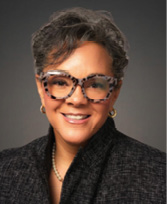 Amy W. Stewart
In one case, her firm hired an appellate lawyer to handle preserving the record during trial. Unfortunately, Stewart says, the judge told the appellate lawyer to “sit down” at critical moments in the trial.
“Appellate counsel held her own, but the drama was becoming distracting for the jurors,” Stewart says, so the trial team changed course, and had a male counsel make the objections.
“We realized the court never interrupted one of our co-lead counsels on the case,” Stewart says. “We coached him to make these critical objections, and the court would rule.”
During his decades of litigation, Jules Epstein has seen all kinds of issues come up during trial with judges who are reasonable and those who are less so. He suggests that if a judge is repeatedly blocking an attorney from making objections, the attorney should approach the judge calmly when the jury is not around.
“You can say to the judge, ‘I don’t want to violate your protocols, but I have to protect my client. Will you please give me instructions on how you want me to do this?’” says Epstein, director of advocacy programs at Temple University Beasley School of Law.
If that doesn’t work, he says, a lawyer can file a written pleading or motion to preserve objections, including every single effort made to object in a timely way.
There’s also the option for an interlocutory appeal, depending on state rules, before a trial has concluded.
Catching black eyes
There are times, says Ryan Watstein, that lawyers need to stand up to judges on behalf of their clients, even if that means they “catch a few black eyes” in the process.
“There are a lot of things culturally built into the practice of law, including a tendency to be intentionally hesitant to push back, particularly on the judiciary,” says Watstein, an Atlanta-based litigator and founding partner of Watstein Terepka.
In a LinkedIn post in May, Watstein described how he was trying to convince a judge to rein in opposing counsel during discovery. Watstein kept arguing, and the judge yelled, “This is your last chance, Mr. Watstein.”
Watstein explains that the courtroom was tense, and his client was uncomfortable. He thought he might get held in contempt.
“Every instinct our conservative profession teaches you was telling me to sit down,” Watstein says. “But I didn’t sit down.”
Watstein says he kept talking, despite the judge indicating it was time to stop. He said that he would seek appellate review of the judge’s decision if he didn’t get justice on the issue.
He ended up convincing the judge to reverse himself.
Watstein warns against being “overly deferential” when an “injustice is being perpetrated” against your client.
“You should always start in way that is respectful and professional, but there are circumstances where you have to push harder,” Watstein says. “The line that lawyers are trained to go up to is not necessarily the appropriate stopping point.”
Write a letter to the editor, share a story tip or update, or report an error.