At the ABA Journal, we love to produce magazine features like the 50 startup tips to get your practice off the ground. But we also think that it's important to provide a platform for the experience and wisdom of legal professionals year-round. Here are our favorite columns from 2021 in our Your Voice, Mind Your Business and On Well-Being sections, with advice for improving your practice and your personal life in 2022.
Looking for a new listen? We've picked our favorite 2021 episodes from each of the ABA Journal's three podcasts. And if this whets your appetite, find more than 10 years of past episodes on our podcast page. You can also check out more legal podcasts from our partners at Legal Talk Network.
Feel like curling up next to the fireplace with a good read? Kevin Davis, the ABA Journal's managing editor, has curated a selection of our favorite feature stories that ran in the magazine and online in 2021.
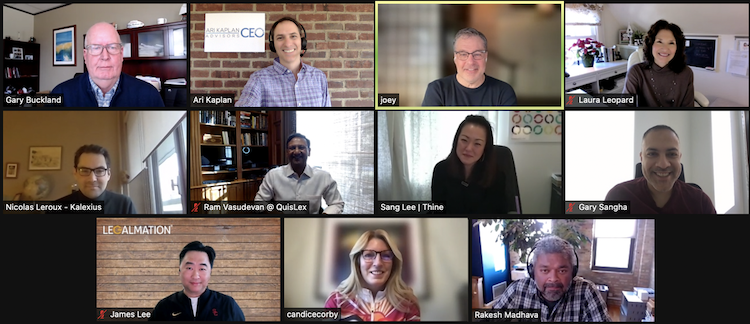
Ari Kaplan recently moderated a discussion with the following chief executive officers for the final Ari Kaplan Advisors CEO Roundtable of 2021 about trends, challenges and opportunities in the past year and the year ahead.
In her debut novel, All Her Little Secrets, attorney Wanda M. Morris has written a legal thriller full of corporate intrigue and small-town secrets. Morris takes readers inside Atlanta boardrooms and back into the past of her heroine, Ellice Littlejohn.
Although 2021 certainly had important developments in the U.S. Supreme Court, there also was a sense of it being a year of waiting for the blockbuster cases to come in 2022 on abortion rights, the Second Amendment, and separation of church and state. As we look back at the court in 2021, what was most significant?
In many ways, 2021 felt like the year that would never end. The pandemic dragged on, and new variants popped up like whack-a-moles. The resulting instability resulted in an increased reliance on remote working software, as lawyers put into place technology that provided the flexibility that their firms needed to transition to a dispersed workforce should the need arise.
“When I became a lawyer more than half a century ago, the law library was, by any measure, the heart of my law firm. It was where lawyers went to do legal research—any and all research,” writes retired Indianapolis lawyer Norm Tabler.
The ABA Journal regularly profiles exceptional ABA members in its Members Who Inspire series. In the past year, we featured many in the legal field who are encouraging and energizing others with their good work, including advocating for inmates on death row, mentoring prospective law students of African descent and fighting to stop bullying in the workplace.
James Patterson, long known as a master of make-believe, took on nonfiction a few years ago. So he may be more qualified than anyone to confirm one of the oldest adages in the book: Truth is stranger than fiction.
As lawyers, do we ever experience trouble or suffer problems? Unlikely. But as rarely as these situations may arise, is there something we can do about them? How about making a New Year’s resolution to prevent trouble or unnecessary problems.
AJ Shankar, the founder and CEO of e-discovery platform Everlaw, likes to say his company’s technology is designed to help clients find needles in a haystack.
August Hieber created Proud to Thrive, the first program in Chicago specifically designed to provide culturally responsive legal advocacy to LGBT older adults. Hieber recognized this population is less likely to access resources because of past experiences with discrimination and worked with the Center for Disability & Elder Law to host legal clinics and train other legal professionals on how to offer services.
AI has been the subject of academic research since the ’50s, but it’s still in its infancy across much of the broader economy. Before advising clients on AI issues, lawyers should have some basic tech knowledge to answer questions about legal compliance.
This year, Bryan Garner gave us tips for using legal dictionaries, a three-part series on how to manage a day’s worth of legal writing, and an ode to a state bar journal that’s championing the use of plain English.