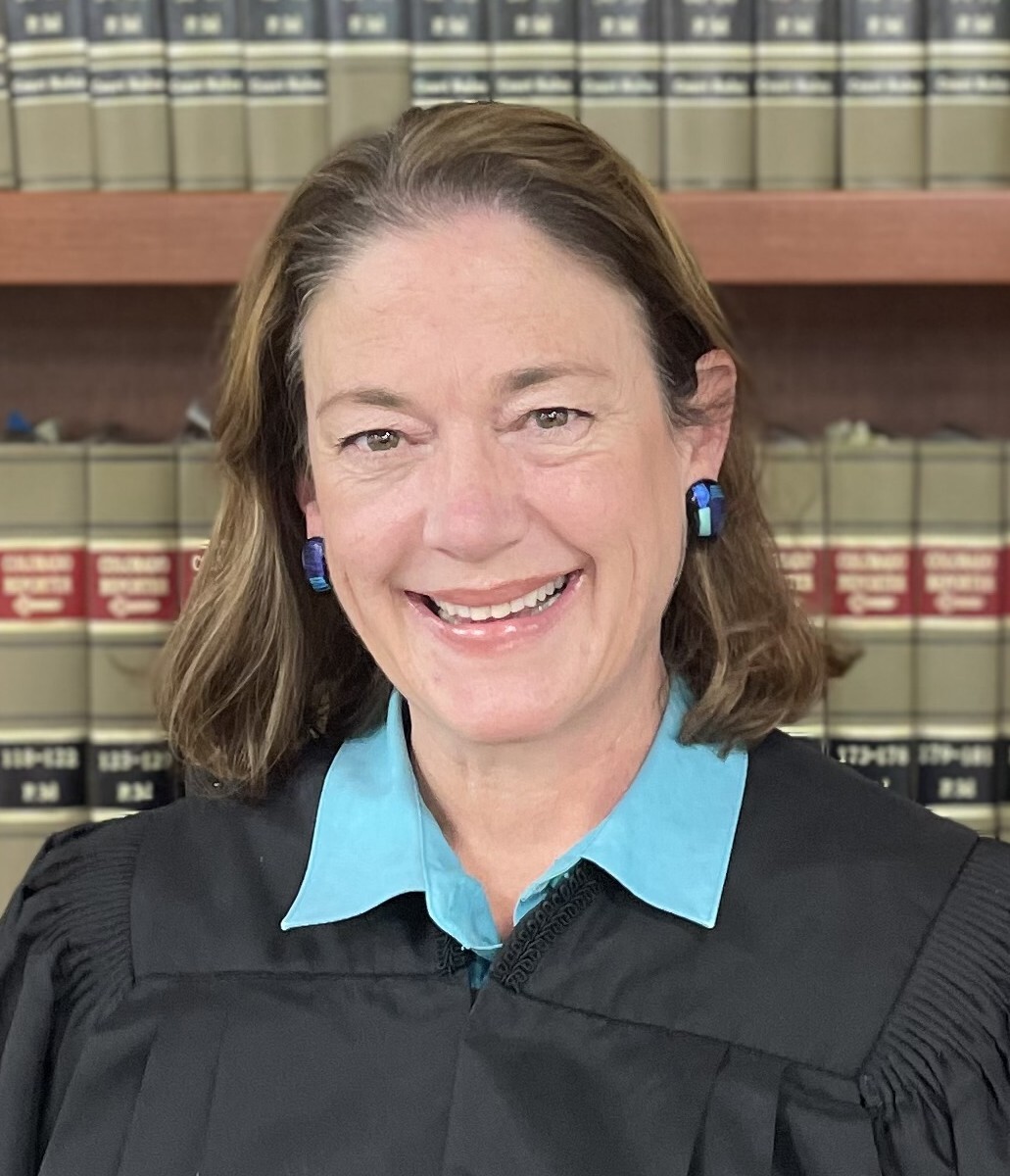
Meet Melissa Hart, the new chair of the ABA Legal Ed council


Being a triathlete requires juggling the demands of what are typically are considered three separate sports—swimming, cycling and running—while understanding the pressure each brings and pacing yourself to persevere through the challenges ahead.
Melissa Hart, who has finished 17 triathlons, will draw on her extensive experience in three other highly demanding areas during her term as chair of the council of the ABA Section of Legal Education and Admissions to the Bar: academia, state courts and law practice. Hart’s term began Aug. 4.
It’s a key moment for the council. The challenges were apparent the morning of Aug. 21, Hart’s first council meeting as chair, when the U.S. Department of Education released an 86-page report recommending the council be stripped of its sole national accreditation powers ahead of a September hearing.
It’s a race against time.
That report arrived just as the council is set to handle a variety of hot-button issues, including the aforementioned five-year review of its accreditor status, as well as moves by three state supreme courts in Republican-leaning states to break away from the council.
This agenda is not what Hart expected when she accepted the vice chair position three years ago in anticipation of becoming chair.
“Circumstances have changed,” she says. “What hasn’t changed is we have a dedicated group of volunteers on the council totally committed to legal education, and an incredible staff working hard to support legal education and to think seriously about what’s best for law schools, law students and the profession.”
Power of law
When Hart went to Harvard Law School, she wasn’t sure what type of law she’d practice.
“I knew I wanted to do something related to civil rights,” says Hart, who graduated from Harvard-Radcliffe College in 1991 before earning her JD in 1995. “I’ve always believed passionately in the power of law to solve people’s problems.”
After graduation, she clerked for Judge Guido Calabresi of the New York City-based 2nd U.S. Circuit Court of Appeals from 1995 to 1996 and U.S. Supreme Court Justice John Paul Stevens from 1996 to 1997. In 1997, she joined the Washington, D.C., office of Jones Day (then known as Jones, Day, Reavis & Pogue) as an appellate associate before moving to the U.S. Department of Justice as a trial attorney in 1999.
But in 2000, she decided to move home to Denver, eyeing a move into academia. She was hired as a professor at the University of Colorado Law School in 2001 and became director of the Byron R. White Center for the Study of American Constitutional Law in 2010.
Her 17 years of teaching included courses like Employment Law, Legal Ethics and Professionalism, and Civil Procedure. She says those classes informed her passion for increasing access to justice, knowing how the system did not reach the needs of poor people.
She also saw how the state supreme court could help, inspiring her to join groups that gave her access to the court. She was a commissioner on the Colorado Access to Justice Commission, a volunteer for Metro Volunteer Lawyers, a member of the steering committee for the Colorado Chapter of the American Constitution Society, and a member of the Judicial Ethics Advisory Board as well as the Chief Justice’s Commission on the Legal Profession.
She started wondering: Could she join the state supreme court?
“It wasn’t about the black robe at all. I loved writing opinions and reading briefs and thinking about the hard legal questions,” she says. “It really was about, ‘What could I do as a state supreme court justice to address the systems questions?’”
She applied four times to join the court and was ultimately appointed in 2017.
That persistence was a big lesson. “You have to be willing to lose and keep on going,” she says.
‘Perseverance’
After retiring from the court this year, that mantra, along with her experience and contacts in various roles in the legal system, will inform her work to tackle the host of issues facing the council.
“One of the things that being both a law professor and a state supreme court justice gives me is insight into how important it is to engage with different stakeholders and different perspectives,” she says.
On Sept. 8, the council will hold a special virtual session to vote on the repeal of the controversial Standard 206, which is focused on diversity and inclusion. Despite vocal opposition from many ABA members, proponents have argued that the standard’s repeal is necessary in order to preserve the council’s national accreditor status.
All law schools need accreditation to offer financial aid to their students, but should the council lose its powers, independent law schools, unable to lean on a host university’s accreditation by other organizations, would be most impacted. The schools will be forced to become accredited by regional groups.
While the council is separate and independent of the ABA, the Education Department’s report claims the council is too intertwined with the larger organization, which has filed legal actions against President Donald Trump’s administration.
“The larger ABA doesn’t have any final say on what the council does in terms of school accreditation,” she says. “It’s clear that we have been separate and independent for a long time, and certainly according to the definition promulgated by the Department of Education.”
On Sept. 23 and 24, Daniel Thies, Hart’s predecessor as council chair, will be in the hot seat before the National Advisory Committee on Institutional Quality and Integrity as part of the recertification process with the Department of Education.
“He was the chair during the time that we completed all of the questionnaires and materials submitted to the Department of Education, so he’s more familiar with everything,” Hart says.
Hart will be there and says the council is ready to appeal if the Education Department does not recognize its accrediting powers. That appeal process could take months.
Hart also stands ready for another task: the council’s recognition by the licensing bodies, oftentimes state supreme courts. She’s prepared to build on relationships she has with other justices to discuss which standards the council should examine, she says.
“The most important way that we retain our status as the national accreditor is to maintain strong relationships with the state supreme courts,” she adds. “They’re the folks that decide licensing requirements in the states, and that’s where our ultimate authority as the national accreditor comes from.”
The juggling will take stamina as the issues move fast, but the progress will come over time, she says.
“Perseverance,” she says. “That’s my that’s my advice to all.”
Write a letter to the editor, share a story tip or update, or report an error.