

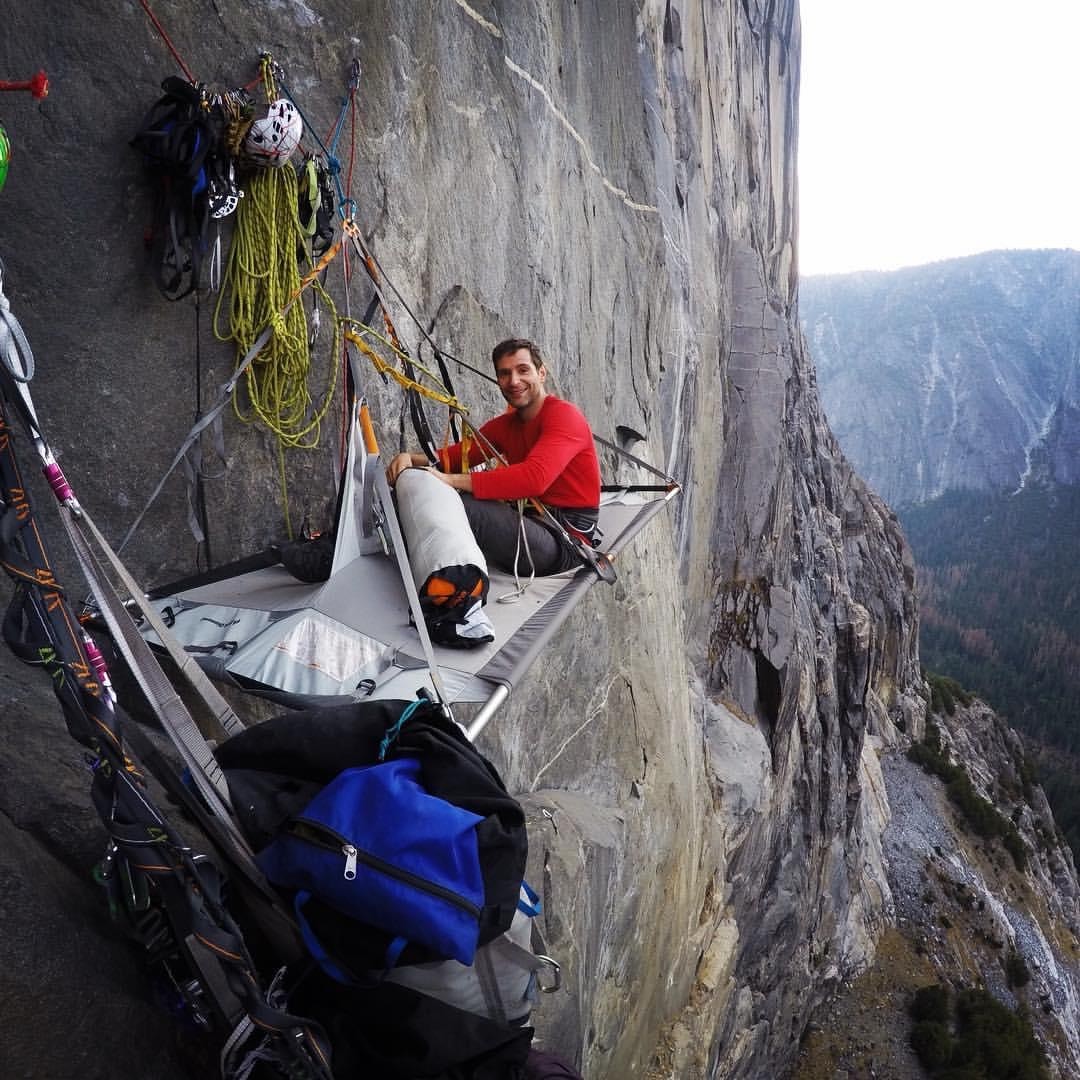
Climbing rocks was the perfect metaphor for the formidable challenges that Paul Stern faced during his legal career with the U.S. Justice Department. It required focus, precision and confidence—not to mention guts.
Stern often drew from his climbing skills as a government lawyer whose job was “defending the United States in the wake of unspeakable tragedies.”
He had the unenviable task of fighting against grieving families seeking compensation in the aftermath of two of America’s deadliest mass shootings: at First Baptist Church in Sutherland Springs, Texas, in 2017; and at Marjory Stoneman Douglas High School in Parkland, Florida, the next year.
Stern was assigned to argue that the government bore no responsibility for those shootings, tragic as they were, and should not have to pay. The odds were stacked against him.
Devin Patrick Kelley, the Sutherland shooter, should have been banned from buying firearms. He was given a bad-conduct discharge from the Air Force after being convicted of assault. Because the Air Force failed to report the conviction to the FBI, Kelley’s name did not come up in background checks. In the Parkland case, the FBI did not act on tips that the shooter talked about planning a massacre and had weapons.
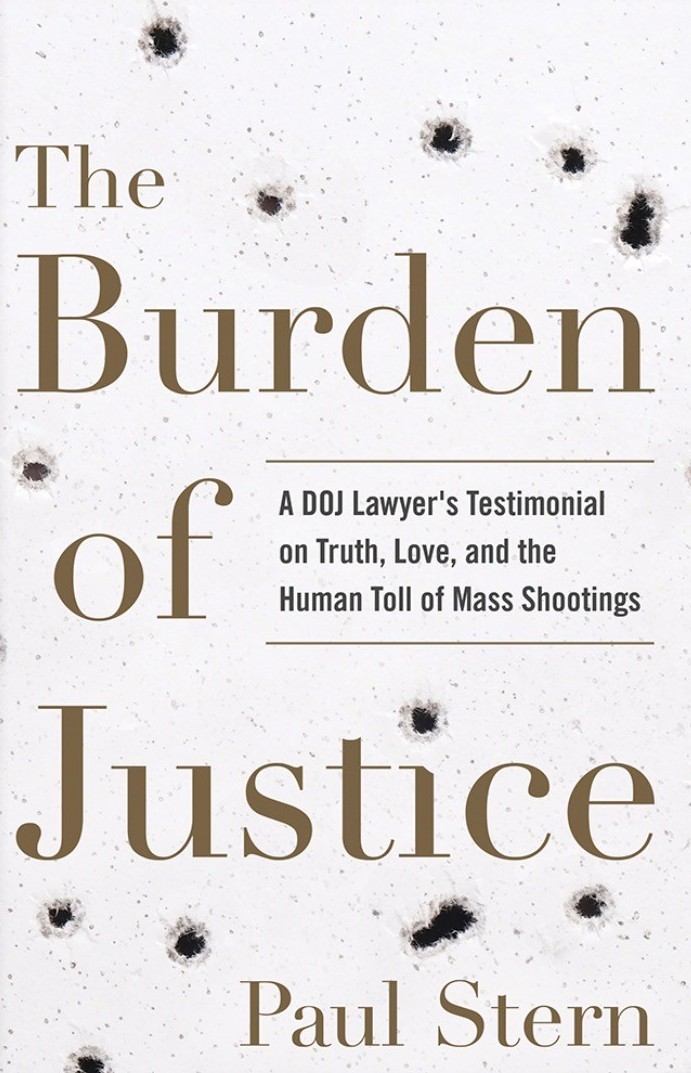
Stern writes about these cases and his career as a government lawyer in his new memoir, The Burden of Justice: A DOJ Lawyer’s Testimonial of Truth, Love and the Human Toll of Mass Shootings. Stern dives deep into the moral dilemmas he faced on the job and the personal toll these cases took on his relationships and mental health.
“I didn’t think that I could share other people’s worst days and talk about their catastrophic loss and their pain and suffering while beating my own chest,” he says. “I needed to share my own worst days also and my own insecurities and my own faults and my own foibles.”
Stern joined the Justice Department through the attorney general’s Honors Program in 2008 after graduating from American University Washington College of Law and clerking for the New Jersey Supreme Court. Back then, the Justice Department was considered one of the best places to work, where “legal crusaders, wearing the proverbial white hat prosecute depraved criminals and would-be terrorists,” Stern wrote.
Stern was assigned to the Torts Branch, which handles cases from families seeking compensation due to failures or negligence of the federal government. The Federal Tort Claims Act was passed in 1946, prompted by families who wanted compensation after an Army plane slammed into the Empire State Building in New York City.
As a government attorney, Stern had many roles. He worked with the FBI during its investigation of terrorist suspects after the 9/11 attacks, as well as on cases involving the abuse of prisoners at Abu Ghraib in Iraq.
“They were exciting cases but very intense and time-consuming,” he says.
After eight years on the job, Stern considered leaving. He was dating a globe-trotting professional rock climber and was enamored of her adventurous lifestyle. While climbing with her on El Capitan at Yosemite National Park, he suggested they find a home together near the park and look for other jobs. She suggested a long overseas vacation instead.
It was not to be. They broke up, but Stern decided to go on his own, traveling to New Zealand, Spain and Afghanistan, where he wound up volunteering with an organization called Ascend that taught climbing and leadership skills to young Afghan women.
After vacation, he returned to the Justice Department at a time when the nation was experiencing its highest rate of mass shootings, and before long, Stern was handed the Sutherland Springs case. He learned that Kelley, the shooter, despite having a criminal conviction, was able to buy an AR-556 semi-automatic rifle that he used to kill 26 people and wound more than 20 others. He took his own life after being wounded by shots from a citizen.
The first to file a negligence suit against the government were Joe and Claryce Holcombe, who lost a son and daughter-in-law along with a grandson, a pregnant granddaughter-in-law and several great-grandchildren. That suit was followed by 62 others that said the government failed to keep weapons from being sold to Kelley.
While Stern was working on the Sutherland Springs case, another massacre occurred in Parkland, Florida. Nikolas Cruz, 19, killed 17 people at his former high school. The shooting led to another wave of lawsuits against the federal government after it was revealed that the FBI had received tips that Cruz was a threat but had not followed up with the Miami field office for further investigation. Stern volunteered to take it on.
“Despite their apparent differences, there was one common thread between the shootings,” Stern writes. “Both had been preceded by failures of the United States government.”
And those failures would be at the heart of two cases that would test his resolve, patience and affect him deeply.
“It’s very difficult to litigate against mass shooting victims because you know they are victims,” Stern says. “So here I was, working at the Department of Justice, because you believe in that institution so much, and you want to do justice at the same time.”
The cases took him to meetings with high-level officials at the Pentagon, to the FBI, to numerous court hearings and to emotional depositions from family members. Through it all, Stern resolved to continue climbing and exercising and took a yoga class.
“It’s very difficult to litigate against mass shooting victims, because you know they are victims."
“To safeguard against the mental stress of lawyering is, bar none, the most important thing you can do, because you can't be a good lawyer without having those outlets,” he says. “I don’t think it’s a great surprise of how many lawyers look to alcohol, look to drugs, other avenues. But alcoholism runs rampant in our field. Divorce runs rampant in our field, and it's unfortunate.”
Stern and his team lost the Sutherland Springs case, with the judge finding that the government was 60% responsible for the shootings and the shooter was 40% responsible. The next step would be to negotiate a settlement with the families.
Around the same time, Stern was grappling with another crisis—this one more personal. Afghanistan, where he volunteered with young women climbers, was nearing collapse. President Joe Biden declared the U.S. would be withdrawing all troops by Sept. 11, 2021, and the Taliban’s promises for safety were fragile. Stern was recruited to help get the girls from Ascend safely out of the country during the chaos and spent many frantic days trying to arrange their exit.
The intensity of those cases and getting the girls out of Afghanistan culminated in an emotional breakdown that left Stern depleted. He walked away from his job at the Justice Department, moving to the Department of Interior and then jumping at an opportunity to serve as acting deputy superintendent at Yosemite National Park. He recently left that job and moved to London with his new girlfriend.

“I am unemployed for the first time in my adult life. I don’t know what that looks like,” he says. “I’d like to say I’m an author rather than unemployed. I think I have a few more books in me. It’s what I really would love to do.”
He also has retired from rock climbing. “I’m basically keeping both feet on the ground these days,” he says. “I do much more fly fishing and the older gentleman sports these days.”
The Sutherland Springs and Parkland lawsuits eventually settled after Stern left, with the families sharing in payouts of more than $100 million in each of the cases.








