On May 8, in West Virginia’s primary election, President Barack Obama received nearly 60 percent of the 178,000 votes cast in the Democratic primary. His opponent, who received about 40 percent of the vote, was a convicted felon named Keith Judd who managed to get on the ballot despite the…
When Massachusetts disciplinary authorities resumed their secret questioning of Boston Municipal Judge Raymond G. Dougan Jr. in late August, they had to do it with one hand tied behind their backs. Sure, authorities got to ask lots about nearly two dozen cases prosecutors say show Dougan’s pattern of bias toward…
Ask Kaleem Caire why he wants single-sex charter schools, and the Urban League president for the greater Madison, Wis., area says it would remove distractions and fears adolescents often have in classrooms, particularly when called on to show what they know. He’ll also tell you there are many fatherless children…
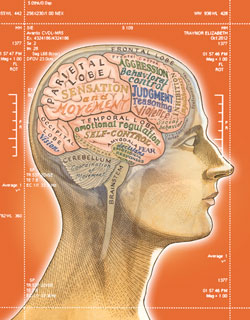
Six weeks after getting his driver’s license, Christopher Tiegreen—a friendly, outgoing 16-year-old who played soccer and sang in his high school chorus—was in a car collision near his home in Gainesville, Ga. Tiegreen’s Isuzu Trooper flipped several times, causing severe head injuries. He was taken by helicopter 50 miles to a hospital in Atlanta, where doctors told his mother he might not make it.
A month later, Tiegreen emerged from a coma a different person. The impact of the crash caused damage to the frontal lobe of his brain and sheared his brain stem. During his recovery and rehabilitation, the usually gentle Tiegreen became violent toward his mother, as well as with other family members and rehab staff. His family sent him to live in various residential facilities, but he frequently was expelled for inappropriate behavior.
On Sept. 11, 2009, Tiegreen, then 23, walked out of a duplex apartment where he was supposed to be under 24-hour supervision. In a yard nearby he attacked a young woman holding her 20-month-old son. He was charged with aggravated assault, criminal attempt to commit a felony, false imprisonment, battery, sexual battery and cruelty to a child in the third degree.
That was it. Nothing more could be done. Two years after the explosion of the Deepwater Horizon, Tina Copeland’s American dream was over. Her Mississippi Gulf Coast business was hemorrhaging funds, her marriage torn apart. Though billions were offered to settle damages from the April 2010 disaster, the formal process…
On a chilly December morning a week before Christmas, Leo Strine, the top judge on the Delaware Court of Chancery, is in a giving mood. A group of lawyers that won a $1.26 billion award in a dispute over the acquisition of a mining company has returned to court seeking…
New York City police arrested 19-year-old Elisaul Perez in March 2009 and charged him with assaulting a man and stealing his iPod. The officers brought Perez from the precinct to central booking, a holding area in the Queens County courthouse basement, where charges were drawn up. Under the Miranda rule,…
See if this sounds familiar: School officials learn that a student may have inappropriate material on a social media site. The officials—ostensibly concerned about bullying and other possible ramifications at school—call the student into the office, force him or her to reveal the password, log on to the site and…
If anyone is in a position to explain the essence of what makes Jim McElhaney tick, it might well be Steven J. Miller.
After starting law school at Vanderbilt University in Nashville, Tenn., Miller transferred in 1979 to Case Western Reserve University School of Law in his native Cleveland, where McElhaney was building a national reputation as a trial advocacy teacher. Miller introduced himself, “and from that moment he became my mentor. He was a very engaging, knowledgeable guy, and we hit it off.”
Miller took every trial advocacy course that McElhaney taught. “He helped people learning to think like a lawyer to talk like a human being,” says Miller, the managing partner at Miller Goler Faeges Lapine in Cleveland. “Jim knew that juries were still people. He knew that you reach people in their guts and their hearts, and not just in their brains.”
Federal appeals Judge A. Raymond Randolph is an admirer of the 18th century English critic Samuel Johnson. But it was Nick Carraway, the narrator of F. Scott Fitzgerald’s The Great Gatsby, whom Randolph found himself quoting during a 2010 lecture at the Heritage Foundation. “They were careless people. … They…