When 15-year-old Luis Cruz joined the Latin Kings in 1991, he was a child by almost any measure: he couldn’t legally drive, drop out of school, or buy a beer. But was he still a child a few years later when—just months after he turned 18—he murdered two people on the orders of gang leaders?
Nebraska inmate Carey Dean Moore became the first person to be executed with the drug fentanyl on Tuesday after a federal appeals court rejected a drug company’s challenge to two other drugs used in the four-drug lethal cocktail. Moore, 60, was executed for killing two cab drivers in 1997, report…
A Tennessee man was executed on Thursday after U.S. Supreme Court Justice Sonia Sotomayor warned that he was likely to suffer “torturous pain” while his suffering is shrouded “behind a veneer of paralysis.” Billy Ray Irick was executed for the 1985 rape and murder of 7-year-old Paula Dyer, report the…
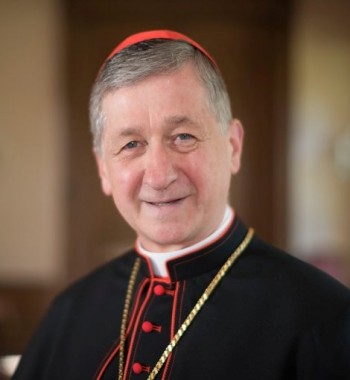
Just hours after Pope Francis declared the death penalty “inadmissible” in all cases, Cardinal Blase Cupich of Chicago urged elected officials and leaders to recognize their responsibility and vested interest “in defending the sacredness and value of every human life.”
Updated: In an appearance at the ABA Annual Meeting on Thursday, Chicago Cardinal Blase Cupich said revisions to the catechism on the death penalty reflect evolving church doctrine and an acknowledgement that the scales of justice can’t be rebalanced after a murder.
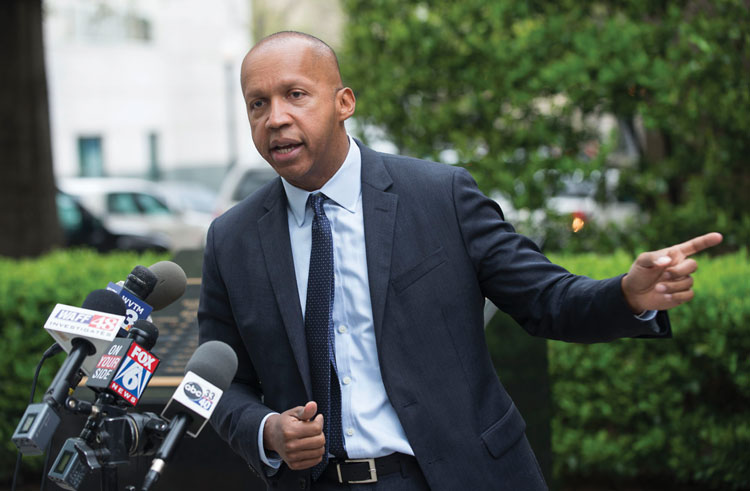
Bryan Stevenson, founder of the Equal Justice Initiative, will be awarded the American Bar Association’s highest honor, the ABA Medal, given to lawyers who have “rendered conspicuous service to the cause of American jurisprudence.”
“I’ve had the great privilege of representing people whose lives and value and humanity are so clear to me that I’m very motivated. Winning their freedom is enormously energizing.”
A recent Supreme Court decision addresses a dilemma that would challenge any lawyer—how to respond if a client refuses to confess to a capital crime when the lawyer believes such a strategy may be the only way to avoid a death sentence.
On June 18, the U.S. Supreme Court declined to hear arguments in the case of Charles Rhines, a South Dakota prisoner who claims he was sentenced to death in part because he is gay. Rhines was convicted in 1993 of fatally stabbing 22-year-old Donnivan Schaeffer during a robbery in Rapid City.
Banning the death penalty for defendants with severe mental illness would save the state of Tennessee an estimated $1.4 to $1.9 million a year, a new ABA study says.
Warning: This story contains graphic content that could be disturbing to some readers. It’s been 13 years since a floridly psychotic black man named Andre Thomas was sentenced to die. He killed his estranged white wife, their young biracial son and the wife’s other biracial child. He then stabbed himself…
The Capital Clemency Resource Initiative offers state-specific information about clemency in death penalty states, plus past petitions, court decisions, academic papers and ABA policy on the subject.