Protecting the vote is central to Jason Abel's career


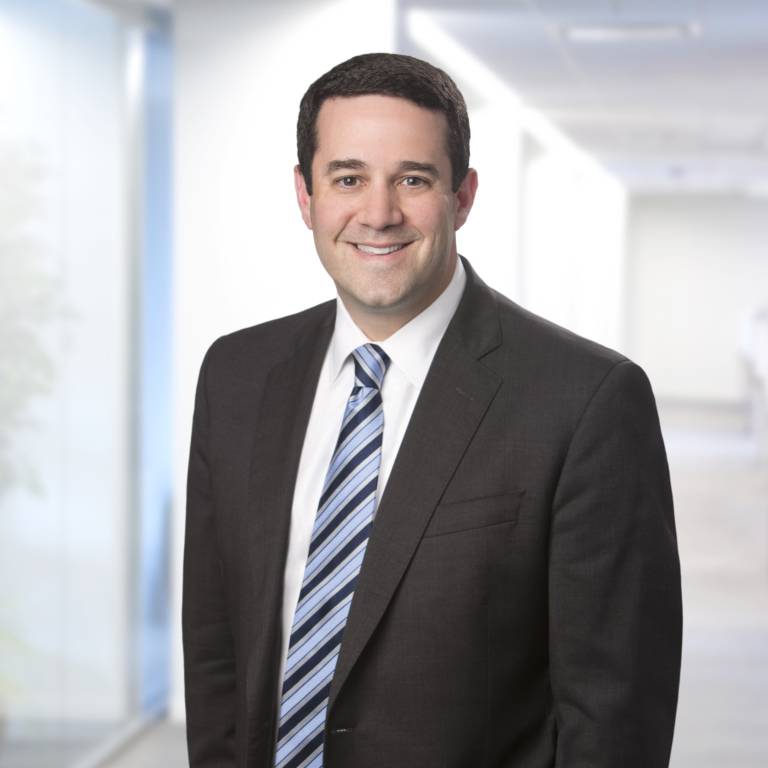
Jason Abel traces his interest in voting rights and his subsequent experience in voter protection back to when he was a summer law clerk with the NAACP Legal Defense and Educational Fund in 2001.
At the time, Abel, who was in his 1L summer at the University of Pennsylvania Carey Law School, served as a poll monitor during a special election for a congressional seat in Virginia. It was among the first federal elections after Bush v. Gore, in which the U.S. Supreme Court ruled in 2000 that an inconsistent ballot recount process in Florida violated the equal protection clause.
It also came amid reports that voters, particularly in Black and Latino areas, had run into problems when trying to cast their ballots in the general election. As a result, a coalition of civil rights groups organized an election protection poll monitoring initiative, which Abel says resembles many operations now seen nationwide.
“It started then to hit home that I had this pretty strong interest in election law and voting rights, and also in civil rights more broadly,” Abel says.
In the years that followed, Abel was involved in many efforts to protect the right to vote. He served as the director of voter protection for the Democratic Senatorial Campaign Committee in Mississippi in 2008. He also has been a leader in the “boiler room”—the legal operations headquarters on Election Day—in Alabama, Tennessee, North Carolina, Pennsylvania and Virginia.
On Tuesday, Abel again will be volunteering in his home state of Virginia during the midterm elections.
“I’ve been able to take on a lot of responsibilities in boiler rooms over the years,” says Abel, now a partner at Steptoe in Washington, D.C., and the head of its campaign finance and political law practice. “It’s very fast paced, and you deal with a lot of issues that are frustrating, that can make you angry and that can be heartbreaking.”
“Just being able to keep your eye on the ball and figure out how you can help as many voters as possible is really the overarching goal,” he adds.
Advancing civil rights
Abel credits his parents, who were public school teachers in the Chicago suburbs, for instilling in him a sense of equality and justice.
While at the University of Illinois, Abel studied the civil rights movement and the Supreme Court’s impact on democracy. After receiving his bachelor’s degree in political science and history in 2000, he hoped to continue his focus on civil rights in law school.
Abel graduated with his JD in 2003 and joined O’Melveny & Myers, where he worked on civil rights and voting rights matters as a young associate. Four years later, an opportunity arose to serve as counsel to U.S. Sen. Chuck Schumer, and he couldn’t pass it up.
“Another one of the great experiences I had as a summer law clerk at the LDF was seeing how lawyers on Capitol Hill were able to advance civil rights work and really push issues that needed to be heard,” says Abel, who assisted with the Matthew Shepard and James Byrd Jr. Hate Crimes Prevention Act of 2009 while in Schumer’s office.
When Schumer became chairman of the U.S. Senate Committee on Rules and Administration, Abel became its chief counsel. As part of his work, he served as the lead Senate aide for campaign finance issues. He was in this role in 2010 when the Supreme Court decided Citizens United v. FEC, which found that limits on independent political spending by corporations and unions were unconstitutional.

When Abel joined Steptoe in 2013, he continued to advise his clients on campaign finance as well as lobbying compliance, congressional investigations and other government affairs issues. He still handles voting rights and election law matters, including through the firm’s pro bono program.
He also teaches campaign finance law and congressional procedure at George Washington University Law School and election law at the University of Pennsylvania Carey Law School.
“Building this type of practice and working on these issues day-to-day was something that was very important to me,” says Abel, who has two children with his wife, Courtney, a fellow lawyer.
Protecting the vote
Abel has led other voter protection efforts, including as a longtime member of the ABA Section of Civil Rights and Social Justice.
For more than a decade, he has helped organize CRSJ’s annual state of voting rights panel, which brings practitioners and scholars together to discuss issues facing voters. In March, he also participated in a voting rights program during the section’s Civil Rights Boot Camp.
This fall, Abel helped develop and introduce a new CRSJ initiative—the Fair Elections Toolkit. It was designed to be an easily accessible information hub for anyone interested in learning about voting rights, election law and nonpartisan election protection.
He thought this resource could help dispel the misconception that only voting rights lawyers with experience in the field can help with elections, Abel says.
“In my experience working with election protection, there are a lot of lawyers who have never done civil rights or election law work,” says Abel, who is a member of the CRSJ Council and co-chair of the section’s Civil Rights and Equal Opportunity Committee. “They might do bankruptcy or tax, and they are able to help.”
Mario Sullivan, the immediate past CRSJ chair, describes Abel as “a tireless champion of voting rights.” In all of his service to the section, Abel “brings deep expertise, energy and a steadfast commitment to protecting the right to vote,” he says.
Paul Smith, the current CRSJ chair, echoes these sentiments. Abel’s work “makes complex election issues accessible and gives people practical tools to understand and protect their rights,” he says.
While the midterm elections are upon us, lawyers can help protect the vote at any time, Abel says. These opportunities include volunteering during special elections as they arise or even just writing to members of Congress about advancing or renewing voting rights protections.
“Most of all, if we are knowledgeable about what is happening when voting rights protections are being dismantled and understanding what is required to repair them, that unfortunately is a day in, day out, year in, year out task,” Abel says.
“Keeping up to speed and ahead of those issues, it’s helpful if we all do that,” he adds.
Members Who Inspire is an ABA Journal series profiling exceptional ABA members. If you know members who do unique and important work, you can nominate them for this series by emailing [email protected].
Write a letter to the editor, share a story tip or update, or report an error.