ABA Journal Logo

ABA Journal

Latest Features

The 9th Annual Blawg 100

For this year's annual Blawg 100 feature—our ninth—we're going beyond announcing our list of 100 excellent legal blogs and the promotion of 10 more blogs to our Hall of Fame. We explore how the legal blogosphere has changed since we first started publishing this list. Do legal blogs have a waning or a thriving readership? And how has the emergence of new bloggers from BigLaw and elsewhere and other social media platforms in recent years changed blogging for the better—or worse?

As in years past, we looked to readers and bloggers to help us compile our list. But this year, no blogs are being forced into categories, and there will be no online voting. Read below to find out more about the blogs on our list, and click here to find our Blawg 100 Twitter list, which includes both the handles of our Hall of Famers and this year's nominees.



Visit our Blawg 100 landing page to read about our eight prior lists, and check out the thousands of other legal blogs in the ABA Journal Blawg Directory.


'Umpire' blog is shuttered, but its judge-author is staying in the game

Blogging judge Richard Kopf says he hates the "mythology" that surrounds federal judges.

"I do think that all of us put our boots on in the same fashion. There's no harm—indeed I believe that there's some good—in acknowledging that," says Kopf, a senior judge for the U.S. District Court for the District of Nebraska, who prefers to be called "Rich" when he is not on the bench.


Supreme Court ruling could spark more unintentional-discrimination cases

A recent U.S. Supreme Court opinion that addressed unconscious discrimination in a low-income housing case could have far-reaching effects on future civil rights and criminal cases involving implicit bias. The June 2015 opinion (PDF) dealt with a claim against the Texas Department of Housing and Community Affairs. It alleged that…


Patent holders allege financial companies are misusing new post-grant review process for profit

Ferrum Ferro Capital, a privately held venture fund, lists its address at a mailbox rental store in Wilmington, Delaware. The company's mostly empty website describes itself as "focused on innovation, application and monetization."

Four months after the company was formed in 2014, Ferrum Ferro filed for FDA approval of a glaucoma drug. In a letter to pharmaceutical company Allergan, Ferrum Ferro attorney Amir Naini of the Los Angeles firm Russ August & Kabat said it was proposing to make a generic version of Allergan's glaucoma drug, Combigan.


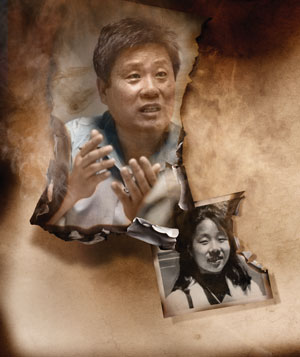
Long-held beliefs about arson science have been debunked after decades of misuse

"Slow and painful has been man's progress from magic to law."

So began the report and recommendation of a federal magistrate judge last year in the case of Han Tak Lee, a New York man then serving a life sentence in a Pennsylvania prison for the 1989 arson murder of his 20-year-old mentally ill daughter, Ji Yun Lee.


32 of lawyers' most common fears

Does your law practice make you fearful? You are not alone, according to John Lande, an emeritus professor of law at the University of Missouri. Some of lawyers' most common fears include:

• Feeling that their offices or cases are out of control.


How prosecutors brought down Lucky Luciano

The telephone rang at midnight, jolting Samuel Kornbluth from an already-troubled sleep. Maurice Cantor began by apologizing for the unseemly hour. A lawyer best known for his representation of the late Arnold Rothstein, Cantor wanted to know whether Kornbluth was still acting as counsel for Dorothy Russell Calvit, the daughter of stage legend Lillian Russell. Yes, Kornbluth replied—was there something the matter with Dorothy? Nothing of the sort, Cantor assured him. But he had with him a colleague who would very much like to speak with Calvit's lawyer. May he put George Morton Levy on the line?


Debt-buying industry and lax court review are burying defendants in defaults

After more than four decades as a commercial litigator, Ward Benshoof was shocked at what he learned two years ago while handling a post-judgment debt-collection case. What had been accepted as evidence seemed to have no more substance than the shadow of smoke. And as he later learned, it also was not evidence at all.


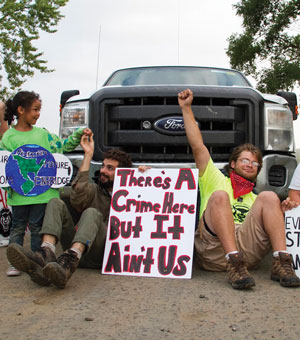
Protesters may pay the price when civil disobedience becomes costly

Michigan State University student Duncan Tarr knew he could face criminal trespass charges when he decided to protest the construction of a pipeline that would transport crude oil known as tar sands from Canada through Michigan. Tarr and Dylan Ochala-Gorka, a carpenter, put U-locks around their necks and connected themselves to a truck to block access to the pipeline road in Oxford. The men, both organizers of a group called Michigan Coalition Against Tar Sands, were indeed arrested after firefighters were called to cut the locks during the August 2014 incident. They pleaded guilty to trespassing charges.


Chinese companies doing business in the US build barriers to legal remedies

While an increasing number of Chinese companies are doing business in the U.S., China has nevertheless built a legal firewall around its financial services firms by refusing to acknowledge the jurisdiction of U.S. courts and regulatory agencies.


Read more ...