Meet the researcher tracking hallucinations in legal filings


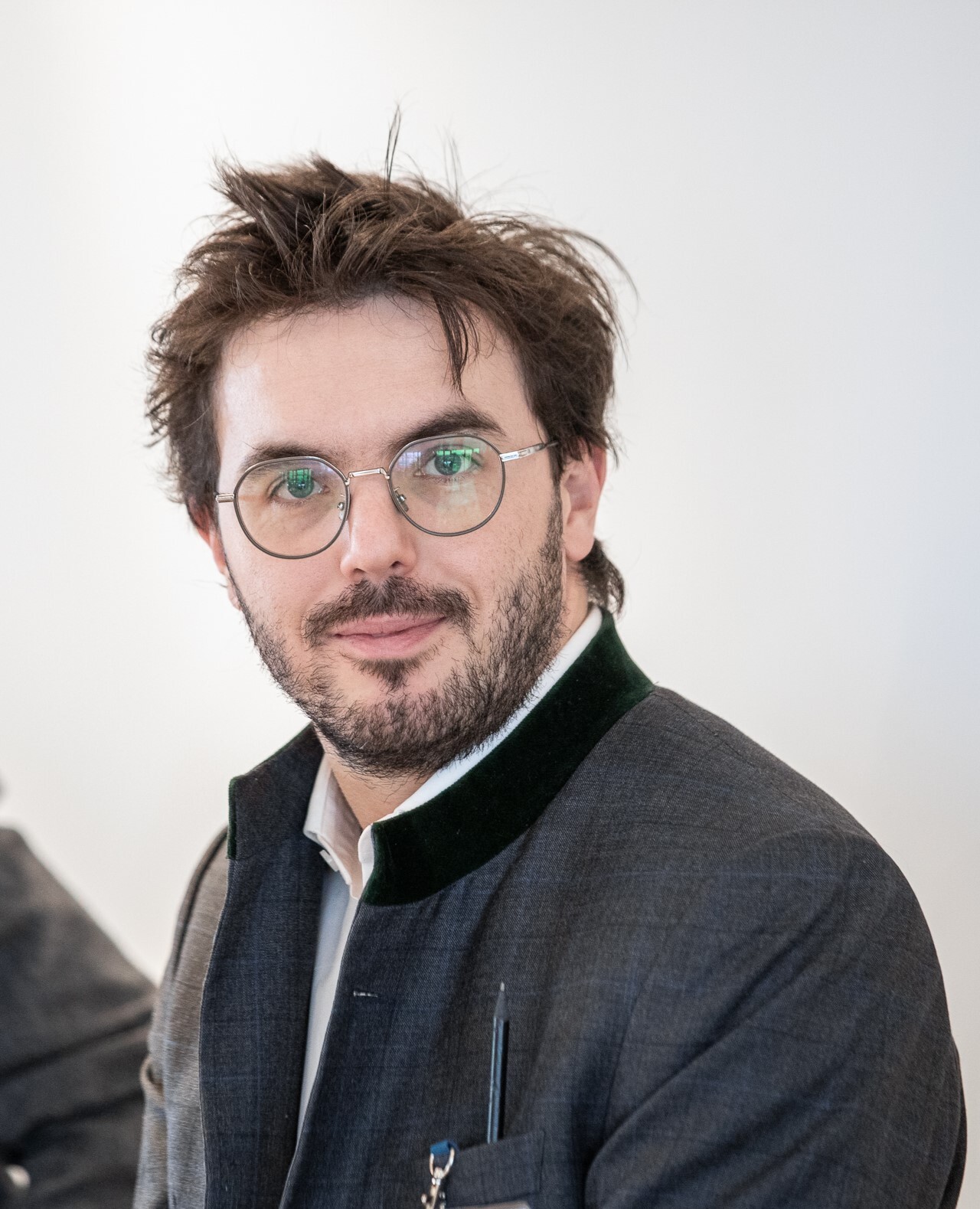
Damien Charlotin grew up as a self-proclaimed geek in Brittany, France, playing video games and learning to code.
Those coding skills came in handy when as a doctoral student at the University of Cambridge in 2020, Charlotin built a database with nearly 200,000 legal citations to accompany his thesis on citing authorities in international legal disputes. That led to teaching legal data analysis—essentially coding for lawyers, he says—at HEC Paris and Sciences Po Paris.
Charlotin still remembers introducing his students to OpenAI two days before the generative artificial intelligence company released ChatGPT in 2022.
“They had no idea what was coming,” Charlotin says. “And obviously, you can never have again that kind of awe on their faces.”
Charlotin transitioned easily into teaching about AI and the legal profession. In April 2025, he was discussing the limits of large language models in the legal domain when he realized there wasn’t much data about hallucinations. He decided to pull together information into what became the AI Hallucinations Cases database, which tracks legal decisions in cases where generative AI produced fake citations and other hallucinated content.
“I’m very empirically minded, and I wanted to be sure that hallucinations were actually an issue,” Charlotin says. “And if so, to what extent?”
With the help of referrals, targeted searches and automated extraction and tagging, Charlotin has identified 2,334 cases that cite hallucinated material. His coverage of the United States is particularly strong because court information is more accessible, he says, but he also highlights cases from dozens of other countries.
And his conclusion? Hallucinations, while often highlighted, are not a major problem.
“I don’t think there are that many cases, all things considered,” Charlotin says.
Digging into the data
Charlotin’s AI Hallucinations Cases database has been shared by media around the world.
“For the first six months, I had something like four or five interviews a week,” Charlotin says. “It was kind of weird, to be honest. That’s easier now, but still, there is a lot of interest.”
A new trend in Charlotin’s data is now catching the legal profession’s attention. Court filings that contain hallucinations seem to be decreasing this year, from 462 in the first quarter to 435 in the second quarter. He logged 376 cases in the third quarter, and so far, only 117 in the fourth quarter.
Charlotin largely attributes the decline in hallucination cases to improved AI models and tools.
“Hallucinations are mostly a technical issue, and you can to some extent fix them by making sure citations are checked by something else, which is something the legal tech side is doing more, or making sure citations of anything are limited to things the model knows particularly well,” Charlotin says.
Other factors may contribute to a decrease in fake AI citations, including that lawyers who misused AI already have been identified and disciplined in many situations, Charlotin adds.
While Charlotin hopes that legal practitioners will continue to use his database to track trends with hallucinations or to keep an eye on relevant cases in their jurisdictions, he also says it is the impetus for other important areas of his work.
He spends a lot of time researching and writing, both as part of his ongoing legal scholarship on AI and the law, and for Artificial Authority, his Substack publication that covers developments in these areas. Charlotin has focused recently on adversarial inputs, which he describes as “attempts to fool or manipulate the AI-mediated legal work on the other side for one’s own purposes.”
“The basic idea is that if you know the other side is using AI and delegating everything to AI, you will be incentivized to exploit it, and you can exploit it,” says Charlotin, who serves as a AI strategy consultant to law firms. “I think that will become even more common.”
Based on his database, Charlotin also created Pelaikan, an automated legal citation and reference verification tool for legal professionals. It has web, desktop and Word versions, and he is now developing Claude and ChatGPT integrations.
While not his main gig, Charlotin has a few clients and is happy to help them shave time off their workdays, he says.
Not a ‘magic button’
Charlotin is bringing his experience with AI and the law to this side of the pond.
As a co-director of the AI-Enabled Lawyer Lab at the University of California College of the Law, San Francisco, Charlotin is designing and teaching an introductory course on legal AI tools. Currently in the pilot phase, it will roll out to the entire cohort of nearly 400 2L students next year, he says.
In the course, Charlotin aims to teach law students how AI models actually work; how to use any platform, no matter the vendor; and how to rely on their own judgment even when incorporating AI into their workflows.
“The main logic throughout the course is that the use of AI by law students, and in fact by anyone, should be as far away from the notion that AI is a magic button as possible,” Charlotin says.
Charlotin, who is married and has a 1-year-old daughter, will mostly teach virtually but plans to travel to San Francisco a few times each semester. He’ll also be in the city in early December to teach practicing lawyers and legal professionals about AI during an intensive three-day program.
“I’m very busy, maybe I should focus on one thing,” jokes Charlotin, who along with everything else, practices in public international law and international arbitration.
Write a letter to the editor, share a story tip or update, or report an error.