Patrick Murphy doesn’t deny participating in the murder and mutilation of George Jacobs in 1999.
But it’s possible that his conviction doesn’t count. As Murphy argued in a habeas appeal to the 10th U.S. Circuit Court of Appeals at Denver, he’s a member of the Muscogee (Creek) Nation, as was Jacobs, and the murder took place on land that was part of the tribe’s reservation as defined by an 1866 treaty.
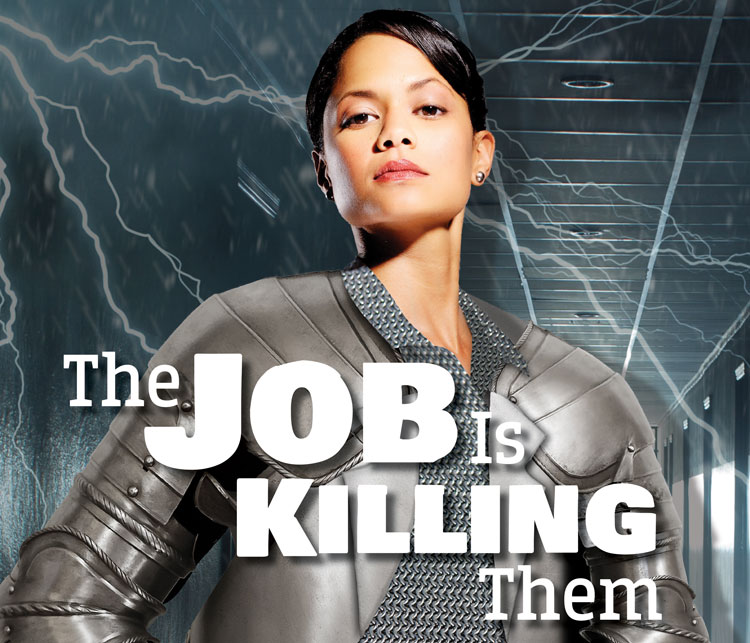
A series of surveys on violence against lawyers shows that family lawyers face disproportionate amounts of threats and violence compared to other lawyers. Almost all lawyers in the 27 states surveyed said they’d received some kind of threat or experienced violence. But the rate for family lawyers was higher.
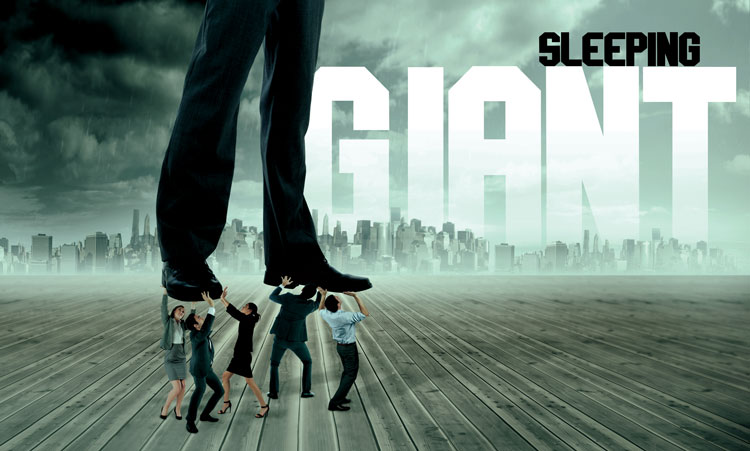
The Big Four accounting firms have added legal services, moving beyond tax law and integrating their legal services into a multidisciplinary approach.

This year’s 11 ABA Journal Legal Rebels innovators are building roads to justice, efficiency, technology and knowledge.

A class action suit against the Pop Warner youth football league on safety concerns stands to be the first lawsuit to go to trial.
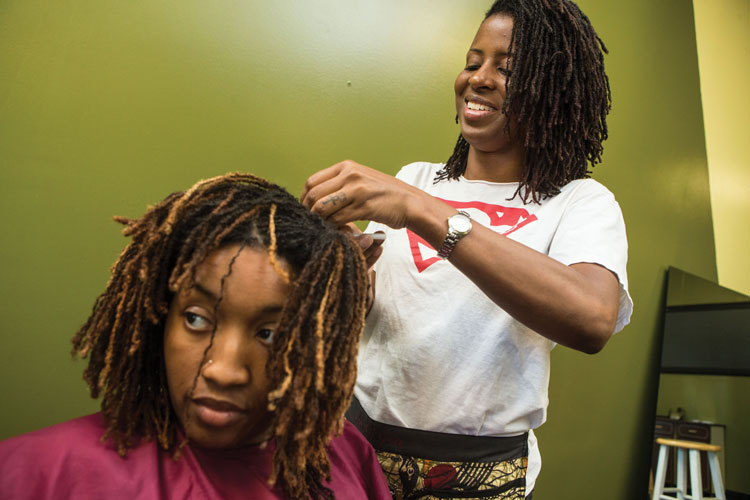
Carefully layering one tiny strand of hair over another, Tameka Stigers has spent years honing her talent for African-inspired, natural hair braiding.
The style she currently specializes in, delicate little twists trademarked as Sisterlocks, involves a process that can take up to 12 hours and relies on patiently working on small sections of hair with the hands, rather than using chemicals, hair irons or scissors. Stigers’ hair-braiding skills have become so prized that the St. Louis woman opened a free-standing salon dedicated to natural braiding last year.
Yet a cloud is hanging above her new business. Under Missouri law, for Stigers to operate legally, she would have to attend at least 1,500 hours of cosmetology classes, in which she’d learn dyeing, cutting, perming and other skills that have nothing to do with African-style braiding. “It’s the most asinine thing,” says Stigers, who has a master’s degree in public health.
The Missouri legislature passed a bill that will finally give Stigers a break. Instead of making hair braiders earn a degree in cosmetology, the law, passed in May, will require them to watch an in-depth instructional video on health and sanitation, register with the state, and pay a small licensing fee. Former Gov. Eric Greitens signed it on his way out of office in early June; absent a challenge, it will take effect this month.
Braiders such as Stigers, who worked illegally under the old scheme, will be able to come out from the shadows. The old rules, she says, “absolutely did not make sense.”
If Stigers were to move her business to nearby Tennessee, however, she’d be back on the wrong side of the law. Braiders there must complete at least 300 hours of training and get a specialty license to run a legal braiding business. An effort to loosen the Tennessee regulations fell apart in March amid a separate fight about combining barber and cosmetology licenses.
Hair braiding in the United States is governed by a patchwork of regulations—or lack of them—that critics say have not kept pace with popular braiding styles. The hodgepodge is providing an opening for libertarian-leaning lawyers.
The nonprofit Institute for Justice, a legal organization founded with money from free market proponent Charles Koch, has taken on what it says are unfair and oppressive regulations for hair braiders. The trend is in its favor. Over the past four years, more than a dozen states have loosened their rules for hair braiders—with an additional handful of state legislatures close to joining them.
According to the institute’s running tally of legislation, some 25 states had no licensing requirement for hair braiders as of mid-June. Another 15 or so states, including Illinois, Missouri and New York, plus the District of Columbia, have created specialty hair-braiding licenses that have much easier training requirements than for cosmetology. About 10 states require hair braiders to undergo the more rigorous process of going to cosmetology school and getting a cosmetology license.
Even so, some hair professionals still want rules in place to protect consumers from unsanitary practices and give them a place to complain. In 2011, North Carolina shifted from requiring no license for braiders to enacting a specialty license with a 300-hour education requirement.
African-style braiding has soared in popularity in recent years, as celebrities such as Beyoncé and Nicki Minaj have shown off braided locks. Many black and biracial women like that it’s chemical-free and lasts a long time.
Popular styles include box braids —which usually involve adding synthetic hair extensions to square-shaped sections of braided hair—as well as the tiny twists of Sisterlocks and head-hugging cornrows. The work can take an entire day and cost several hundreds of dollars. But clients save time and money by not needing to style their hair each day.
A hair braider’s tools are a comb, hair bands and in some cases boiling water to dip and seal the ends of braids. Although formal hair-braiding schools have cropped up, many braiders say they learned the skill as children from family members.
That simplicity drives some to argue braiding is a different industry from hair styling altogether—for which practitioners attend cosmetology school to learn about color treatments, highlights, permanent waves, chemical relaxers, and cutting and shaping. Some braiders complain that the people in charge of oversight know little about their craft, which dates back centuries to Africa.
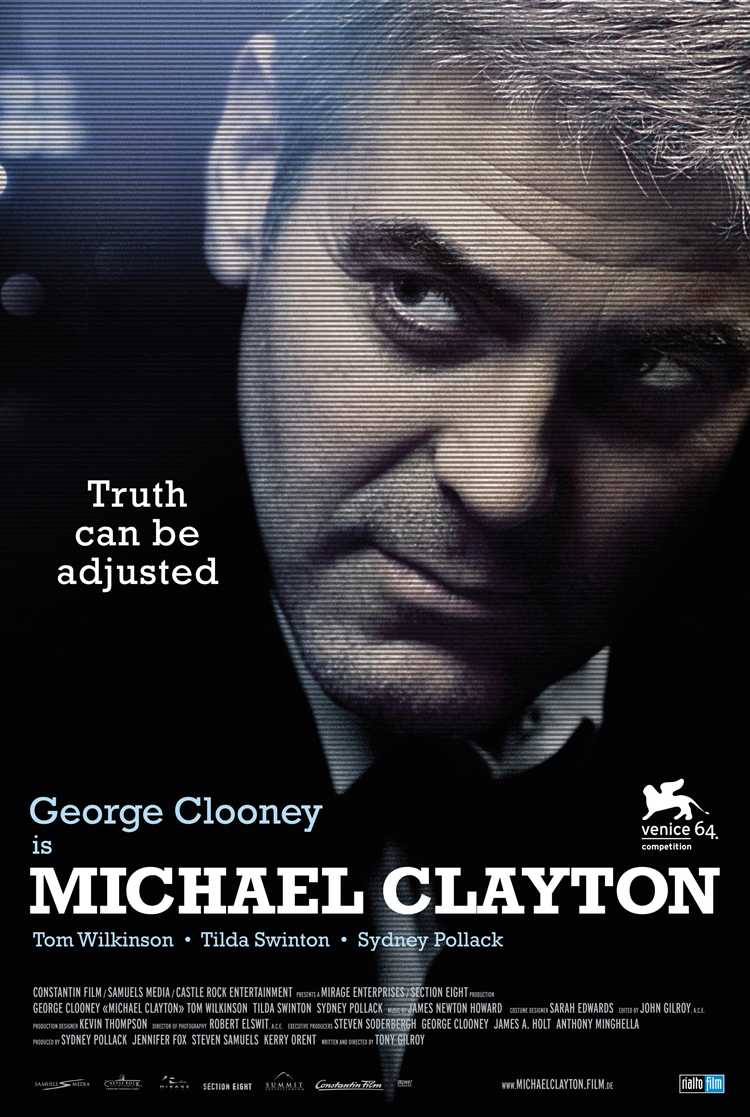
Hollywood, for instance, has always had a crush on crusading lawyers. But tropes that once dominated legal dramas have given way to an entirely new twist on the genre. Cinema has developed a newfound cynicism about the once-righteous trial attorney. Nowadays, perhaps consistent with our diminished faith in public institutions, the legal system and its practitioners, as depicted in movies, have been found wanting and guilty

Our panel had its work cut out to name the 25 greatest legal movies. But why stop there? Here are 25 more screenworthy choices.

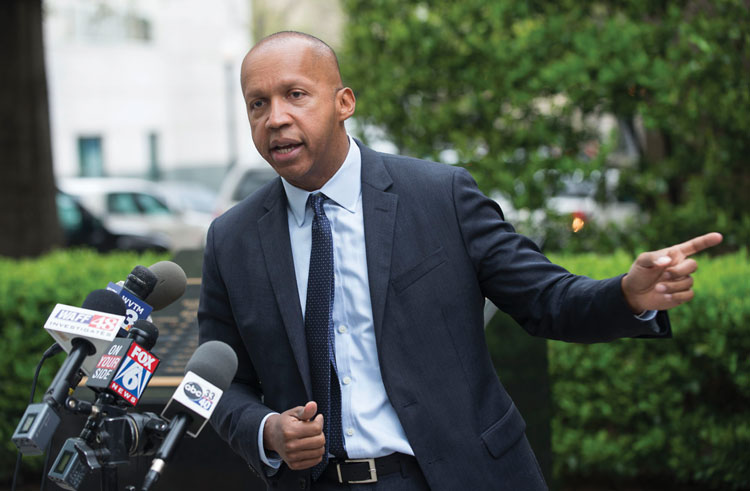
Bryan Stevenson, founder of the Equal Justice Initiative, will be awarded the American Bar Association’s highest honor, the ABA Medal, given to lawyers who have “rendered conspicuous service to the cause of American jurisprudence.”
What keeps you going in the toughest times?
“I’ve had the great privilege of representing people whose lives and value and humanity are so clear to me that I’m very motivated. Winning their freedom is enormously energizing.”