If AI can think for you, why go to college?


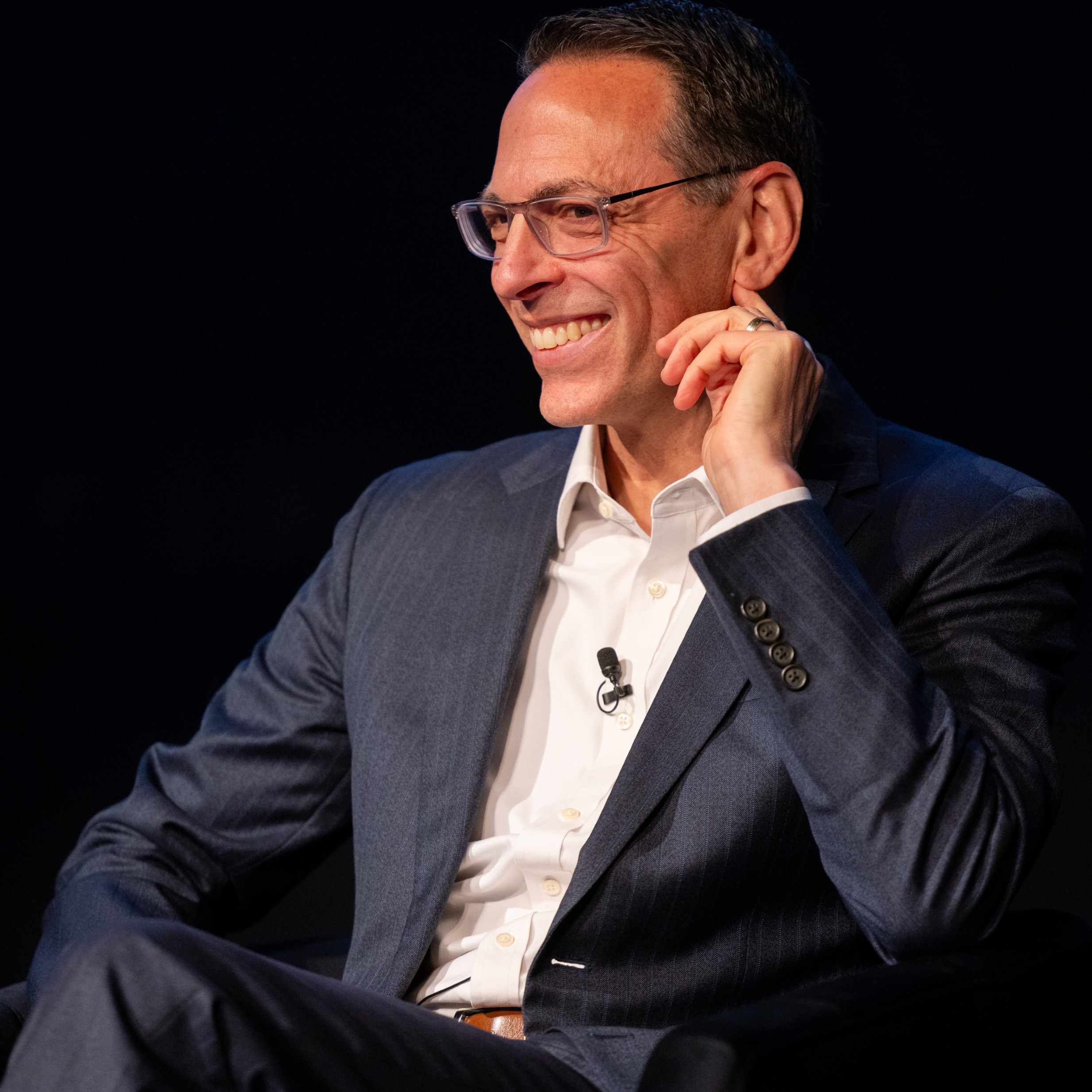
Jonathan Rosenbloom.
Artificial intelligence can summarize an entire semester of coursework in seconds, grade assignments, pass the bar exam and write a legal brief. Meanwhile, the decision to pursue higher education has never faced more scrutiny. Politicians brand universities as ideological factories, parents balk at the soaring price tag, new federal policy caps graduate student borrowing, research funding is under political siege, and enrollment is nearing a demographic cliff.
In short, AI can now perform many of the tasks that once defined the purpose of higher education, even as a degree grows more expensive and harder to obtain. As the first generation raised entirely on smartphones comes of age, the question once whispered is now asked aloud: Why bother?
I’ve been thinking about that question a great deal because my father—my first teacher—died a few weeks ago.
He was 84, and had spent nearly six decades as a pediatrician. Doctors don’t choose pediatrics for the money. What it offered instead was moments like this: My father kept a sewing kit in his office, so he could repair the stuffed animals his young patients brought in for “checkups”—transforming frightened toddlers into trusting ones.
When his medical group considered dropping Medicaid patients, he fought it until the policy died, on the conviction that a child’s care shouldn’t depend on circumstance. Even after retiring, he continued reading medical journals, long after anyone expected him to. He never stopped asking what more there was to learn or how he could better serve his patients.
I took a different path and became a law professor, but I inherited his love for learning and teaching. That inheritance shows up each year, when I take 15 law students to Parma, Italy, where they study alongside students from the University of Parma. We focus on international and comparative law through the lens of climate change and food systems.
Parma is not an arbitrary choice: It sits at the heart of the Po Valley, one of Europe’s most productive agricultural regions and, increasingly, one of its most climate-stressed. The city that gave the world Parmigiano-Reggiano and prosciutto di Parma is also grappling with drought, flooding and the slow transformation of its landscape. For law students studying the intersection of climate and food, there is no better classroom.
Before my father died, I spent weeks designing an architectural walking tour for my students. It looked like a tour about art, history and culture, but that was never really the point. The goal was to teach them how to ask questions.
Why did the Romans establish Parma where they did? Why is an ancient bridge now far from the river it once crossed? And why is it 30 feet under ground? Why does a medieval cathedral feel solid and permanent, rather than light and soaring? Why do cities preserve some historical scars while erasing others?
I finished preparing the tour as my father’s health declined. By the time the students arrived in Italy, it was clear I would not be there to walk those streets with them. Handing them that tour became the last lesson I could give: the instinct to look at something and ask why, curiosity disciplined into a method.
Law is not something confined to heavy casebooks. It is something you learn to see everywhere.
Parma exists because of centuries of decisions about property, water, transportation, taxation, religion and political power. The Romans chose its location because of trade routes, river access and geography. Its bridges, churches, parks and public squares all reflect legal and political settlements reached long before today’s students were born. The challenge is to learn to see those choices, rather than merely admire the surface. A building is never just a building. A patient is never just a patient. A law is never just a law.
Universities, at their best, cultivate exactly that habit of mind. They take the instinct to ask questions and test it against history, evidence and experiences different from our own. Students encounter historians who complicate their assumptions, scientists who demand evidence, lawyers who expose weaknesses in their reasoning, and classmates whose perspectives challenge what they thought they knew. Curiosity may begin alone. Education is what happens when curiosity is refined, corrected and sometimes proven wrong.
That education extends well beyond the classroom. College coincides with one of life’s defining transitions, when young adults begin testing inherited beliefs against lived experience. They learn not only what to think but how to evaluate sources, navigate uncertainty, recover from mistakes and accept that freedom and responsibility cannot be separated. Those lessons are not incidental to higher education. They are among its greatest gifts.
None of this dismisses the legitimate criticisms of modern universities. College has become too expensive for many families. Access remains unequal. Public confidence has declined sharply. Those concerns deserve serious attention.
But they also risk obscuring what higher education is actually for.
If education was simply about acquiring information, AI would already have won. It retrieves facts faster than any professor, summarizes books in seconds, and answers doctrinal questions with astonishing speed. Used well, it can make students more efficient and professionals more productive.
What it cannot do is decide which assumptions deserve to be questioned, which problems are worth solving, or why one answer matters more than another. It cannot teach judgment, empathy, intellectual humility or moral responsibility. Those qualities emerge through sustained engagement with teachers, classmates, difficult ideas and experiences that resist easy answers. It is the difference between diagnosing a child with the flu and sewing their teddy bear along the way.
My father understood that instinctively. He never believed expertise was something you earned once and possessed forever. Education was not preparation for life; it was a way of moving through the world. He remained and taught me to be curious because curiosity made him a better physician—and more importantly, a better human being.
The tour was supposed to end in Piazza Garibaldi, where students could stand in one place and see centuries layered upon one another—Roman foundations beneath Renaissance ambition beneath modern civic life. It was the perfect place to end because, by then, the lesson was no longer really about Parma. It was about learning to see that nothing worth understanding simply is. Cities. Laws. Institutions. Patients. They are all the product of choices, assumptions, compromises and people who believed in curiosity.
AI will almost certainly write better legal briefs than many of my students someday. It may summarize every case they read and answer every doctrinal question they ask. Those developments should change how universities teach.
They should not change why universities exist.
The purpose of higher education has never been simply to fill minds with information. It is to cultivate people who can think critically, question confidently, empathize with the world around them, revise their beliefs when the evidence demands it, and approach the world with both curiosity and humility. My father taught me to remain curious. My education taught me how to sharpen that curiosity. AI can help us find answers. It cannot tell us which questions are worth asking—or what kind of people we should become while asking them. That remains the work of education.
Jonathan Rosenbloom is an associate dean and a distinguished law professor at the Albany Law School in Albany, New York. A co-founder of the Sustainable Development Code, the host of the podcast Insincerely Yours, Earth, and the author of numerous legal texts and treatises, Rosenbloom bridges architecture and law to equip communities with actionable climate solutions.
ABAJournal.com is accepting queries for original, thoughtful, nonpromotional articles and commentary by unpaid contributors to run in the Your Voice section. Details and submission guidelines are posted at “Your Submissions, Your Voice.”
This column reflects the opinions of the author and not necessarily the views of the ABA Journal—or the American Bar Association.
Your Voice submissions

The ABA Journal wants to host and facilitate conversations among lawyers about their profession. We are now accepting thoughtful, non-promotional articles and commentary by unpaid contributors.
Your Voice