As courtrooms specializing in girls’ cases crop up around the country, the U.S. Department of Justice is examining whether they actually work.
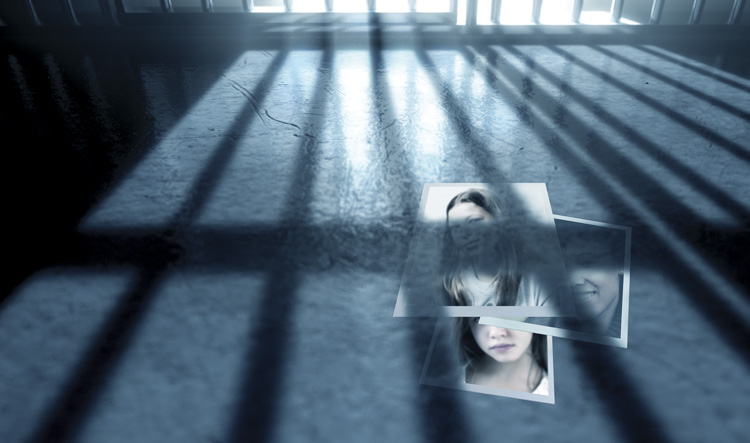
In pockets around the country, the movement to keep kids out of detention homes and prisons is beginning to give more focus to girls, whose experiences and vulnerabilities are markedly different from those of boys.
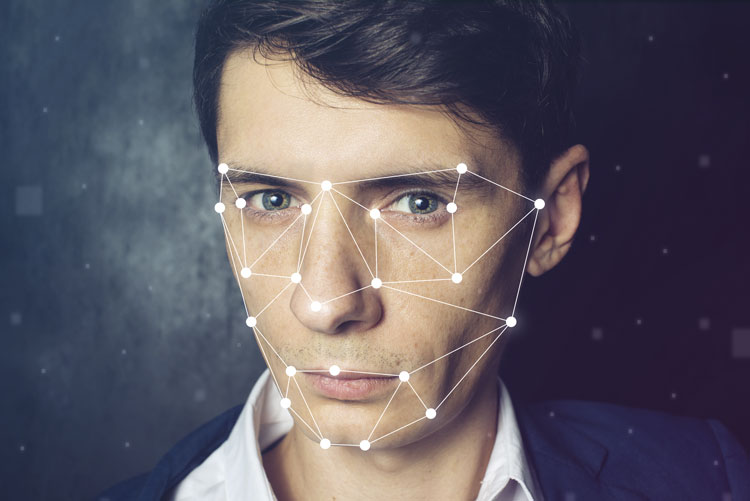
The growing deployment of facial recognition technology is raising alarms among civil libertarians, who worry that the capability to identify people based solely on their appearance will erode privacy. And just how accurate is it?
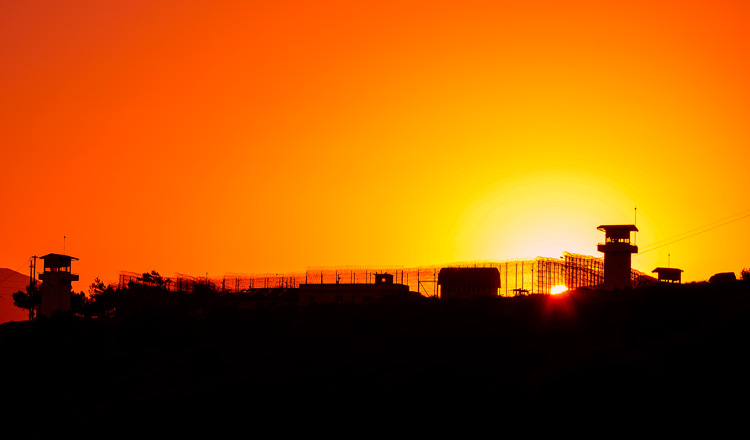
Lawyer Donald Specter, executive director of the Berkeley-based Prison Law Office, was blown away by prisons in Germany and the Netherlands. For starters, they were physically different—built to resemble life on the outside. Inmates had their own rooms and, in some cases, were allowed to cook in communal kitchens.
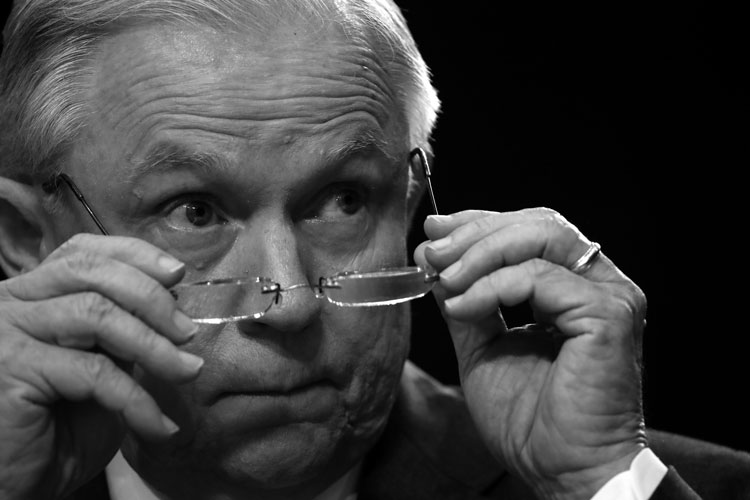
A special preview from the October issue: The attorney general sees his role as pushing present-day law enforcement toward a rose-colored past.
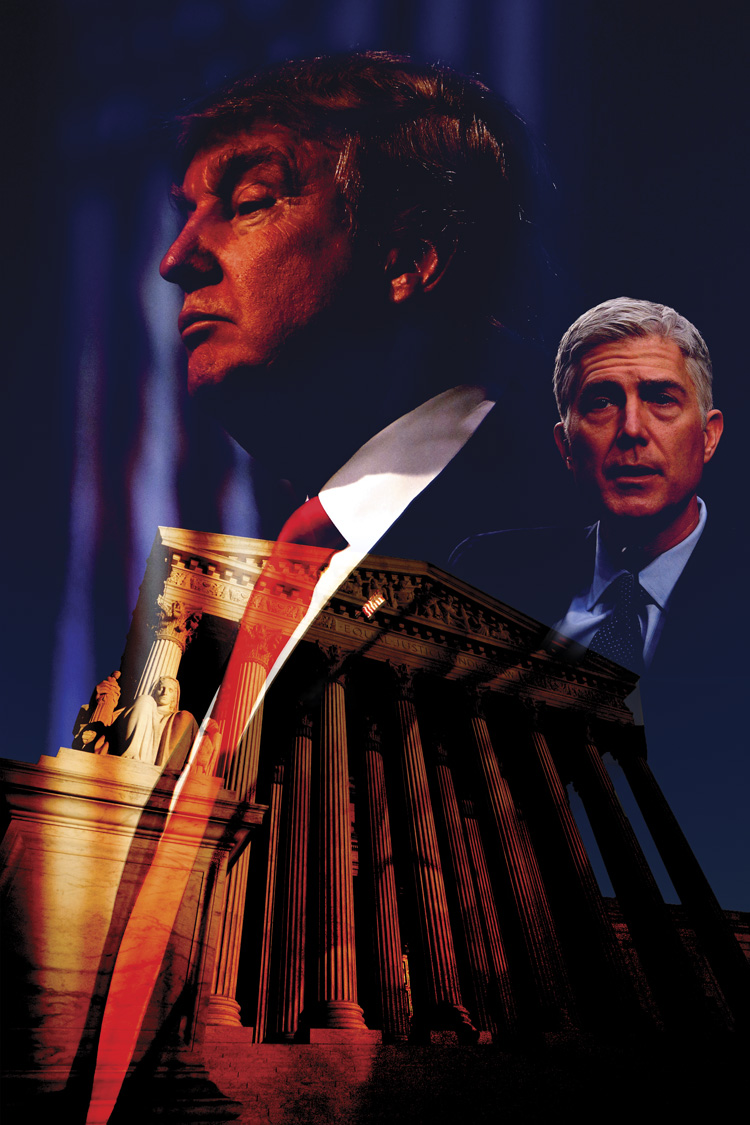
The President’s Court: The Supreme Court’s new term will address the travel ban and other hot-button issues with President Trump’s first appointee on the bench.

In a field premised on protecting the rights of others, law firm equality should be a de facto presumption. But in practice, not enough firms are putting in enough effort to get it right, and even fewer are doing it well.
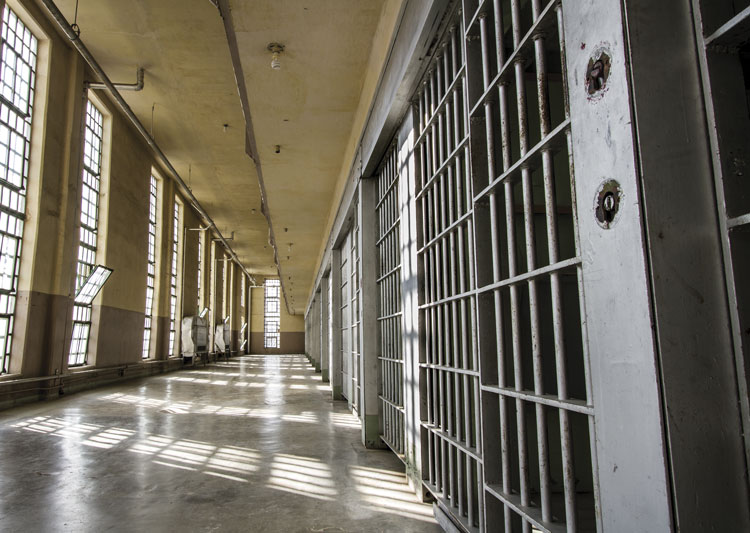
Edward Kenzakoski was 17 when he was caught in possession of drug paraphernalia. Unfortunately for Kenzakoski, he lived in Luzerne County, Pennsylvania, and landed before Judge Mark Ciavarella.
While a typical outcome for a juvenile in this situation was probation, Ciavarella sentenced Kenzakoski to a month at the privately operated PA Child Care detention center. Kenzakoski’s mother, Sandy Fonzo, says he came out of the experience angry and depressed, leading to two assault charges and more incarceration. In 2010, Kenzakoski committed suicide at age 23.
By then, Pennsylvanians knew something was wrong in the Luzerne County juvenile justice system. That same year, Ciavarella and one of his colleagues, Judge Michael Conahan, were federally indicted on charges they took $2.6 million in kickbacks from the developer of PA Child Care and another for-profit detention center. To fill those facilities, prosecutors said, they sent thousands of kids to detention for offenses as minor as making fun of a teacher online. Both judges and their co-conspirators were convicted. Ciavarella was sentenced to 28 years in prison, and the Pennsylvania Supreme Court vacated all the juvenile cases they handled.
On the day Ciavarella’s jury found him guilty, Fonzo rushed to the federal courthouse in Scranton, thinking she’d see the disgraced judge being led away in handcuffs. Instead, he walked out free pending sentencing, with his lawyer declaring: “This is not a ‘kids for cash’ case.”
“I’d like him to go to hell and rot there forever!” Fonzo yelled in a video that went viral. “Do you remember my son, an all-star wrestler? He’s gone! He shot himself in the heart! You scumbag!”
Alex Friedmann, a prison reform activist with the Human Rights Defense Center and managing editor of Prison Legal News, says this scandal could only have happened with for-profit facilities because publicly run facilities don’t need to fill beds. That’s just one reason Friedmann wants to abolish private prisons.
“Pretty much everything bad that can happen in prisons is more likely to happen in private prisons, due to their business model,” says Friedmann, who served 10 years in Tennessee lockups—six in a privately run facility—in the 1990s for armed robbery, attempted robbery and assault with intent to commit murder.
That’s a familiar claim from critics of the private prison industry. And in August 2016, the Department of Justice joined that chorus. Former Deputy Attorney General Sally Yates said the Bureau of Prisons would phase out the use of contract facilities, citing a report that found serious safety and security problems at the department’s contract prisons. (That decision didn’t affect the states, which use private prisons much more heavily.)
But her announcement came before President Donald J. Trump won the election. After taking office, he issued an executive order calling for the detention of more immigrants, most of whom are held in private prisons. Attorney General Jeff Sessions reversed Yates’ decision, saying private prisons were necessary to meet the DOJ’s future needs.
Those policies suggest that the federal government will increase its use of private prison contractors. Prison rights advocates are watching closely. “I’ve listened to the investor calls recently, and the investors are very, very enthusiastic about the prospect of making a lot more money from [federal] contracts,” says Carl Takei, staff attorney for the American Civil Liberties Union’s National Prison Project.
Almost all federal inmates in contract prisons are minimum-security, noncitizen males. According to Friedmann, that’s because they are the least expensive to incarcerate—they’re healthy and don’t need re-entry programs because they’ll be deported. That’s part of the business model he decries.
Another part is cutting costs in the easiest place: payroll. “They tend to pay their employees less, they provide fewer or less costly benefits, they provide less training, and they understaff,” Friedmann says.
Understaffing is a problem in public prisons too, because most are in rural areas, notes Lauren-Brooke Eisen, senior counsel at the Brennan Center for Justice at New York University and author of a forthcoming book on private prisons.
But Martin Horn, a former Pennsylvania secretary of corrections and commissioner of the New York City Department of Correction, believes understaffing is worse in private facilities. He also says lower compensation creates higher turnover, and private prisons tend to do less training. All of this leads to “a green and nervous staff” who “don’t know how to do their job,” says Horn, who teaches at the John Jay College of Criminal Justice.
That, he says, could explain the results of the DOJ’s August report by the Office of the Inspector General, which compared security incidents at private prisons with those in similar public facilities. The report found that private prisons had higher rates of assault by inmates; more than twice as many complaints about staff; eight times as many contraband cellphones confiscated; and 10 times as many lockdowns.
When OIG personnel visited three of the private prisons, they found that two were using solitary confinement units to house new arrivals—because the institutions were out of other beds. That’s inappropriate, Horn says. The United Nations has declared solitary a form of torture under certain circumstances.
Eisen says the problems all come down to a profit motive. “If you talk to [public] directors of corrections, they say, ‘I want to keep my prison population low.’ Private prison companies won’t say that,” she says. “Some of them are paid per inmate.”
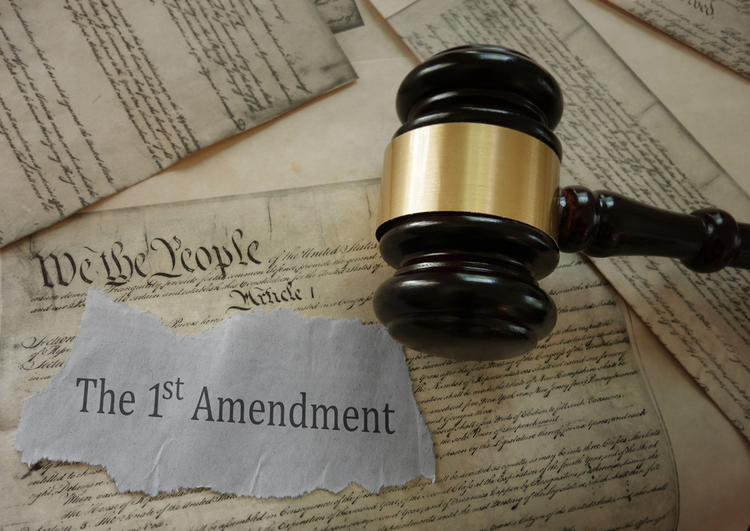
Government officials removed a high school student’s painting from the U.S. Capitol building earlier this year, contending that its message was anti-police and inappropriate. The student and his congressional representative objected, arguing that the government engaged in impermissible viewpoint discrimination by censoring the artwork.
The government countered that removing the painting, submitted in a congressional art competition, was its prerogative under the government speech doctrine.
The controversy raised an important question: Did the government violate the First Amendment by censoring private speech, or was it engaged in government speech? Over the last two decades, the Supreme Court has expanded the government speech doctrine, and more officials have asserted it as a defense in free speech cases.
“The government speech doctrine has the ability to swallow much of the Constitution’s protection for freedom of speech,” says constitutional law expert Erwin Chemerinsky, dean of the University of California at Berkeley law school and an ABA Journal contributor. “The Supreme Court has said that when the government is the speaker—or when the government adopts private speech as its own—the First Amendment does not apply.”
Many trace the doctrine to a 1991 government funding case, Rust v. Sullivan, even though the court didn’t use the term government speech. The court narrowly upheld a federal regulation that prohibited doctors who received federal funds for family planning services from discussing with patients the option of abortion. Critics termed it the “abortion gag rule,” but the court upheld the regulation, writing that the government can “selectively fund a program to encourage certain activities it believes to be in the public interest, without at the same time funding an alternate program which seeks to deal with the problem in another way.”
Since then, the government speech doctrine has become more of a force in First Amendment law, thanks to Supreme Court decisions.
In Pleasant Grove v. City of Summum (2009), the court reasoned that a Utah city could decline to post a religious monument that listed the seven aphorisms of Summum in a public park, even though the park already had a Ten Commandments monument. The reason: Monuments in public parks were a form of government speech.
More controversially, a divided court ruled 5-4 in Walker v. Sons of Confederate Veterans (2015) that the state of Texas could refuse to approve a specialty license plate with a depiction of the Confederate battle flag. The majority reasoned that specialty plates are a form of government identification and communicate messages from the state. “Indeed, a person who displays a message on a Texas license plate likely intends to convey to the public that the state has endorsed that message,” wrote Justice Stephen G. Breyer.
“The Walker decision probably helped further educate governmental bodies—as well as lower courts—about the role of the government speech doctrine as a potential defense to First Amendment challenges by private individuals who seek to join or alter or silence what the government believes is its own expression,” says Helen Norton, a University of Colorado law professor and associate dean, who has written extensively about the doctrine.
Chemerinsky says governmental officials are “much more frequently claiming the government speech defense since Walker.”
The case of the artwork removed from the Capitol is one high-profile example. David Pulphus of St. Louis had his painting selected by a panel of local artists and, ultimately, by U.S. Rep. William Lacy Clay, for display in the Cannon tunnel, which is part of the Capitol grounds.
Pulphus’ painting depicts a protest, including police officers with piglike heads, and a black man crucified on the scales of justice. The painting was intended to convey social injustice, including events in Ferguson, Missouri, and was displayed for months without incident. It was later removed by members of Congress for its anti-police content.
Pulphus and Clay filed a federal lawsuit, contending the removal was a form of impermissible viewpoint discrimination in violation of the First Amendment. However, U.S. District Judge John D. Bates ruled in Pulphus v. Ayers on April 14 that the art competition was a form of government speech.
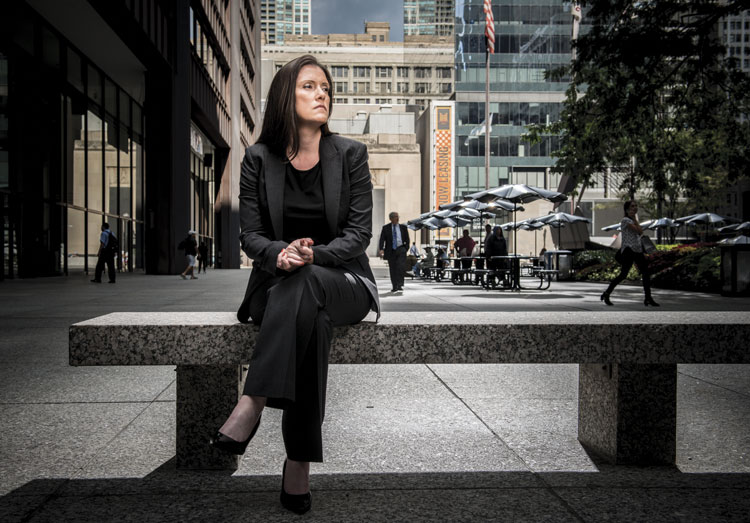
Women who have sued their law firms for gender discrimination put big-firm careers at risk. The alternatives: stay silent and see no change, or move on and hope a pattern of bias does not repeat.