

Soon after Dannel Malloy became the governor of Connecticut in 2011, he began working to reform the state’s criminal justice system.
He had been a prosecutor in Brooklyn, New York, where he realized too many people were kept behind bars for too long. He was particularly concerned about inmates who were elderly or debilitated and required specialized care. In many cases, these inmates were granted release but remained in prison because nursing homes refused to accept them.
“Keeping them in institutions that can’t meet their needs doesn’t make a whole lot of sense, especially when there are dollars available to pay for their care—not in prison but in other facilities,” Malloy says.
At Malloy’s direction, the state of Connecticut issued a request for proposal for a nursing home dedicated to paroled inmates. Medicaid doesn’t cover care delivered in prison, so Malloy hoped the facility would receive federal reimbursement from the Centers for Medicare & Medicaid Services to help cover costs.
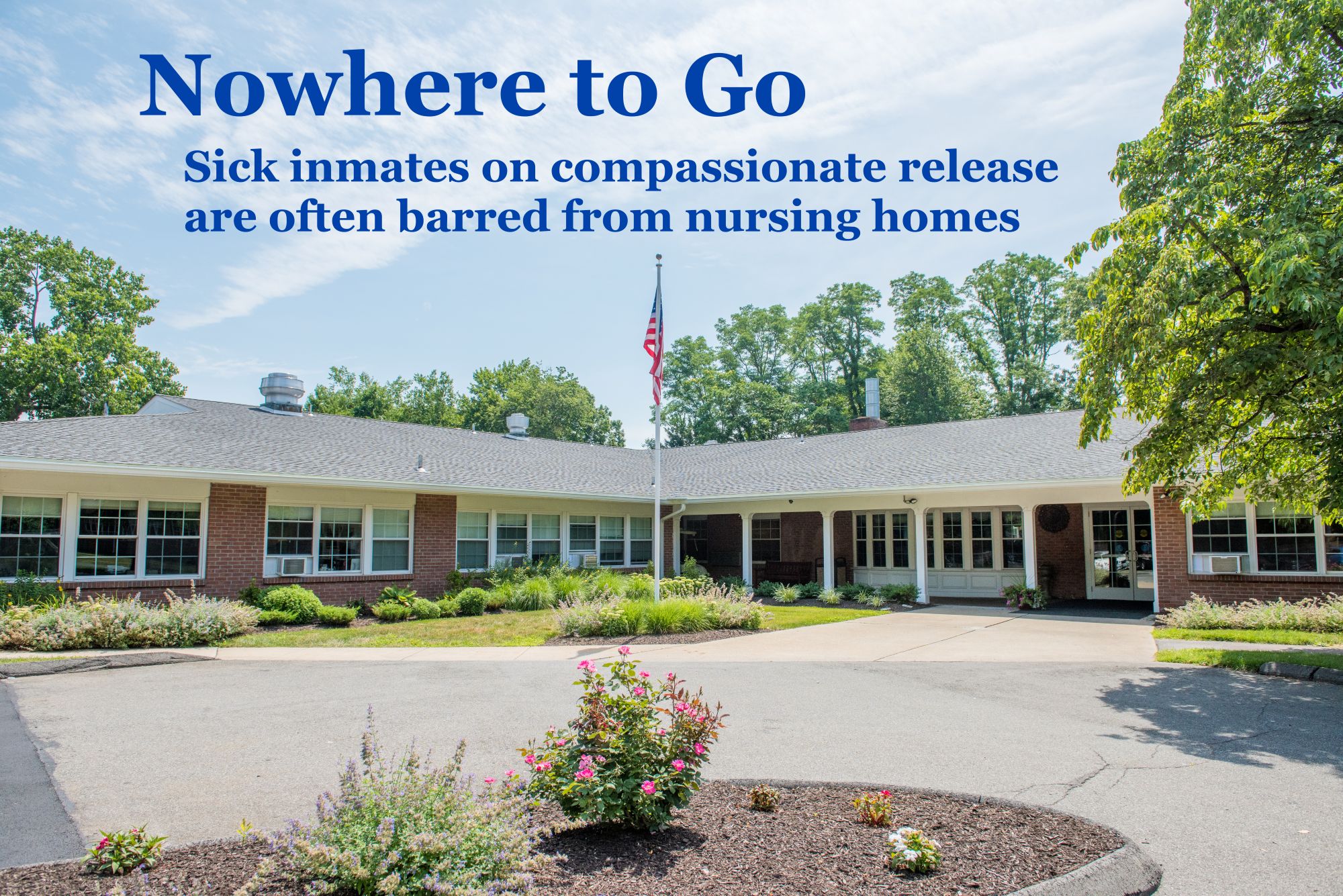
In 2013, Connecticut partnered with iCare Health Network to open 60 West in Rocky Hill, a town near Hartford. The 95-bed facility is described as the first long-term nursing center for individuals who are formerly incarcerated or otherwise difficult to place because of mental illness or behavioral health issues. It eventually won approval for federal nursing home funding, and according to Malloy, it provides a national model for the care of aging inmates.

“It’s just the decent thing to do,” says Malloy, who became the chancellor of the University of Maine System after his tenure as governor ended in 2019. “If someone is sick, to not give them the care that might help resolve their pain or disease is inhuman.”
In the years since Malloy created a way for elderly and sick prisoners to receive nursing home care in his state, Connecticut remains somewhat of an outlier. Most states now provide for compassionate release, which allows people in prison to qualify for early release when advanced age, terminal illness or incapacitation lessens the need for their continued incarceration. But how to move these people out of prison—and where to move them—remains a national problem.
The elderly prison population has skyrocketed over the past three decades.
Between 1991 and 2021, the percentage of people age 55 and older who were incarcerated in state and federal prisons increased from 3% to 15%, according to the Prison Policy Initiative, which cites data from the Bureau of Justice Statistics. By 2030, more than one-third of the country’s prison population will be 55 and older, the American Civil Liberties Union also estimates.
“Decades of tough-on-crime policies have led to the mass incarceration of millions of people, and that has meant that state prisons today operate as very dysfunctional, sort of prison nursing homes for the increasingly elderly and infirm people behind bars,” says Molly Crane, counsel at FAMM, a national advocacy organization that promotes fair and effective criminal justice policies.
Aging inmates can have complex and costly medical needs. According to a 2025 study from Johns Hopkins Bloomberg School of Health's Department of Health Policy and Management, they reported experiencing disabilities at nearly double the rate of peers living in outside of prison. In particular, 15% of incarcerated individuals who were 55 or older reported cognitive impairments, compared with 7% of peers living outside of prison.
Despite its intended benefit, compassionate release is still rarely used because individuals with serious medical conditions find the process confusing, are too sick to apply or lack resources to hire counsel for assistance, notes Crane, who helps pair people with critical illnesses in state prisons with lawyers and doctors to secure compassionate release.
Even when older adults are granted compassionate release, they often discover they have nowhere to go, Crane adds. She finds that across the country, nursing homes have categorically declined to accept people if they are coming from prison.

As one example, Crane talked with social workers in North Carolina who said they called more than 400 nursing homes that all refused to take elderly or sick prisoners.
“They get, ‘Absolutely no,’ when they call,” Crane says. “People hang up on them. And sometimes nursing homes even say, ‘Ew,’ as in, gross.”
Older and ill inmates have faced similar challenges finding nursing home placements upon release in several other states, including Rhode Island, New York and Colorado, according to a recent story from KFF Health News.
As far as Crane is aware, iCare Health Network is the only long-term care provider that focuses on older adults who have been incarcerated and other difficult-to-place individuals. It operates 60 West in Connecticut as part of its MissionCare Health program, which also launched MissionCare at Holyoke in Massachusetts in 2021, and MissionCare at Bennington in Vermont in 2024.
In 2016, the Centers for Medicare & Medicaid Services acknowledged that more states were examining how the health care system treats individuals during and after incarceration, including those who need special care for chronic conditions or have been granted compassionate release.
The agency provided updated guidance that clarified the federal requirements for providing services to formerly incarcerated individuals, noting that nursing homes and other facilities should ensure their care aligns with “essential patient rights and safety for all individuals.”
Patient and staff safety has been a chief concern for nursing homes that chose not to accept inmates who were granted compassionate release.
Sean Sanada, the CEO of the Hawaii Health Systems Corp.’s Oahu region, who oversees two state-funded long-term care facilities, told KFF Health News the system has reviewed dozens of compassionate release referrals but declined all of them. In addition to safety risks, he noted that the facilities do not have the resources to care for patients with criminal backgrounds.
“The risk is just too high in most of those instances,” Sanada told KFF Health News.
In Connecticut, iCare Health Network faced opposition from the town of Rocky Hill and some of its residents over 60 West. The town filed lawsuits alleging the nursing home violated local zoning regulations because it didn’t serve traditional patients. Residents who lived near the facility also filed lawsuits after expressing concerns that it posed a danger to the community and decreased their property values.
A judge ruled in favor of iCare Health Network in its dispute with the town, and the residents withdrew their lawsuits, according to David Skoczulek, the vice president of business development and communications for iCare Health Network.

He noted that elected officials and community members expressed similar concerns over MissionCare at Bennington in Vermont and that iCare Health Network held an informational meeting that was attended by more than 100 people to try to alleviate some of those concerns.
Residents in all three MissionCare Health facilities, no matter how they enter, go through a preadmission screening and resident review, which is a federally required evaluation to ensure they meet the criteria for nursing home admission and are not candidates for another environment, such as an acute behavioral health inpatient setting, Skoczulek says. This supports its decision-making and helps mitigate any safety risks since residents who are accepted have debilitating medical conditions, including cancer, diabetes and dementia.
MissionCare Health additionally conducts its own in-person clinical evaluation, interview, chart review and risk analysis before admitting residents, Skoczulek adds.
“Some individuals may have serious criminal histories, but by the time they require nursing home care, their age, medical condition and level of functional impairment can significantly change their risk profile,” Skoczulek says.
MissionCare Health develops a care plan to meet its residents’ needs, which often includes a higher level of mental health services, social support and recreation, Skoczulek says. Its facilities have more staff than a typical nursing home, including greater nurse-to-resident ratios, and provide specialized training.
All three of MissionCare Health’s facilities are full or nearly full.
It is looking for more locations in Connecticut, Massachusetts and Vermont and aiming to expand elsewhere, Skoczulek says. He has met with officials in at least 15 states that are experiencing “some level of crisis” with aging inmates who need better care and are interested in MissionCare Health’s model.
“They are managing very difficult and often very sad cases,” Skoczulek says. “In some instances, they are seeing individuals with serious medical conditions or nearing the end of life remain in correctional settings—even when the correctional system and their advocates would prefer to see them cared for outside prison walls. The challenge is finding an appropriate setting capable of meeting their needs.”
In her work with FAMM, Crane partners with advocates and coalitions nationwide to identify barriers to compassionate release and develop strategies for reform in their states.
She has organized visits by nursing home administrators to prison infirmaries so they can meet the people who need services and better understand their conditions and circumstances. She also is building relationships with hospital social workers, who often have better connections with nursing homes than prison social workers.
Crane has also seen innovative approaches in several states, including Rhode Island. In one program, each person who is granted compassionate release is assigned an outreach worker, she says. That person becomes a point of contact for the nursing home and can provide additional support when needed.
In the short-term, more work needs to be done to educate nursing homes and provide assistance when they agree to care for people who come from prison, Crane says.
“But big picture, we need more expansive compassionate release so that people aren’t so incapacitated that nursing homes are the only option,” Crane adds.








