What happens next in Jane Doe's case against Cornell, the Cornell Seven?



What allegedly happened to Jane Doe at a fraternity party at Cornell University nearly two years ago has captivated the nation.
Last month, Doe filed a civil complaint accusing seven members of the Chi Phi fraternity of pressuring her to drink alcohol and take ketamine until she was intoxicated, and then sexually assaulting and raping her over a period of several hours on Oct. 19-20, 2024. Doe, who was then a 20-year-old student, also accused Cornell of failing to protect her and adequately punish the involved fraternity brothers.
In response to the lawsuit, Cornell disclosed that it had conducted a Title IX investigation, which led to student expulsions and suspensions, and barred the Chi Phi fraternity from campus. Tompkins County District Attorney Matthew Van Houten, who reviewed Doe’s initial statement in November 2024 and declined to pursue criminal charges, also announced he would reopen the investigation to examine potential new evidence in the civil complaint.
New York Gov. Kathy Hochul on Thursday appointed Letitia James, the state’s attorney general, to lead the investigation as a special prosecutor. Cornell also announced this week that it would retain former U.S. Deputy Attorney General Sally Yates and her firm, King & Spalding, to conduct its own review of the handling of Doe’s allegations.
Several fraternity brothers who are named in Doe’s lawsuit have denied wrongdoing, according to ABC News.
In this complex and still-evolving case, the ABA Journal asked legal experts to weigh in on factors that could help or harm Doe moving forward.
What is consent in New York?
Whether Doe gave consent to sexual acts at the Chi Phi fraternity party will likely be a central focus of the criminal investigation.
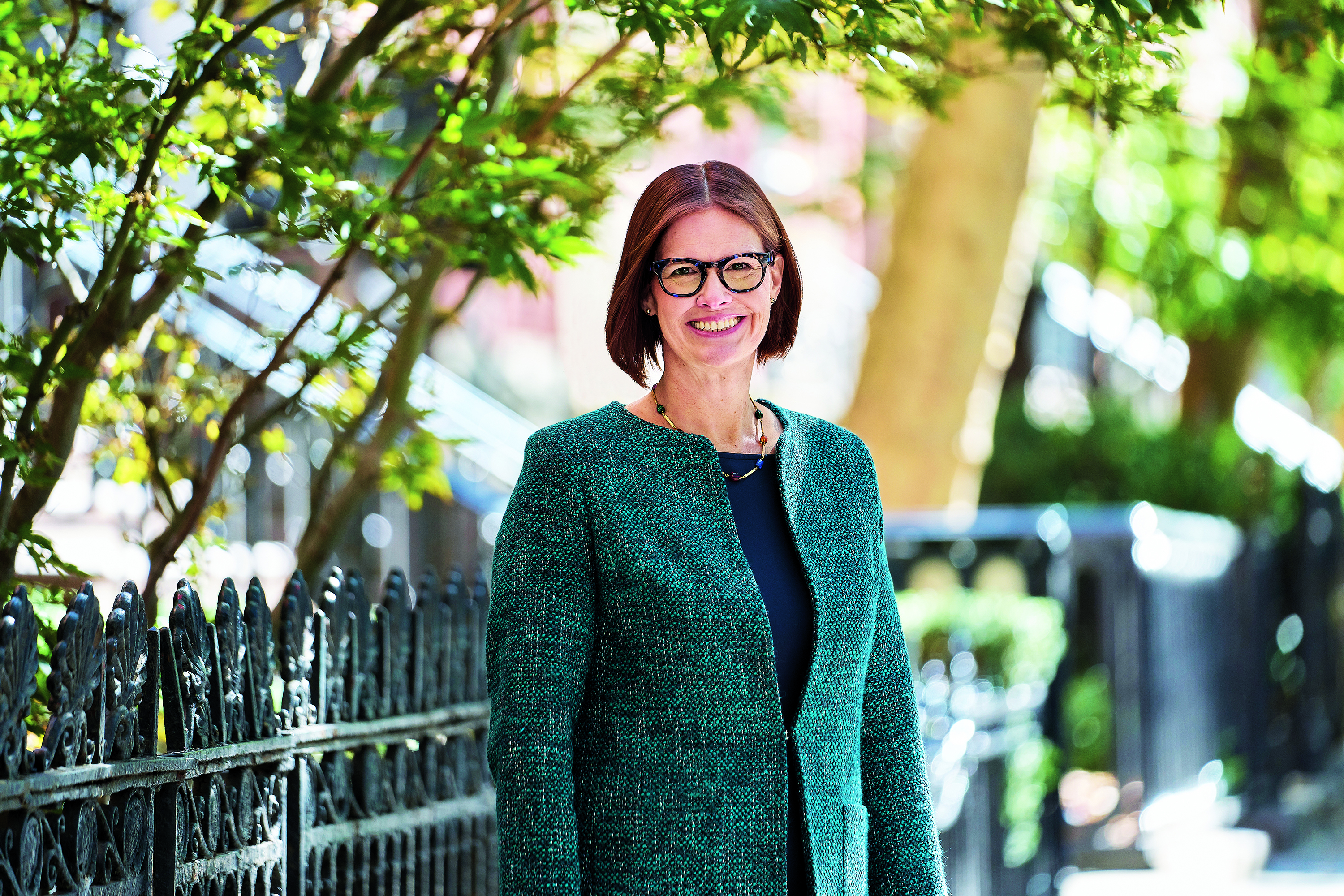 In a civil case, “you can obviously be held negligent for behavior that causes harm far short of a criminal act. It’s a lower standard,” Erin Murphy says. (Photo by NYU Law)
“One thing this case is exposing is that there is a wide gap—not just in New York, but in many jurisdictions—between what people think the law says and what it actually says,” says Erin Murphy, a professor at New York University School of Law, who assisted in the American Law Institute’s 2022 revision of Article 213 of the Model Penal Code, which addresses sexual offenses.
Under New York law, lack of consent to a sexual act can be established through physical force, mental incapacitation, unconsciousness or other physical helplessness, or clear expression of nonconsent.
When deciding against criminal charges in 2024, Van Houten noted that Doe didn’t show she was mentally incapacitated, which occurs when a victim is given a drug without her consent and can no longer control her conduct.
This is referred to as the “voluntary intoxication loophole” in New York, and it requires someone who chose to consume drugs or alcohol to reach a state of physical incapacitation before a sexual act is deemed nonconsensual, says Ann Olivarius, an attorney who represents victims of sexual misconduct and discrimination.
“That means mental incapacitation, being powerfully affected by drugs and alcohol but still awake, doesn’t clear that bar,” Olivarius says. “Even if a person is clearly under the influence, slurring, falling over or disoriented, they are still considered able to give consent.”
This could be a difficult obstacle for Doe to overcome, adds Olivarius, the chair of the executive committee at McAllister Olivarius. She also was a plaintiff in Alexander v. Yale, the 1977 landmark case that established sexual harassment constituted sex discrimination under Title IX.
Proving physical helplessness could also be a high bar for Doe to clear, Murphy adds. Under New York law, it requires a victim to be unconscious or otherwise unable to communicate their unwillingness to participate in a sexual act.
In Murphy’s experience, the standard has been used in cases where, for example, a victim is sexually assaulted by a home intruder while they are asleep.
“It’s not meant to cover people who are at the extremes of intoxication, whether from drugs or alcohol, but not so far that they’ve passed out fully,” Murphy says.
Van Houten has said Doe didn’t initially allege she was rendered unconscious. But in the course of a new investigation, and as more evidence is uncovered, Doe may be able to prove otherwise, Murphy says. If video or photos show she was unconscious at points in the night, or if someone who was involved told a friend that she couldn’t communicate, that could support a charge under the standard, she says.
“What a jury does with that charge is obviously up to the jury, but it would at least provide a factual basis for charging the offense,” Murphy says. “On the other hand, if a thorough investigation fails to uncover anything like that, then it might be a challenge even to bring the charge.”
Focus on accounts
In Van Houten’s decision to reopen the Cornell investigation, he referred to the discrepancy between Doe’s initial six-page statement and the allegations in her civil lawsuit. These include that Doe, who says she was incapable of and did not give consent to any sexual activity, found herself in a “room full of predatory, fraternity men” with “no way for her to escape.”
Information from Cornell’s Title IX investigation into Doe’s allegations in 2025 was also made public by the New York Times. Among these documents are Doe’s November 2024 interview with campus police, in which she told them, “I can say with 100 percent confidence I was raped.”
That statement was later omitted from a six-page report Cornell provided to the Tompkins County District Attorney’s Office, the New York Times reported. The paper added that Doe read the report and signed it.
Defense lawyers may attempt to challenge Doe’s credibility because of the inconsistencies in her recounting of events and because she reportedly texted with at least two of the fraternity members after the alleged sexual assault, Olivarius says.
Suzanne Goldberg, a professor at Columbia Law School and co-founder of its Center for Gender and Sexuality Law, has seen this happen in the past but notes that societal norms around sexual assault victims are changing.
“Most experts agree that it is consistent with the experience of sexual assault for a victim’s account to change over time because it can take time to come to terms with what has happened,” says Goldberg, who also served as deputy assistant secretary for strategic operations and outreach in the U.S. Department of Education’s Office for Civil Rights during President Joe Biden’s administration.

In some cases, prosecutors are hesitant to pursue criminal investigations when there is an open Title IX investigation because they know victims and other witnesses have made lengthy statements that may complicate a criminal case, says Amanda Walsh, the deputy director of external affairs at the Victim Rights Law Center, which represents sexual assault survivors in on-campus proceedings.
If criminal charges are filed after the completion of a Title IX investigation—which could happen in Doe’s situation—the entire record from the investigation and hearing is nearly always included in the case, Walsh says.
“Although, in my experience, it more often hurts the survivor, even if there is a favorable finding for the complainant,” adds Walsh, a liaison to the ABA Commission on Domestic and Sexual Violence. “Lengthy statements can often lead to inconsistencies that might feel inconsequential and are very normal, but defense attorneys will focus on them.”
When a university investigation concludes before a criminal matter begins, it also means the defense has had access to evidence for longer than the prosecution, Walsh says.
‘Broader case’
Legal experts are also paying close attention to Doe’s civil case, which only requires her to prove by a preponderance of the evidence that Cornell and the fraternity members were negligent or violated key New York state laws, including those against sexual assault, sexual battery and infliction of emotional distress.
“It always helps if you don’t protect someone from a criminal act,” Murphy says. “But you can obviously be held negligent for behavior that causes harm far short of a criminal act. It’s a lower standard.”
 “Even if a person is clearly under the influence, slurring, falling over or disoriented, they are still considered able to give consent,” Ann Olivarius says.
Doe’s civil lawsuit is “ambitious,” because it names a series of defendants, including the bar where she was served alcohol underage, the national and local chapters of the Chi Phi fraternity and the Delta Delta Delta sorority, of which Doe was a member, Olivarius says.
“This allows for a much broader case than a narrow focus on the seven defendants versus Doe,” Olivarius says.
Olivarius also notes that in a case involving sexual violence, the claimant’s credibility is typically on trial. But in Doe’s case, she says, so is Cornell’s.
“That brings a different dynamic to the trial,” Olivarius says. “The media scrutiny of Cornell and campus police’s handling of the case have already inflicted significant reputational damage on the university.”
Write a letter to the editor, share a story tip or update, or report an error.Topics: Career & Practice

BigLaw boosts bonuses, pay for associates creating new market rate following Cravath, Milbank hikes
Your Voice

The Pink Suit Problem: Preparation can help head off problems that are ultimately peripheral
Podcasts