Could the use of AI upend privacy and security expectations in court?


Shortly after news broke this spring of an unnamed federal judge having sex in chambers with a high-ranking police officer, Above the Law reporters went to work to uncover the judge’s identity.
In May, the Judicial Conference of the United States’ Committee on Judicial Conduct and Disability issued an order affirming a private reprimand of the judge by the 11th U.S. Circuit Court of Appeals at Atlanta’s Judicial Council. While both orders concealed the judge’s name and court location, the reporters used generative artificial intelligence to determine it was U.S. Judge Eleanor Ross of the Northern District of Georgia.
It only took about 45 minutes after zeroing in on key details in the orders. This included that the judge in question hired clerks for two-year staggered terms, had prosecutor experience and attended a district attorney’s primary election victory party.
As AI becomes more powerful and users become more savvy, will this sort of sleuthing become more frequent in the future? Legal experts say yes, especially since it was already happening long before AI.
 Jonah Perlin (Photo courtesy of Jonah Perlin)
Earlier in his career, Jonah Perlin was a litigator at Williams & Connolly in Washington, D.C., where he used the internet and paid and unpaid search tools to pull together information that wasn’t provided in a single court document.
“AI is providing us, for better or for worse—and most of the time, I think it’s for the better—with opportunities to do things that were always possible but maybe not scalable,” says Perlin, now a professor at Georgetown University Law Center whose scholarship includes legal ethics and the technology of law.
Perlin doesn’t anticipate that AI will do a “cryptographic hack” of properly redacted and sealed information. But as the Above the Law example illustrates, but he does expect details that are “hiding in plain sight” to continue to be uncovered.
“It’s the information that you can find if you’re able to read between the lines,” Perlin says. “What would have taken a human a lot of knowledge and maybe 20 hours of searching can now be done in seconds.”
Andrew Guthrie Ferguson, a professor at the George Washington University Law School, agrees that AI could connect information that may have been fragmented or flew under the radar in the past. For example, he says if someone uses an AI tool in a court management system, which isn’t typically open to the public, it could reveal patterns that wouldn’t ordinarily be noticed.
“That said, most people will not have access to a closed system, so court data might be a bit more protected than some other types of data,” says Ferguson, the author of the book, Your Data Will Be Used Against You: Policing in the Age of Self-Surveillance.
But Ferguson notes there is a danger that public-facing data, such as information about criminal cases on court websites, could “be scraped by bots” and moved to separate private datasets. AI could make new connections using that approach, he says.
How could this affect the courts?
The presence of AI will likely change people’s expectations of privacy, Perlin argues.
This happens any time new technology becomes available, he says, pointing to the use of GPS in police investigations as one example.
“I think it will be much harder to say that information is truly private, and that will have an effect on parties and inevitably have an effect on courts,” Perlin says.
David Lizmi is a partner at Mayer Brown in New York City, where he focuses on cybersecurity and data privacy as well as AI. He previously was an assistant U.S. attorney in the Eastern District of New York, where he served as the computer hacking and intellectual property coordinator.
In Lizmi’s experience, defense attorneys have always tried to identify confidential informants and unnamed co-conspirators in criminal cases. Using AI, they can now pair discovery from the government with their own responses to an indictment to identify people much more quickly, he says.
“There are concerns for the court and the government that stem from that,” says Lizmi, noting they are just beginning to contemplate potential uses of this information.
Defense lawyers could use it for several reasons, including to develop impeachment material if they go to trial, Lizmi says. There are risks that AI could identify the wrong individual, he adds. And in certain instances, publicly naming confidential informants or co-conspirators could lead to security concerns.
On the civil side, Lizmi also doesn’t discount the possibility that lawyers could run thousands of pages of documents through AI to try to identify redacted material.
 Jeremy Fogel (Photo courtesy of Jeremy Fogel)
Jeremy Fogel, the executive director of the Berkeley Judicial Institute and a former judge for the Northern District of California, recently participated in a conference for federal judges where they talked about their own use of AI as well as the use of AI in cases before them.
The availability and acceptance of these tools will likely push courts to rethink how they protect information, such as confidential informants in criminal cases, Fogel says.
“If the court is trying to protect documents, and sometimes there are very good reasons why they should be protected, you want to make sure you are accounting for the fact that AI is out there so you don’t leave a trail unwittingly,” Fogel says.
Fogel has heard from judges who have other privacy and security concerns, including whether AI could be used to determine which sites a judge visited when researching a case. That could potentially provide insight into their decision-making, which could be useful to parties in a hotly contested proceeding, he says.
“It’s just a matter of being able to use these tools in an appropriate and secure way, and I think that is very much on people’s minds right now,” Fogel says.
The federal judiciary is currently preparing recommendations on the courts’ use of artificial intelligence.
Judge Sidney Thomas of the 9th U.S. Circuit Court of Appeals at San Francisco said earlier this month that the judiciary’s AI task force aims to share its final guidance by the end of the year. Thomas, who chairs the group, also noted that it released interim guidance in July 2025 that addressed judges’ use of the tools.
What can lawyers do to protect clients?
Lawyers may also reconsider how they handle private or confidential information.
They should rethink how they approach redactions, Ferguson suggests. He notes that generative AI is adept at predicting gaps in texts, and redactions are essentially gaps in texts.
“Unless the court system and lawyers are very conscious of all the ways data can be reconnected, redactions may not be as effective as they used to be,” Ferguson says. “This does not mean that courts cannot keep secrets, just that some of the old ways of doing things will need an update for the AI age.”
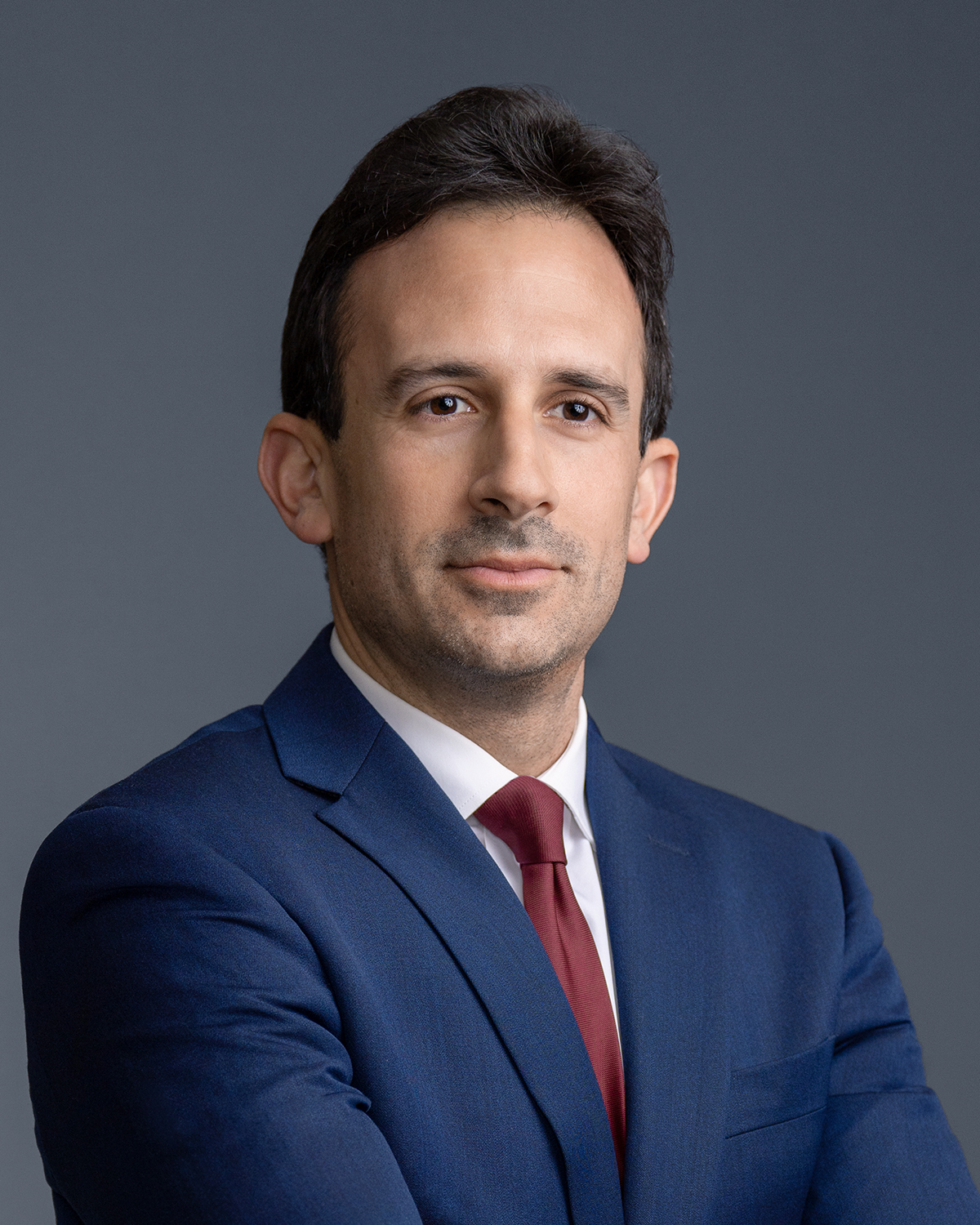 David Lizmi (Photo courtesy of Mayer Brown)
Looking specifically at criminal cases, Lizmi says that prosecutors may decide to delay disclosing Giglio material (which can be used to impeach the credibility of a government witness) or Brady material (which is information or evidence that can be beneficial to the defense). This would give defense counsel less time to identify confidential informants or co-conspirators, he says.
To mitigate security risks, Lizmi says there also could be attempts to seal more information.
And in civil cases, Lizmi says lawyers need to continue to craft protective orders and electronically stored information protocols in ways that best protect their clients. He says this could mean requiring notice from an opposing party before they run specific court documents through AI.
“This is a new circumstance to apply those protections, and so I think we’ll have to aggressively do that to protect clients,” Lizmi says.
Write a letter to the editor, share a story tip or update, or report an error.